The shift from single-use plastic bags to reusable bags is often discussed as a simple sustainability choice, but the reality is more nuanced.
Reusable bags can reduce dependence on disposable shopping bags when they are designed for repeated use and are actually reused enough times to offset the impacts of producing a heavier bag. For businesses, the decision also involves cost, branding, material choice, customer behavior, and local regulations.
This 2026 guide explains why reusable bags are often preferred, what materials are commonly used, and what businesses should consider before switching.
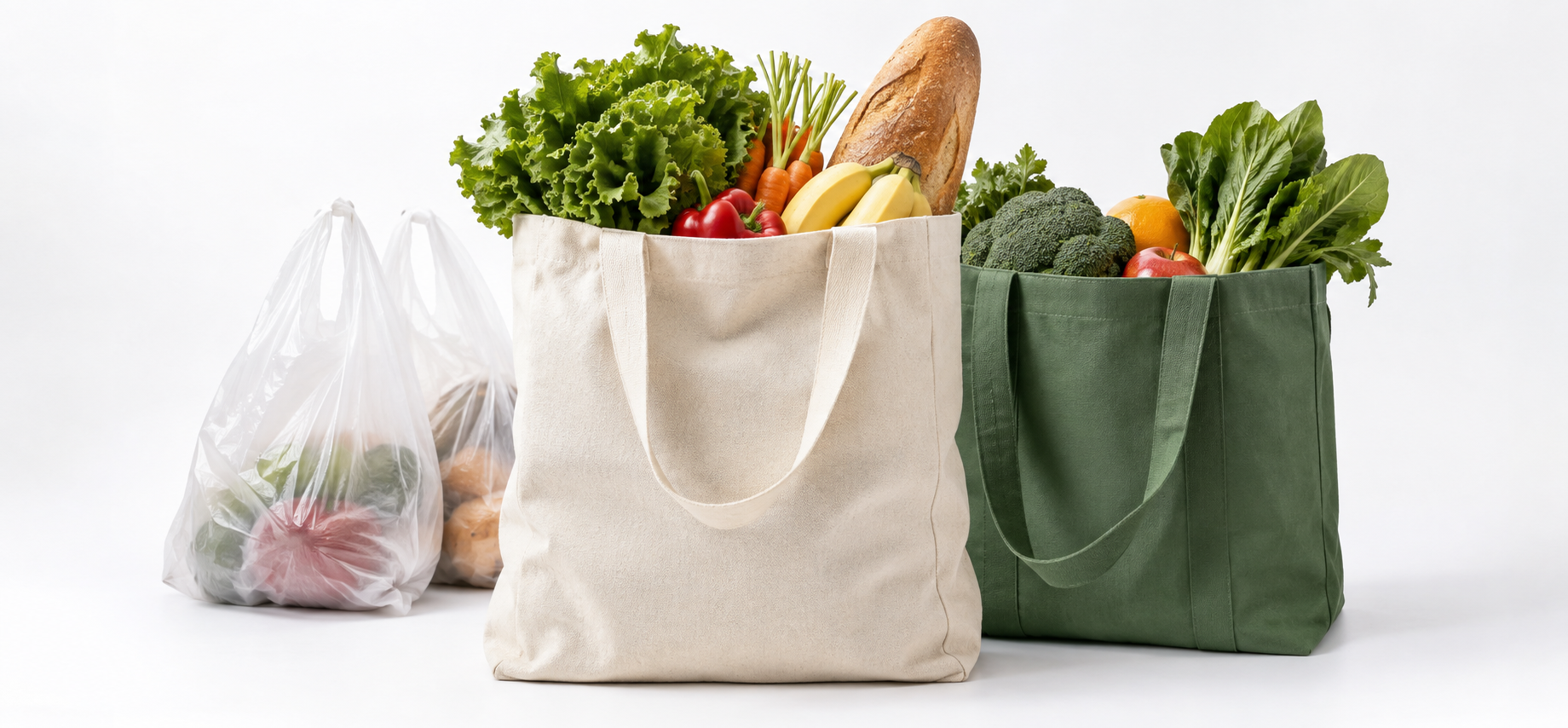
Why Single-Use Plastic Bags Are a Concern
Single-use plastic bags are lightweight and convenient, but they can create waste-management problems when they are discarded after a very short period of use.
Common concerns include:
- Litter and leakage into the environment
- Marine and wildlife impacts
- Long persistence in the environment
- Fragmentation into smaller plastic particles
- Dependence on fossil-based raw materials
- Low collection rates in some markets
The environmental impact varies by region because recycling systems, waste collection, bag thickness, and consumer behavior differ.
For broader background on plastic pollution, see the United Nations Environment Programme.
Benefits of Reusable Bags
Reusable bags can offer practical advantages when they are used repeatedly.
Repeated Use
A reusable bag is designed to carry products over many shopping trips instead of being discarded after one use.
Greater Load Capacity
Depending on the material and construction, reusable bags can carry heavier products than lightweight disposable bags.
Brand Visibility
Custom reusable bags can remain in circulation for longer periods, creating repeated exposure for a retailer or brand.
Better Fit for Retail Programs
Retailers can standardize:
- Bag size
- Handle length
- GSM
- Printing
- Color
- Gusset
- Load requirement
This makes reusable bags suitable for loyalty programs, grocery retail, exhibitions, and branded shopping campaigns.
Common Materials for Reusable Bags
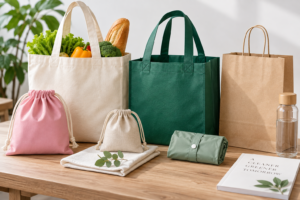
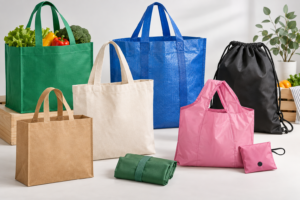
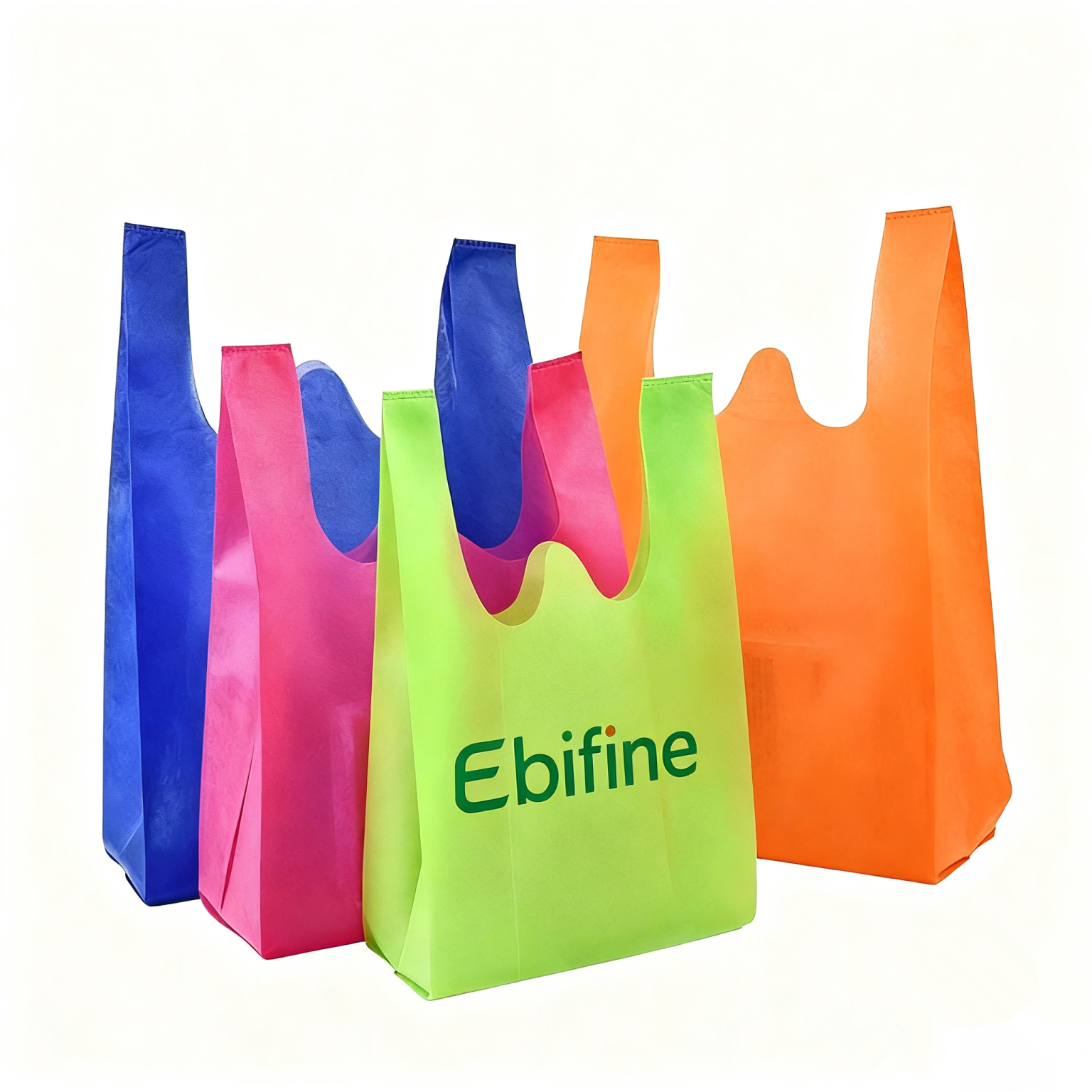
1. Non-Woven Polypropylene
Non-woven PP is widely used for retail and promotional bags.
Common advantages:
- Lightweight
- Cost-efficient at volume
- Printable
- Available in many colors
- Suitable for stitched or heat-sealed construction
Important note:
Although it has a fabric-like appearance, non-woven PP is still a plastic-based material. Its sustainability depends heavily on how many times it is reused and how it is handled at end of life.
2. Woven Polypropylene
Woven PP is stronger and more suitable for heavier grocery loads.
Common advantages:
- Good load-bearing performance
- Strong dimensional stability
- Suitable for lamination
- Durable for repeated use
3. Cotton and Canvas
Cotton and canvas bags are often selected for premium retail and lifestyle branding.
Common advantages:
- Premium appearance
- Strong woven structure
- Good printing and embroidery options
- Suitable for long-term use
Important note:
They generally use more material and energy during production than lightweight plastic bags, so repeated use is important if environmental performance is a priority.
4. rPET and Polyester
Recycled PET and polyester can be used for lightweight reusable shopping bags and foldable totes.
Common advantages:
- Lightweight
- Foldable
- Good for travel and convenience
- Can support recycled-content positioning
Ask for documentation if recycled content is an important purchasing requirement.
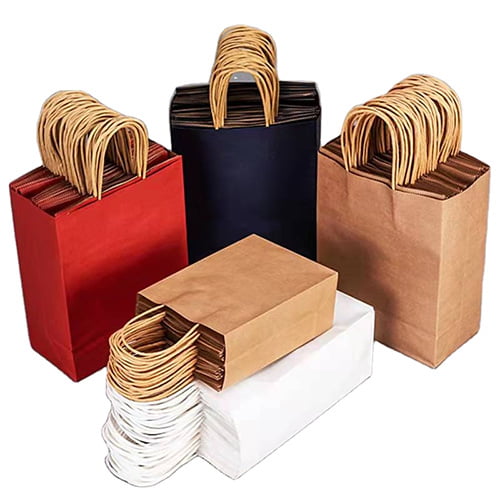
5. Paper Bags
Paper bags are often used as an alternative to lightweight plastic bags, but they are not always "reusable" in the same way as woven or stitched bags.
They are best considered a separate paper-based packaging option.
Common advantages:
- Good print surface
- Widely recyclable in many markets
- Suitable for retail, food service, and gifting
Limitations include reduced performance when wet and lower repeated-use durability compared with many textile-style bags.
Reusable Bags vs. Single-Use Plastic Bags
Durability
Reusable bags are generally designed for repeated carrying, while lightweight single-use bags are designed for short-term use.
Upfront Cost
Reusable bags usually cost more per piece.
However, unit cost should be evaluated against:
- Number of reuses
- Branding value
- Customer retention
- Reduced dependence on disposable bags
Environmental Performance
Reusable bags are not automatically better in every scenario.
The environmental result depends on:
- Material
- Bag weight
- Number of uses
- Washing
- Transportation
- Recycling infrastructure
- End-of-life treatment
For broader waste-reduction guidance, buyers can review the U.S. EPA's reuse and recycling resources.
How Businesses Benefit from Reusable Bags
For businesses, reusable bags can serve both a packaging function and a marketing function.
Potential benefits include:
- Long-term brand visibility
- Customer loyalty programs
- Branded retail presentation
- Reduced reliance on disposable packaging
- Better alignment with local bag regulations
- More consistent packaging specifications
Reusable bags can be particularly useful for:
- Supermarkets
- Clothing stores
- Trade shows
- Corporate promotions
- Event organizers
- Hospitality
- Lifestyle brands
How to Choose the Right Reusable Bag
Match the Material to the Use
For lightweight promotional use:
- Non-woven PP
- Lightweight polyester
For grocery retail:
- Stitched non-woven PP
- Woven PP
- Heavier reusable structures
For premium retail:
- Cotton
- Canvas
- Laminated woven bags
Check Construction
Confirm:
- GSM
- Seam method
- Handle reinforcement
- Gusset
- Bag dimensions
- Load target
Choose the Right Printing Method
Common options include:
- Silk screen
- Heat transfer
- Flexographic printing
- Lamination
- Embroidery
Approve a Sample
A physical sample helps confirm:
- Size
- Handle comfort
- Print quality
- Load capacity
- Overall appearance
Where Ebifine Fits for Reusable Bag Buyers
Ebifine Import And Export Company Limited was established in 2016 in Guangzhou, China and works as a packaging solutions provider for international buyers.
For reusable bag projects, Ebifine can help coordinate:
- Non-woven bags
- Woven PP bags
- Canvas and cotton bags
- Foldable bags
- Drawstring bags
- Printing
- Sample approval
- Packing
- Export shipment
Buyers can review Ebifine's bag and carrier options when comparing materials, structures, and customization.
Practical Tips for Switching to Reusable Bags
1. Start with the Actual Use Case
Do not choose a bag simply because it looks more sustainable.
Define:
- Product weight
- Reuse expectation
- Retail environment
- Customer behavior
2. Avoid Over-Specifying
A very heavy bag may not be necessary for lightweight retail products.
Use the lowest specification that still performs properly.
3. Encourage Reuse
The environmental benefit of a reusable bag improves when customers actually use it repeatedly.
4. Keep Bags Clean
For grocery use, reusable bags should be cleaned or washed according to the material and manufacturer instructions.
5. Plan for End of Life
Ask whether the bag can be:
- Reused
- Recycled locally
- Returned
- Reprocessed
Sustainability Considerations
A reusable bag should be evaluated across its full life cycle.
Important factors include:
- Raw material
- Production
- Weight
- Transportation
- Reuse count
- Washing
- Recycling
- End-of-life handling
The UN Environment Programme emphasizes that alternatives to single-use plastics should be evaluated based on their broader life-cycle performance rather than material labels alone.
Frequently Asked Questions
Are reusable bags always better for the environment?
Not automatically. They generally need to be reused enough times to justify their higher production impact.
Which reusable bag material is best?
There is no single best material. The right choice depends on load, reuse, cost, branding, washing, and end-of-life options.
Are non-woven bags biodegradable?
Most conventional non-woven PP bags are not biodegradable. They are plastic-based and should be evaluated for reuse and recycling potential.
Are paper bags reusable?
Some paper bags can be reused several times, but they generally have lower durability than stitched textile-style bags, especially when exposed to moisture.
Can reusable bags be customized?
Yes. Custom options can include size, material, GSM, color, handles, gussets, printing, and packing.
What information should I send for a quotation?
Provide:
- Bag material
- Width × height × gusset
- GSM or fabric weight
- Quantity
- Bag color
- Handle type
- Printing artwork
- Number of print colors
- Intended load
- Destination country
Final Recommendation
Reusable bags can be a strong alternative to single-use plastic bags when they are designed for repeated use and actually reused.
For businesses, the best approach is to:
- Match material to application
- Avoid over-specifying
- Choose appropriate printing
- Approve samples
- Encourage reuse
- Consider recycling and end-of-life options
For custom reusable bags, buyers can contact Ebifine with their material preference, dimensions, GSM, quantity, artwork, intended load, and destination country for a more accurate sourcing recommendation.