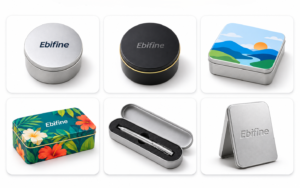
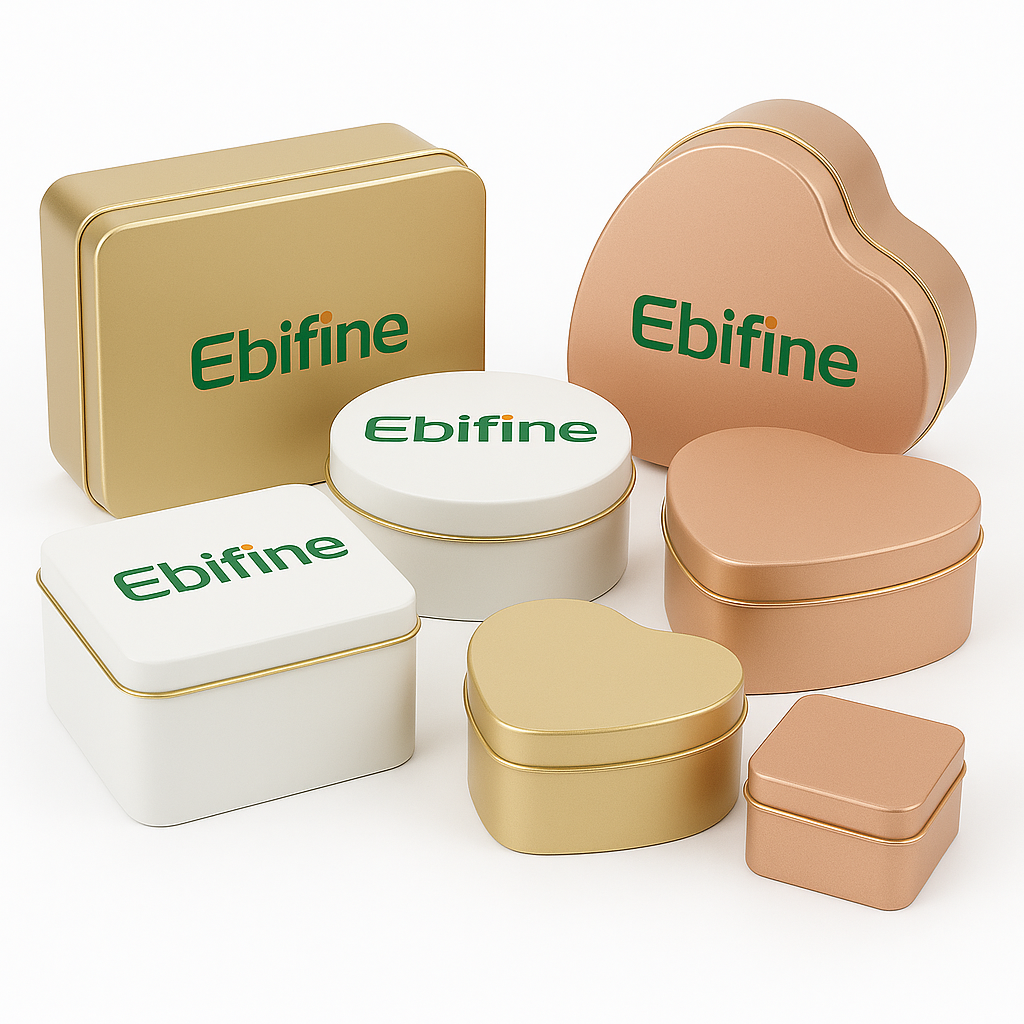

When we developing custom tin packaging, one of the first decisions buyers face is whether to use an existing stock tin size or invest in a completely custom mold.
At first glance, a custom mold may seem like the better choice because it allows the tin box to match the product dimensions more precisely. In practice, however, the decision should consider much more than dimensions alone.
Order quantity, expected repeat purchases, tooling cost, product fit, insert requirements, printing method, lead time, and available existing molds can all affect which option makes more commercial sense.
For many packaging projects, the most efficient process is not to start by asking, “Can you make this exact size?” Instead, start by asking:
Is there already an existing mold close enough to the required dimensions? 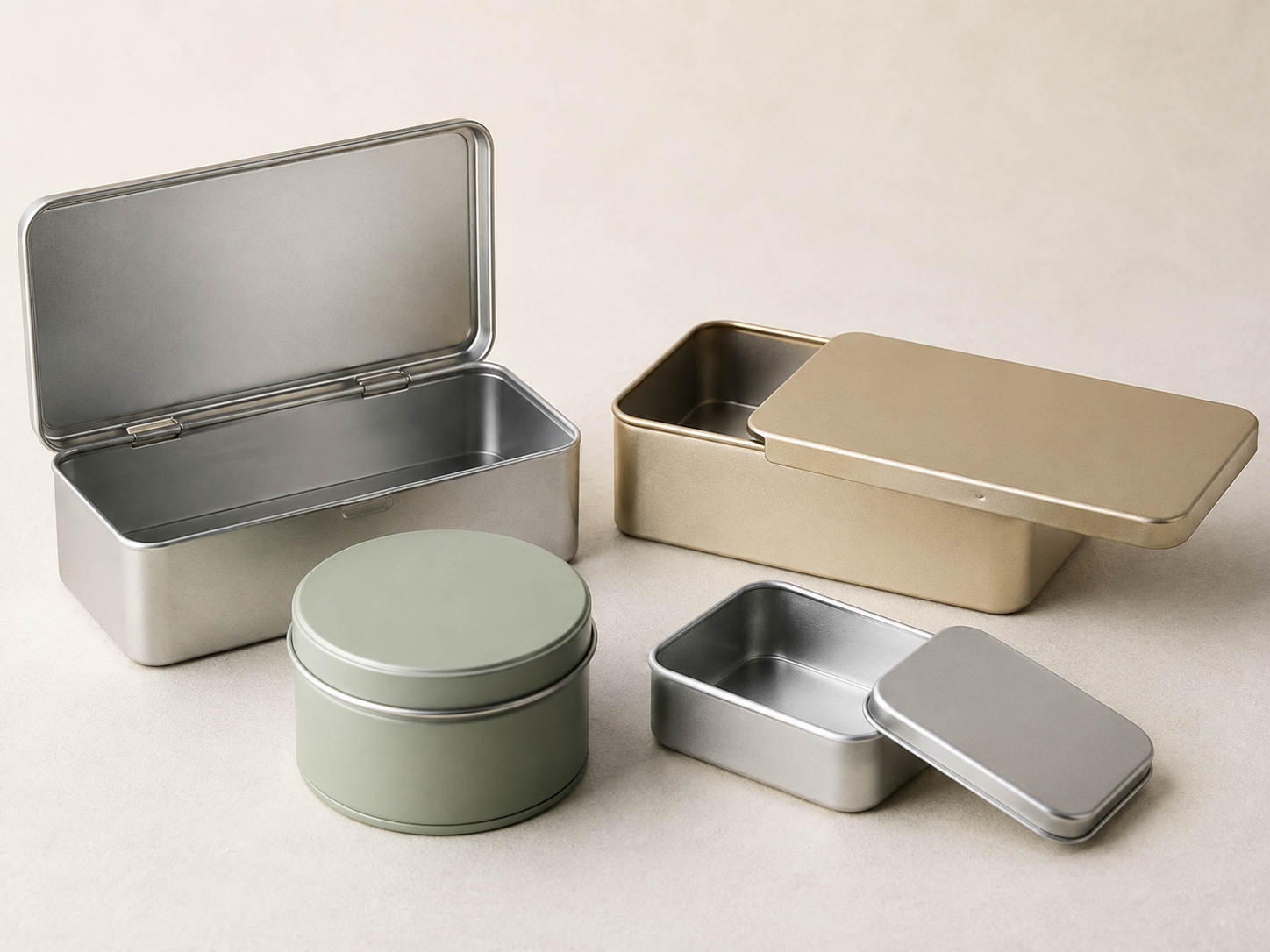
That single question can significantly affect the cost and development time of a custom tin packaging project.
Quick Answer: Stock Tin Size or Custom Mold?
For most projects, an existing stock mold should be checked first.
A stock tin size is often the better option when:
- an existing mold is reasonably close to the required dimensions;
- the product has some flexibility in packaging size;
- the project is still in the testing or early purchasing stage;
- tooling cost would be difficult to justify;
- faster sampling and production are important.
A custom mold becomes more reasonable when:
- the product requires very precise internal dimensions;
- the packaging must fit an existing insert or assembly system;
- the tin shape itself is part of the product design;
- the buyer expects substantial repeat orders;
- no suitable existing mold can be found.
The best decision is therefore not simply “stock is cheaper” or “custom is better.” It depends on the commercial requirements of the entire packaging project.
What Is a Stock Tin Box Size?
A stock tin box size refers to a tin structure for which the tooling already exists.
This does not necessarily mean that the finished tin itself is sitting in a warehouse ready to ship.
In many cases, the mold already exists at the factory, but the tin boxes are still produced according to the buyer's order.
The advantage is that the buyer normally does not need to pay for a completely new set of tooling.
Existing molds can include many common structures, such as:
- hinged tin boxes;
- rectangular tins;
- square tins;
- round tins;
- sliding tins;
- removable-lid tins;
- shallow tins;
- deep tins;
- pencil or pen tins;
- mint tins.
The exact available dimensions vary significantly between factories.
This is why checking only one factory's mold list may not always give a complete picture of what is available in the market.
What Is a Custom Tin Box Mold?
A custom mold is developed when an existing tin size or structure cannot meet the project's requirements.
Custom tooling may be needed when the buyer wants:
- a completely new length, width, or height;
- an unusual shape;
- a special lid construction;
- a unique closure;
- a special structural feature;
- tighter integration with an insert or product component.
Custom tooling gives buyers more control over the packaging dimensions, but it also adds another stage to the project.
Before mass production, the tooling normally needs to be designed, manufactured, tested, and adjusted if necessary.
For this reason, custom molds should usually be treated as a long-term packaging investment rather than simply another customization option.
How Much Can Custom Tin Tooling Cost?
Tooling cost can vary significantly depending on the tin size, structure, number of tooling components, and how much the design differs from an existing mold.
For some custom tin box projects, a completely new tooling set may cost around US$6,000 or more.
Even when the overall structure remains similar, changing only one or two key dimensions may still require additional tooling investment of approximately US$2,000 or more.
These figures are only practical reference points rather than fixed industry prices. Actual tooling costs depend on the tin size, structure, degree of modification, mold complexity, and specific production requirements.
These figures should not be treated as fixed industry prices. Different factories, tin structures, sizes, and tooling requirements can produce very different quotations.
However, they illustrate an important sourcing point:
Creating a new tin size is not always a small adjustment.
For orders of 100, 200, or 500 pieces, the tooling investment may be much larger than the value created by achieving an exact custom dimension.
That is why we normally recommend checking existing molds before developing new tooling.
For larger repeat-order programs, the calculation can be different. If the buyer expects substantial long-term purchasing volume, the tooling cost can be spread across multiple orders and may become commercially reasonable.
Why We Recommend Checking Existing Molds First
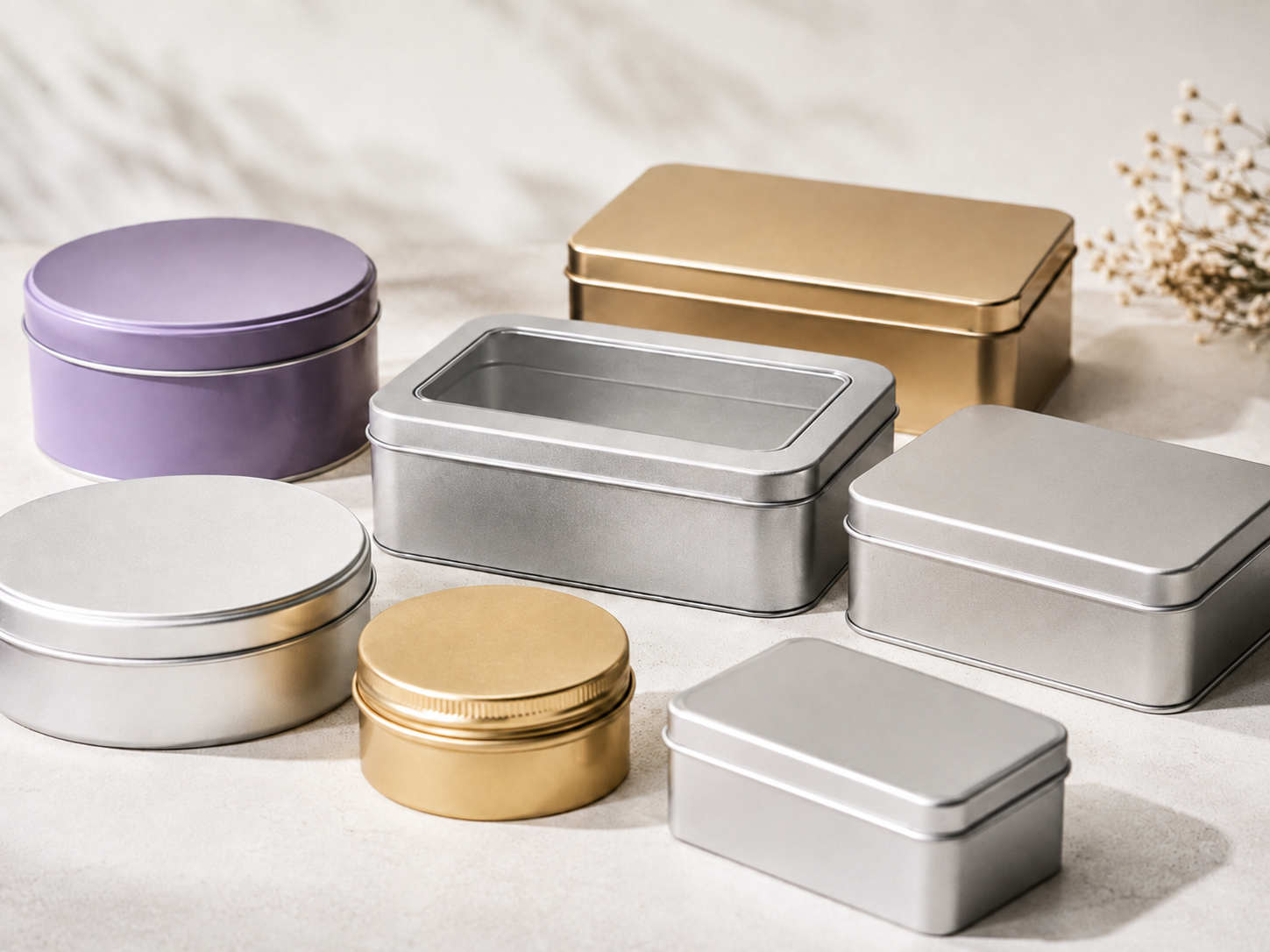
One lesson from sourcing custom tin packaging is that buyers often decide too quickly that they need a new mold.
For example, a product may ideally require a tin measuring:
150 × 80 × 25 mm
but an existing mold may already be available at:
148 × 78 × 25 mm
or:
152 × 82 × 26 mm
The important question is not whether those dimensions match the original drawing perfectly.
The important question is:
Will the existing tin still work for the actual product?
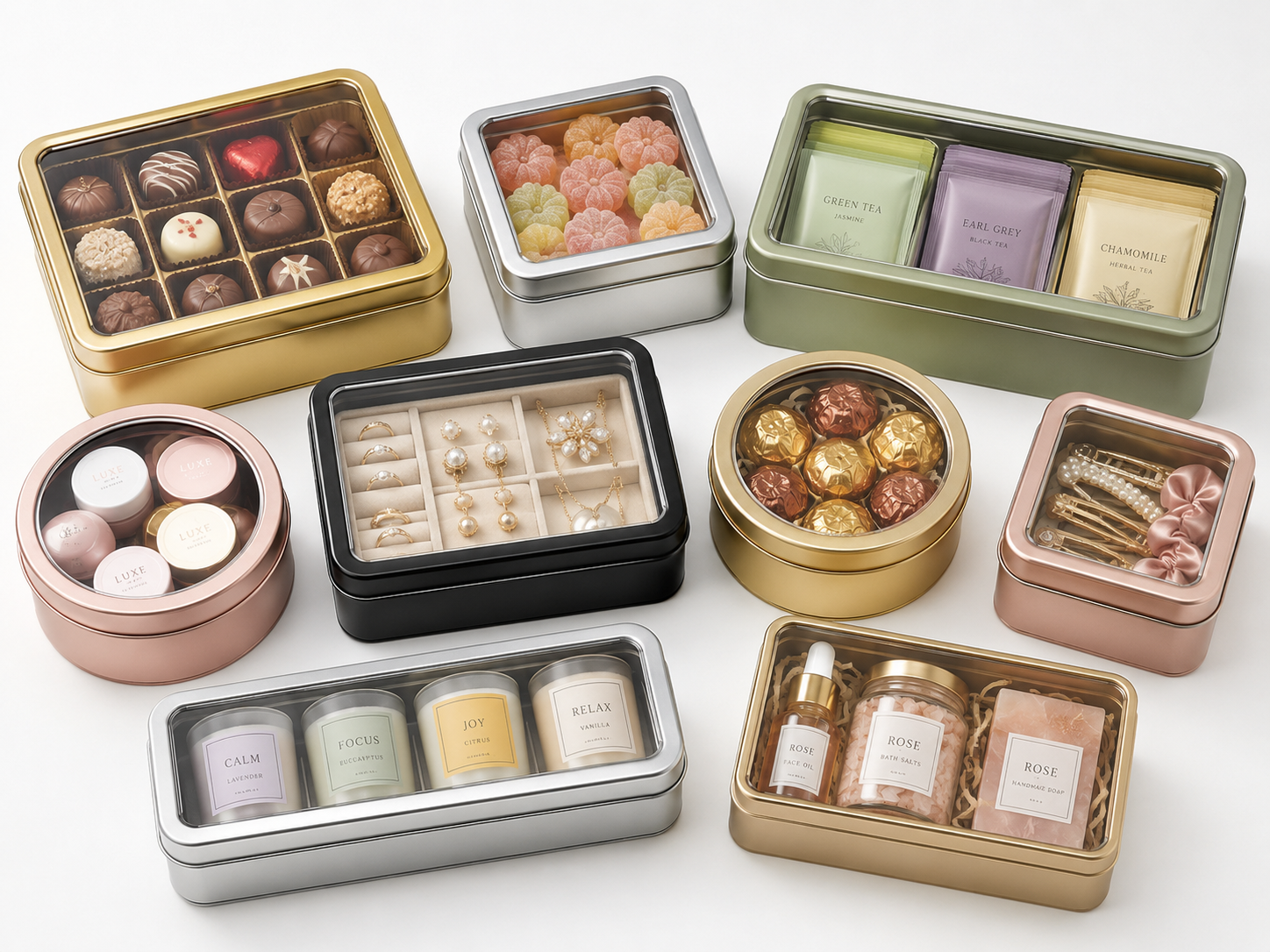
In many projects, a difference of several millimeters has little practical effect.
That is particularly true when:
- the product has flexible dimensions;
- an EVA or foam insert can be adjusted;
- additional padding can compensate for the difference;
- the packaging is mainly promotional rather than structural;
- the product does not require a tight mechanical fit.
This is why we normally recommend testing the product against a real tin sample whenever possible.
A drawing can tell you the dimensions.
A physical sample tells you whether the packaging actually works.
Product Size, Internal Size and External Size Are Not the Same
This is an important point when selecting a stock tin.
The dimensions shown in a tin specification are usually external dimensions.
The usable internal dimensions will be slightly smaller because of:
- tinplate thickness;
- rolled edges;
- lid construction;
- hinges;
- seams;
- internal ribs or structural features.
Therefore, a product measuring exactly the same size as the stated tin dimensions will usually not fit properly.
For example, if the product itself is:
140 × 70 × 20 mm
selecting a tin with exactly the same external dimensions would normally be too tight.
Some clearance should be allowed for loading, removal, and manufacturing tolerance.
If an insert will also be added, its thickness and construction need to be considered at the same time.
When a Few Millimeters Matter
Although small dimensional differences are acceptable for many projects, there are situations where they matter a great deal.
A custom mold may be more appropriate when the tin must fit:
A Fixed Product Assembly
If the tin is part of a larger product system, even a few millimeters may interfere with assembly.
A Precision Insert
Plastic trays, molded inserts, or precisely cut components may require much tighter dimensional control than a simple foam insert.
Retail Shelf Requirements
Some brands design packaging around an exact shelf footprint or display system.
Shipping Cartons
When thousands of units are packed into master cartons, even a small increase in tin dimensions can affect carton dimensions, CBM, and freight cost.
Brand-Specific Packaging Design
For certain premium products, the unusual size or shape of the tin is part of the brand identity rather than simply a container.
In these cases, compromising on dimensions purely to avoid tooling may not be commercially sensible.
When an Existing Mold Is Usually the Better Choice
Using an existing tin mold can be especially practical in the following situations.
1. The Product Is Still Being Tested
If the buyer is still validating the market, investing heavily in custom tooling may be premature.
An existing mold allows the packaging concept to be tested before committing to a long-term structure.
2. The Packaging Has Flexible Dimensions
Products such as promotional items, accessories, confectionery, small gifts, stationery, cosmetics accessories, and many dry products often allow some dimensional flexibility.
3. An Insert Can Adjust the Fit
EVA foam, felt, paper inserts, plastic trays, or other internal packaging can sometimes adapt an existing tin size to the product.
For example, a slightly oversized tin may work very well once a properly designed EVA insert is added.
4. Faster Development Is Important
Existing tooling can reduce development steps.
The buyer can focus on:
- printing;
- surface finishing;
- inserts;
- artwork;
- packing;
- quality control.
instead of waiting for a completely new tin structure to be developed.
When a Custom Mold Makes More Sense
A custom mold becomes increasingly reasonable when the packaging will be used repeatedly over a long period.
For example, a brand that expects regular repeat orders may place more value on:
- optimized dimensions;
- better product fit;
- lower packing volume;
- consistent brand identity;
- proprietary packaging structure.
In this situation, tooling should not be evaluated only against the first order.
It should be evaluated against the expected purchasing volume over the life of the project.
This is one of the biggest differences between short-term packaging sourcing and long-term packaging development.
Do Not Assume One Supplier Has All Available Tin Sizes
Another practical sourcing issue is that different tin factories often maintain different mold libraries.
Factory A may tell you:
“We do not have this size.”
That does not necessarily mean the size does not exist elsewhere.
Factory B or Factory C may already have a very similar mold.
This is one area where working with a packaging sourcing partner can be useful.
Instead of evaluating only one factory's mold list, a sourcing partner may be able to compare mold availability across multiple cooperating factories.
This can sometimes help a buyer find a suitable existing size without immediately paying for new tooling.
At Ebifine, our role is to coordinate packaging sourcing, OEM/ODM requirements, and quality control across suitable production partners rather than claiming that every packaging format is produced by one single factory.
That approach can be especially useful for custom tin packaging, where available tooling varies widely between suppliers.
Stock Mold Does Not Mean the Tin Cannot Be Customized
Choosing an existing mold does not mean accepting a completely standard product.
A stock tin structure can still usually be customized in many ways.
Depending on the project and order quantity, customization may include:
- logo printing;
- silk-screen printing;
- full-color printing;
- laser engraving;
- embossing or debossing;
- different surface finishes;
- internal inserts;
- sleeves;
- labels;
- custom packing.
In other words:
The structure can remain standard while the appearance becomes highly customized.
This is often a practical middle ground between an off-the-shelf tin and a completely new packaging structure.
For more complex printing or finishing requirements, buyers should confirm the appropriate MOQ and production method before finalizing the packaging design.
Stock Size vs Custom Mold: Key Buying Differences
Stock Tin Size
Advantages
- No completely new tooling development
- Faster project development
- Easier sampling
- Lower initial investment
- Suitable for testing new products
- Multiple existing structures may be available
Limitations
- Dimensions may not match the product perfectly
- Some compromise may be required
- Insert design may need adjustment
- Exact shapes and structures are limited by existing tooling
Custom Mold
Advantages
- Dimensions can be designed around the product
- Better control over packaging structure
- Suitable for proprietary packaging designs
- Can improve packing efficiency for long-term orders
Limitations
- Additional tooling investment
- Longer development process
- Tooling needs to be tested before mass production
- Less economical when future demand is uncertain
A Better Way to Request a Tin Box Quotation
Instead of sending only one required tin dimension, we recommend giving the supplier enough information to evaluate alternatives.
A useful RFQ should include:
- product dimensions;
- required quantity;
- preferred tin dimensions;
- acceptable size tolerance;
- product application;
- required structure;
- printing requirements;
- insert requirements;
- destination country;
- whether an existing mold is acceptable;
- expected repeat-order potential.
For example:
Product size: 138 × 15 mm
Preferred tin size: approximately 150 × 40 × 20 mm
Quantity: 2,000 pcs
Structure: hinged tin
Finish: natural silver
Logo: lid printing
Insert: dark grey felt
Existing mold preferred if suitable.
This gives the supplier much more flexibility to find a practical solution.
Simply stating:
“We need exactly 150 × 40 × 20 mm.”
may cause the supplier to quote custom tooling even when a nearby existing mold could work.
Questions to Ask Before Approving a Stock Tin Size
Before confirming an existing mold, ask:
- Are the quoted dimensions external or internal?
- Can you provide the actual internal dimensions?
- Is a physical sample available?
- What is the tinplate thickness?
- Will the lid, hinge, or rolled edge reduce usable space?
- Can the product be tested inside the tin?
- Will an insert be required?
- Does the selected size affect master carton dimensions?
- Is the mold currently active and suitable for repeat production?
- Can the same structure support the required printing and finishing?
A few minutes spent confirming these details can prevent much more expensive packaging problems later.
Food Packaging Requires Additional Checks
If the tin will be used for food, mold availability should not be the only consideration.
The intended food-contact application, coatings, inks, liners, and other components should also be evaluated according to the destination market.
The U.S. Food and Drug Administration provides guidance on food packaging and food-contact substances:
U.S. FDA – Food Packaging & Food Contact Substances
The International Tin Association also provides technical and industry information related to tin and tinplate applications:
Packaging optimization should consider the full packaging system rather than the container alone. ISO maintains standards and technical work related to packaging and environmental considerations:
Final Recommendation
For most custom tin packaging projects, we recommend checking existing molds before developing a new one.
The process should usually be:
- Measure the actual product.
- Define the ideal packaging size.
- Search available existing molds.
- Compare the closest options.
- Test the product in a real sample whenever possible.
- Consider inserts or minor packaging adjustments.
- Only move to custom tooling when the commercial benefit justifies it.
The goal is not to find a tin box that matches a drawing perfectly.
The goal is to create packaging that:
- fits the product;
- protects it properly;
- presents the brand well;
- works within the purchasing budget;
- supports efficient production and shipping;
- remains practical for future orders.
For many projects, an existing tin mold achieves that goal.
For others, custom tooling is the better long-term investment.
The right decision comes from evaluating the complete packaging program rather than focusing only on dimensions.
Frequently Asked Questions
Can I customize a tin box without creating a new mold?
Yes. Existing tin molds can often be customized through printing, surface finishing, logo decoration, inserts, labels, sleeves, and other packaging elements. A new mold is mainly required when the existing structure or dimensions cannot meet the product requirements.
How close should a stock tin size be to my ideal dimensions?
There is no universal tolerance. It depends on the product, insert, packaging function, and shipping requirements. A difference of several millimeters may be irrelevant for one product but unacceptable for another.
Should I choose the tin box based only on external dimensions?
No. Always confirm usable internal dimensions, especially when the product needs a close fit. Hinges, rolled edges, seams, and inserts can reduce the available internal space.
Is a custom mold always better for a premium product?
No. Premium appearance can often be achieved with an existing mold through high-quality printing, embossing, inserts, sleeves, and finishing. Custom tooling is most valuable when the dimensions or structure themselves are important to the product.
Can a sourcing partner help find an existing tin mold?
Yes. Because different factories may maintain different mold libraries, comparing multiple production partners can increase the chance of finding a suitable existing mold before investing in new tooling.
What information should I provide when requesting a custom tin box?
Provide the product size, desired tin size, quantity, application, preferred structure, artwork or logo requirements, insert requirements, destination market, and whether you are willing to consider nearby existing mold sizes.