For an e-commerce business, a plastic bag is not simply a low-cost way to cover a product. It can protect an order from moisture and dust, keep small items organized, reduce shipping volume, and present a consistent brand image when a customer receives a parcel. The right choice depends on what you sell, how it ships, and what customers expect when they open the package.
10 Plastic Bag Packaging Solutions for E-Commerce Businesses
The most effective plastic bag packaging solutions for e-commerce businesses are not necessarily the thickest, most colorful, or most heavily customized options. They are the formats that protect the product, fit the fulfillment process, and deliver the right balance of cost and customer experience. For most online retailers, we recommend choosing packaging by product category first, then adding branding and sustainability features that make commercial sense.
1. What Are Plastic Bag Packaging Solutions for E-Commerce Businesses?
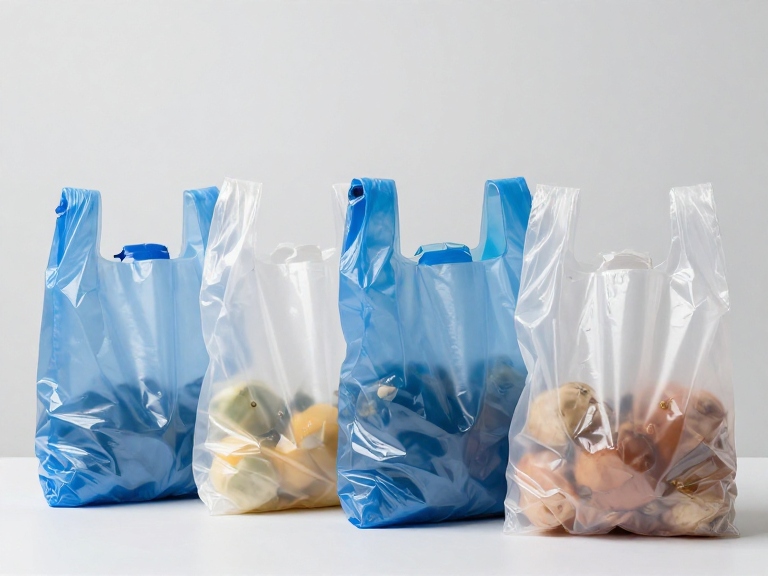
Plastic bag packaging solutions are flexible packaging formats made from polymer films and designed to contain, protect, organize, or ship products. In e-commerce, they range from simple transparent bags used inside a shipping carton to branded mailers that travel directly through parcel networks.
Common materials include polyethylene (PE), such as LDPE and HDPE, and polypropylene (PP). Different film structures offer different combinations of flexibility, clarity, strength, moisture resistance, printability, and sealing performance. Some applications use multilayer films to achieve barrier or durability requirements that a single material may not provide.
The important point is that a plastic bag is not automatically a shipping bag. A thin product bag may be ideal for keeping a T-shirt clean inside a carton, but it may not withstand parcel handling as an outer mailer. Likewise, a strong poly mailer may be suitable for apparel but offer inadequate impact protection for glass or electronic components.
What a well-chosen bag needs to do
- Contain: Keep the product and its components together during storage, picking, and delivery.
- Protect: Provide suitable resistance to dust, moisture, abrasion, puncture, or tampering according to the product’s risks.
- Fit: Match the product dimensions without excessive empty space or unnecessary material.
- Communicate: Display product information, handling instructions, branding, or required warnings where appropriate.
- Support fulfillment: Open, fill, seal, label, and store efficiently within the retailer’s operation.
For a business selling apparel, accessories, stationery, cosmetics, or lightweight household goods, the right flexible packaging can reduce the need for oversized rigid cartons. For fragile products, however, the bag may need to be combined with an inner protective structure or placed inside a corrugated shipping box.
2. How Plastic Bag Packaging Works in an E-Commerce Fulfillment Process
Plastic bag packaging performs differently depending on where it sits in the packaging system. Professionals distinguish between primary packaging, secondary packaging, and transit packaging. A product bag may protect an individual item, while an outer mailer protects the shipment during handling and delivery.
Step 1: Match the film to the product
Start with the product’s physical characteristics. A soft garment usually needs a flexible bag with enough tear resistance for packing and shipping. A small metal component may need a stronger film to reduce puncture risk. A product that must remain visible may benefit from clear film, while a premium accessory may be better presented in a frosted or printed bag.
Step 2: Choose the right bag construction
Flat bags, gusseted bags, zipper bags, and mailers are not interchangeable. A gusset adds capacity for bulky products. A zipper provides repeat access. A self-seal adhesive strip can speed up outbound fulfillment. A bubble-lined mailer adds cushioning, but it is not a substitute for engineered protection when the product is highly fragile.
Step 3: Set dimensions and thickness based on use
Bag dimensions should allow practical loading and sealing without leaving excessive unused space. Film thickness should be specified in a consistent unit, such as microns or mil, and assessed alongside the film type and construction. Thickness alone does not guarantee puncture resistance or seal strength.
Step 4: Validate the finished package
In most professional situations, we recommend testing a filled package rather than approving an empty bag based on appearance. Check the seams, closure, tear resistance, label adhesion, and performance during realistic handling. For outer mailers, test the actual packed product under the conditions it will face in distribution.
Finally, assess the complete fulfillment process. A bag that saves a few cents but takes longer to load or causes frequent packing errors may cost more in practice than a slightly more expensive format that works reliably.
3. 10 Plastic Bag Packaging Solutions for E-Commerce Businesses
1. Poly mailers for apparel and soft goods
Poly mailers are among the most practical shipping formats for clothing, fabric accessories, and other non-fragile products. They are lightweight, flexible, and generally require less storage space than rigid cartons. Self-seal adhesive closures can also simplify packing during busy fulfillment periods.
Choose a mailer with suitable film strength, a reliable adhesive strip, and dimensions that fit the folded product. For products that can be crushed, punctured, or damaged by bending, use a box or additional protective packaging instead.
Our recommendation: For a fashion store shipping T-shirts, leggings, or lightweight accessories, start by testing a well-sized poly mailer. Do not pay for bubble lining unless the product needs it.
2. Flat poly bags for individual product protection
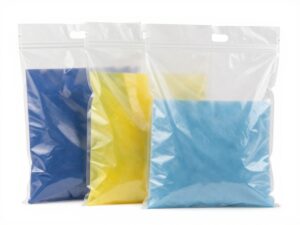
Flat poly bags are simple, versatile bags used to protect products from dust, handling marks, and incidental moisture. They work well as inner packaging for clothing, printed materials, small accessories, and components packed inside a shipping carton.
They are especially useful when a retailer needs a consistent way to separate items in multi-product orders. A transparent format makes product identification easier, while printed or labeled versions can support inventory and brand presentation.
Ebifine’s poly bags and carriers category is relevant for retailers comparing flexible bag formats for product packaging and handling.
3. Gusseted poly bags for bulky or irregular products
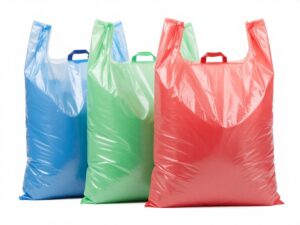
Gusseted bags have expandable sides or bottoms that provide additional capacity. They are useful for products that do not sit neatly inside a flat bag, including bulky textiles, packaged accessories, and some retail multipacks.
The added capacity can improve loading and presentation, but it is important to choose the correct gusset depth. An oversized bag may allow products to move excessively, while an undersized gusset can stress the seams.
Best use case: Retailers shipping folded blankets, multiple soft accessories, or irregularly shaped non-fragile products may benefit from gusseted construction.
4. Resealable zipper bags for products customers may reopen
Zipper bags provide a reusable closure that allows customers to open and close the package without destroying it. They are suitable for small accessories, craft supplies, hardware kits, beauty accessories, and products that need to remain organized after delivery.
For e-commerce sellers, the main advantage is convenience and product organization. Customers can store the product in the original bag, reducing the risk of losing small components. However, a zipper closure is not automatically airtight, child-resistant, or suitable for food contact. Those claims require the relevant construction and evidence.
Use a clear zipper bag when visibility matters, or a frosted version when a softer, more premium presentation is preferred. For a custom format, consider custom frosted drawstring bags where the closure style and product use make sense.
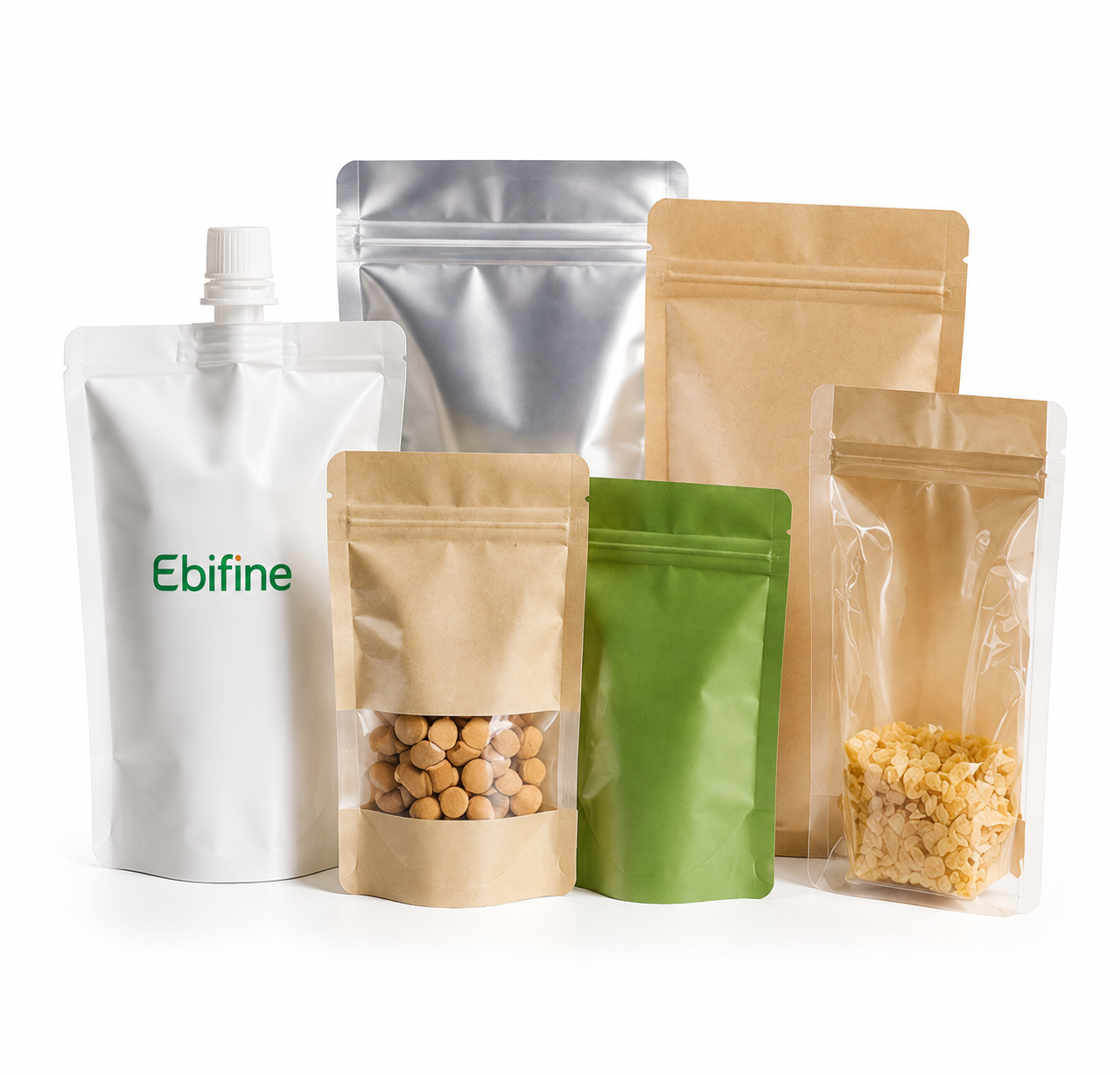
5. Stand-up pouches for compact retail products
Stand-up pouches are flexible bags with a bottom gusset that allows them to stand upright on a shelf or during display. They are common for snacks, powders, specialty ingredients, and selected personal-care products.
They can offer a useful combination of shelf presentation and material efficiency, but the film structure must match the product. Food products may need specific barrier properties, suitable seals, and packaging materials compliant with applicable food-contact requirements. Do not assume that a generic pouch is suitable for every food or cosmetic formulation.
For food-related applications, review the requirements described in Ebifine’s food-grade packaging information and confirm the actual material specification with the supplier.
6. Bubble mailers for small items needing cushioning
Bubble mailers combine an outer flexible envelope with a cushioning layer. They are useful for products such as small accessories, selected electronics accessories, and items that need more protection than a plain poly mailer can provide.
They are not suitable for every fragile product. A bubble mailer can reduce surface abrasion and absorb some handling impacts, but it may not protect a glass bottle, delicate component, or heavy item against severe drops or compression. Use a fitted box and tested cushioning for higher-risk shipments.
Commercial advice: Compare the total packed cost of a bubble mailer against a small carton with protective fill. The cheaper packaging material is not necessarily the lower-cost shipping solution if damage rates increase.
7. Frosted plastic bags for premium product presentation
Frosted bags soften the visibility of the contents and create a more refined appearance than basic transparent film. They can be useful for accessories, apparel, gift items, and beauty-related products where presentation is part of the perceived value.
Frosted film is a visual choice, not a protective upgrade by itself. It should be selected because it supports the brand’s design language, not because it is assumed to be stronger or more sustainable than clear film.
8. Drawstring bags for reusable packaging and gift presentation
Drawstring bags are useful when customers may keep the packaging after receiving the product. They work well for promotional merchandise, travel accessories, gift sets, and selected retail products. They can also create a more deliberate presentation than a disposable shipping bag.
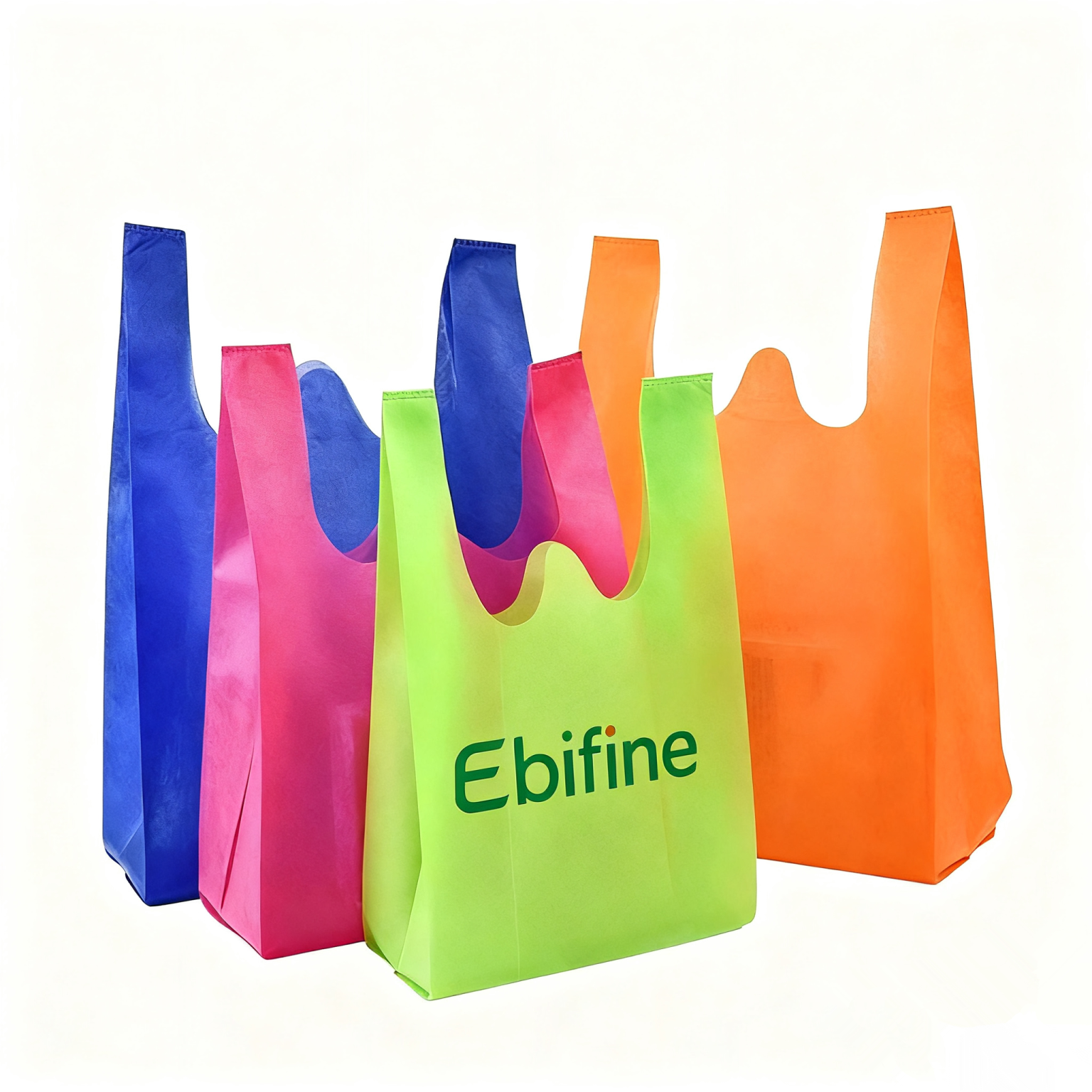
Fabric and non-woven options are often more appropriate than conventional single-use plastic when repeated reuse is the objective. Consider custom reusable shopping bags or PP non-woven shopping bags when the package is intended to have a second use.
9. Compostable or certified recyclable bags for specific sustainability goals
Some e-commerce businesses want to reduce reliance on conventional plastic or improve the end-of-life options for their packaging. Compostable and recyclable bags may be relevant, but they should never be selected on marketing language alone.
Compostable materials may require specific industrial composting conditions and may not be accepted in local waste systems. Recyclability depends on the material structure, local collection infrastructure, and sorting capability. Multilayer films can be difficult to recycle through ordinary collection systems.
We recommend asking for the exact material composition, applicable certification, disposal instructions, and evidence supporting any environmental claim. If the package is intended for food, verify both food-contact suitability and the relevant compostability or recycling claims separately.
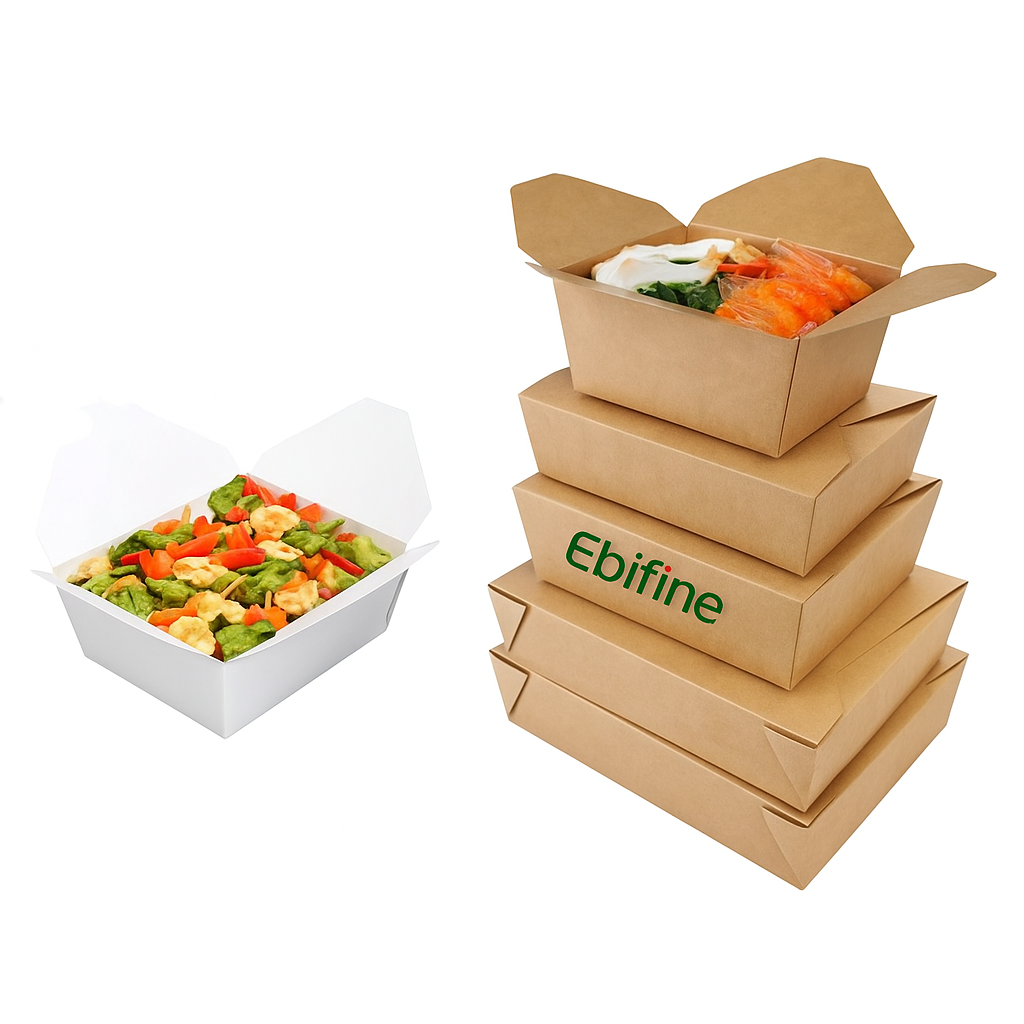
For food-service businesses comparing alternatives, Ebifine also offers information on compostable food containers and disposable food packaging.
10. Custom printed and branded plastic bags
Custom printed bags use logos, brand colors, product information, patterns, or campaign artwork to make packaging recognizable. They are particularly useful for businesses with repeat customers, gift orders, product launches, and promotional campaigns.
Printing can be applied to suitable mailers, flat bags, pouches, and other flexible formats. Before ordering, confirm the print method, artwork requirements, color matching process, minimum order quantity, and whether the supplier can maintain consistency across repeat production runs.
For campaigns with a fixed launch date, ask the supplier to confirm sample and production milestones in writing. A custom bag that arrives after the campaign is over has little commercial value.
4. Comparison Table: Which Plastic Bag Packaging Solution Should You Choose?
The table below is a practical starting point. Actual performance depends on material grade, dimensions, film structure, closure quality, and how the package is used.
| Packaging Type | Best Application | Protection | Branding Potential | Relative Cost | Our Recommendation |
|---|---|---|---|---|---|
| Poly mailer | Apparel and soft goods | Basic moisture and handling protection | High | Low | Best starting point for many non-fragile shipments |
| Flat poly bag | Inner product packaging | Dust and surface protection | Medium to high | Low | Use inside cartons or mailers |
| Gusseted bag | Bulky and irregular products | Depends on film and seams | Medium | Low to medium | Choose when flat bags are difficult to load |
| Zipper bag | Small goods and reusable storage | Basic containment and organization | Medium | Low to medium | Useful when customers need repeat access |
| Stand-up pouch | Food and retail products | Depends on barrier structure | High | Medium | Specify barrier and sealing needs before buying |
| Bubble mailer | Small items needing cushioning | Moderate for suitable products | Medium | Medium | Use for compact items, not high-risk fragile goods |
| Frosted bag | Accessories and premium presentation | Depends on film specification | High | Low to medium | Choose for appearance, not assumed strength |
| Drawstring bag | Gifts and reusable product packaging | Product-dependent | High | Medium | Best when continued use is realistic |
| Compostable or recyclable bag | Brands with defined material goals | Depends on construction | Medium to high | Medium to high | Verify certification and local disposal routes |
| Custom printed plastic bag | Brand-led e-commerce packaging | Depends on base bag | Very high | Medium to high | Worthwhile when volume and brand identity are stable |
Quick summary: match the bag to the order
| If You Sell… | Recommended Packaging | What to Prioritize |
|---|---|---|
| Clothing and fabric accessories | Poly mailer plus inner flat bag | Fit, tear resistance, moisture protection |
| Small hardware and craft supplies | Resealable zipper bags | Organization, closure quality, clear labeling |
| Snacks and specialty food | Suitable food-grade pouch | Food-contact compliance, seals, barrier properties |
| Small non-fragile accessories | Bubble mailer | Cushioning, mailer dimensions, seal strength |
| Premium gifts and promotional items | Frosted or custom printed bag | Brand presentation, print quality, lead time |
| Reusable retail products | Drawstring or reusable shopping bag | Durability, useful second life, branding |
| Fragile products | Protective inner packaging plus carton | Impact protection and transit testing |
Pros and cons of plastic bag packaging for e-commerce
| Pros | Cons |
|---|---|
| Lightweight formats can reduce package weight and shipping volume | Plain bags offer limited impact protection |
| Flexible formats are often easy to store and handle | Thin films can puncture or tear if poorly specified |
| Many options support printing and custom branding | Custom printing can require setup costs and minimum quantities |
| Moisture and dust protection can help preserve product condition | Not every plastic film is accepted in local recycling programs |
| Resealable and reusable formats can improve customer convenience | Reuse depends on product type and actual customer behavior |
| Different constructions suit a wide range of product categories | Choosing the wrong format can increase damage and returns |
5. Benefits of Plastic Bag Packaging Solutions for Online Retailers
Lower shipping weight for suitable products
Flexible bags can weigh less than rigid cartons, which may help reduce shipping costs for lightweight, non-fragile products. The benefit is strongest when the bag also reduces package dimensions. However, the actual savings depend on the carrier’s pricing model, dimensional weight rules, and the final packed parcel.
More efficient storage and fulfillment
Flat bags and mailers usually occupy less warehouse space before use than assembled cartons. They can also be quicker to prepare for simple products. For businesses processing a high volume of apparel or accessories, the right mailer can make packing more consistent.
Product separation and cleaner presentation
Inner bags keep products separated, reduce surface contamination, and make multi-item orders easier to organize. A retailer shipping several accessories in one carton can use separate bags to prevent scratches and tangling.
Flexible branding options
Custom printed bags create a brand touchpoint without requiring a fully custom rigid box. Retailers can use logo placement, colors, product messaging, and campaign graphics to make packaging more distinctive.
Different formats for different product needs
The biggest commercial advantage is choice. A retailer does not have to use one format for every order. A poly mailer can serve apparel, zipper bags can organize small items, and a bubble mailer can handle selected products needing light cushioning.
6. Limitations and Trade-Offs: When Plastic Bags Are Not the Right Choice
Plastic bags are useful, but they are not a universal replacement for cartons, paper packaging, or engineered protective inserts. The right decision depends on the product and the full distribution process.
Limited structural and impact protection
A standard poly bag cannot provide the same structural support as a corrugated carton. Products that can crack, bend, or deform may need a rigid outer package. Even bubble mailers have limits when products are heavy, sharp, or highly fragile.
Environmental performance depends on material and infrastructure
Plastic packaging can create disposal challenges, particularly when it is made from mixed materials or when local recycling systems do not collect flexible films. A recyclable label does not guarantee that a bag will be accepted in every curbside program.
Likewise, compostable bags should not be described as universally compostable unless the relevant certification and disposal conditions support that statement. The Federal Trade Commission’s Green Guides provide a useful framework for making environmental marketing claims accurately.
Printing and customization increase planning requirements
Custom printed bags can require artwork approval, printing setup, color matching, and production lead time. Businesses with frequently changing logos, seasonal campaigns, or uncertain order volumes should avoid ordering more printed stock than they can reasonably use.
Some products require specialist packaging
Food, chemicals, cosmetics, and products with specific safety or barrier requirements may need packaging that meets particular regulatory or technical requirements. A generic plastic bag should not be assumed suitable simply because it physically holds the product.
7. Who Should Use These Plastic Bag Packaging Solutions?
Fashion and apparel e-commerce stores
Poly mailers and inner flat bags are practical for clothing, socks, scarves, and other soft goods. They help keep products clean and simplify shipping. Use a rigid carton when the product needs to retain a particular shape or has delicate accessories.
Beauty and personal-care retailers
Small bags can organize accessories and protect secondary packaging from surface abrasion. For bottles and jars, however, use leak prevention and suitable cushioning. Product labels must remain legible, and any claims about food, cosmetic, or chemical contact should be verified against the actual packaging specification.
Food and specialty product sellers
Stand-up pouches and other flexible formats can be useful for dry foods and packaged products when the material structure and sealing system are appropriate. Verify food-contact suitability and barrier requirements with the manufacturer before purchasing.
Promotional merchandise and event suppliers
Custom printed bags, drawstring bags, and reusable shopping bags can carry a campaign identity beyond the point of sale. For event deadlines, the supplier’s sample schedule and production capacity matter as much as the design itself.
Small parts, craft, and hobby stores
Resealable zipper bags and flat poly bags are useful for grouping small components, kits, and accessories. Clear labeling and consistent dimensions can also make warehouse picking easier.
8. Who Does Not Need Plastic Bag Packaging?
Some businesses should use another packaging format as their primary shipping solution.
- Retailers shipping fragile glass or ceramics: A bag alone is not sufficient. Use a rigid outer carton and tested cushioning.
- Businesses shipping heavy or sharp products: Thin flexible film can puncture or fail under concentrated loads.
- Brands selling products requiring rigid presentation: A carton, molded insert, or protective case may be more suitable.
- Businesses with verified plastic-reduction targets: Consider whether paper-based, reusable, or other material systems better meet the actual goal and local infrastructure.
- Products requiring specialist barrier or regulatory performance: Choose packaging based on documented material suitability, not a generic bag description.
For a retailer shipping a glass candle, for example, a plastic bag may be useful as an inner dust cover, but it should not be the primary protective package. A carton with a fitted insert is a more appropriate starting point.
9. Common Mistakes When Choosing Plastic Bag Packaging
Mistake 1: Choosing by thickness alone
Film thickness matters, but it does not tell the whole story. Material type, film structure, seam design, and bag dimensions also influence performance. Ask for a specification rather than relying on a vague description such as “heavy duty.”
Mistake 2: Using one bag size for every product
A bag that is too large can allow products to move around, while a bag that is too small can stress the seams or make packing difficult. Standardize a small range of practical sizes based on your best-selling product dimensions.
Mistake 3: Treating a product bag as a shipping mailer
Many flat bags are intended for inner packaging, not parcel transit. If the package will travel directly to the customer, select a mailer designed for that job and test it under realistic conditions.
Mistake 4: Ignoring the closure
A weak adhesive strip or poorly designed zipper can undermine the entire package. Test the closure after filling the bag, not just when it is empty. Consider whether customers need to reopen it or whether a permanent seal is more appropriate.
Mistake 5: Over-customizing too early
Large custom print runs may reduce unit costs but create cash-flow and storage problems. If your sales volume is still changing, use labels or simpler print options until demand is more stable.
Mistake 6: Making unsupported sustainability claims
Do not assume that all PE bags are recyclable everywhere or that a compostable claim means home compostability. Ask for supporting documentation and make the claim specific to the actual material and disposal conditions.
Mistake 7: Skipping transit tests
Sample approval should include a filled package. Check for punctures, seam failure, abrasion, label peeling, and product damage. A bag that looks fine on a supplier’s sample table may behave differently in a real parcel network.
10. Buying Considerations: How to Choose a Plastic Bag Packaging Manufacturer
For commercial users, supplier selection is not just a price comparison. The manufacturer must deliver consistent dimensions, material quality, print results, and lead times. We recommend evaluating the following factors before committing to a bulk order.
10.1 Confirm the material and construction
Ask whether the bag is made from LDPE, HDPE, PP, a multilayer structure, or another specified material. Confirm thickness, dimensions, sealing method, closure type, and any barrier properties required for the product. If the supplier uses a general term such as “eco material,” request the exact composition and supporting documentation.
10.2 Request a sample in the actual size
A sample should match the proposed dimensions, thickness, closure, and print specification. Test it with the product you intend to ship. Check loading speed, fit, seal quality, and whether the package remains presentable after normal handling.
10.3 Compare MOQ and volume pricing
Request pricing at several order quantities. A lower unit price at a very high MOQ may not be a good deal if you need months to use the inventory. Include storage costs and the risk of obsolete printed packaging in your calculation.
10.4 Evaluate printing and customization capability
For branded bags, ask about available print colors, print area, artwork format, color matching, and proof approval. Confirm whether the manufacturer can reproduce the same design consistently on repeat orders. A custom bag should support your brand guidelines rather than introduce avoidable color variation.
10.5 Check production lead times and communication
Ask for a realistic timeline covering artwork confirmation, sampling, production, inspection, and shipping. If the bags are for a campaign or product launch, build in time for sample revisions. A supplier who provides clear milestones is more useful than one who simply promises fast delivery.
10.6 Calculate the total cost per shipped order
The quoted bag price is only one part of the economics. Compare the total cost of packaging, including freight, storage, assembly time, shipping weight, damage rates, and the cost of returns or replacements.
| Cost Factor | What to Check | Why It Matters |
|---|---|---|
| Unit price | Price at different order quantities | Shows whether volume discounts justify larger inventory |
| Material specification | Polymer type, thickness, film structure | Determines whether the bag suits the product |
| MOQ | Minimum per size, color, and print design | Affects cash flow and stock flexibility |
| Printing setup | Artwork, plates, cylinders, or setup fees | Reveals costs beyond the bag price |
| Freight and storage | Carton dimensions, shipping terms, storage volume | Influences landed cost and warehouse capacity |
| Lead time | Sampling, production, and delivery schedule | Reduces the risk of stockouts and missed campaigns |
| Quality control | Inspection standards and defect handling | Supports consistent repeat orders |
10.7 Choose a supplier that can support more than one packaging need
As an e-commerce business grows, packaging requirements often expand. You may need poly bags for products, reusable bags for promotions, labels for product identification, or alternative packaging for a new product category. A supplier with a broader packaging range can simplify sourcing, provided each product meets the required specification.
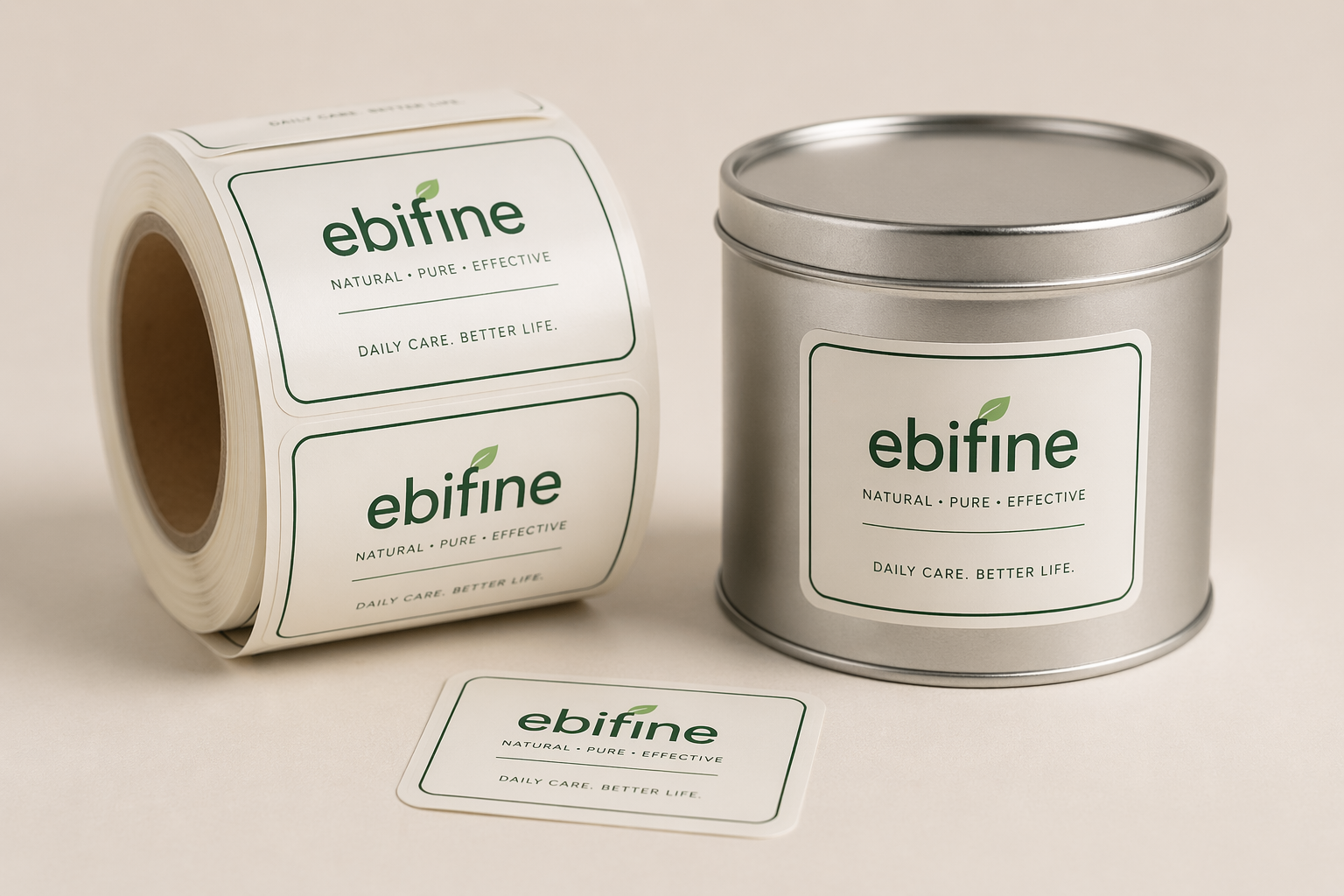
Ebifine supplies packaging products and solutions for retail, e-commerce, food, and promotional applications. Its range includes bags and carriers, reusable shopping bags, packaging labels, and other retail packaging formats. For retailers planning seasonal promotions, the promotional packaging service is relevant when branded packaging needs to be coordinated with a campaign or event.

Questions to ask before placing a purchase order
- What exact polymer and film structure will be used?
- What are the finished bag dimensions and thickness tolerances?
- What is the MOQ for each size, color, and printed design?
- Can you provide a physical sample or pre-production proof?
- How do you check seal strength, print quality, and dimensional consistency?
- What is the confirmed production lead time after sample approval?
- Can you provide documentation for food-contact or environmental claims where relevant?
- How are defects, shortages, and repeat-order variations handled?
11. Expert Recommendation: Build a Small, Purposeful Packaging Range
From our experience, e-commerce businesses rarely need ten different bag types in their warehouse. They need a small number of well-chosen formats that cover their main product categories and fulfillment risks.
We recommend starting with three questions:
- What needs protection? Identify whether the product needs dust protection, moisture resistance, cushioning, puncture resistance, or rigid support.
- How will it be shipped? Decide whether the bag is inner packaging or the actual outer mailer. This is one of the most important distinctions in the buying process.
- What does the customer need from the package? Consider easy opening, resealing, product visibility, storage, and brand presentation.
For beginners
Start with a standard poly mailer for suitable soft goods and a flat inner bag for products that need additional cleanliness or organization. Add branding through a simple printed logo or label before investing in a large custom run.
For growing e-commerce businesses
Standardize a few bag sizes and constructions. Use a zipper bag for small components, a bubble mailer for suitable compact products, and a separate protective carton for fragile orders. This approach improves purchasing control without creating unnecessary packaging complexity.
For established brands and promotional campaigns
Custom printed bags become more worthwhile when your brand identity is stable and order volume can support repeat production. Confirm color matching, sample timing, and reorder consistency. For campaign-specific packaging, plan production around the event date rather than assuming a supplier can accommodate a last-minute change.
For heavy-duty applications
Do not try to solve a structural protection problem by simply increasing bag thickness. Choose a stronger construction, add suitable cushioning, or move to a carton when the product’s weight and fragility require it. Test the complete packed shipment.
Measure the result after upgrading
Track packaging cost per order, packing time, damage rates, returns, and customer feedback. A packaging upgrade is commercially successful when it improves the customer experience or operating performance enough to justify its full cost.
12. Frequently Asked Questions About Plastic Bag Packaging for E-Commerce
1. What is the best plastic bag packaging for e-commerce businesses?
Poly mailers are a practical choice for many lightweight, non-fragile products such as apparel. Flat poly bags work well as inner packaging, zipper bags organize small items, and bubble mailers provide cushioning for selected compact products. The best option depends on product dimensions, weight, fragility, and shipping conditions.
2. Are poly mailers better than cardboard boxes?
Poly mailers are often lighter and more space-efficient for soft, non-fragile products. Cardboard boxes provide better structural support and are generally more suitable for fragile, rigid, or easily crushed items. Many retailers use both formats for different product categories.
3. What thickness should an e-commerce plastic bag be?
There is no universal thickness. The right specification depends on film material, bag dimensions, product weight, sharp edges, closure design, and expected handling. Ask for a technical specification and test the filled bag rather than choosing by thickness alone.
4. Can plastic bags be customized with a company logo?
Yes. Many poly mailers, flat bags, pouches, and reusable bag formats can be printed with logos, brand colors, patterns, and product information. Confirm print area, available colors, artwork requirements, MOQ, and production lead time before ordering.
5. Are plastic packaging bags recyclable?
Some plastic bags are recyclable through specific collection programs, but acceptance varies by material and location. Flexible films are not accepted in every curbside recycling system. Check local guidance and confirm the bag’s material composition before making recycling claims.
6. Are compostable plastic bags suitable for all e-commerce products?
No. Compostable bags must match the product’s performance needs and the disposal conditions available to customers. Verify the relevant certification, material specification, and whether industrial or home composting is required. Do not assume that compostable packaging can be processed in ordinary recycling systems.
7. What is the difference between a poly bag and a poly mailer?
A poly bag is a broad term for a flexible plastic bag, often used for product containment or inner packaging. A poly mailer is designed as an outer shipping envelope and commonly includes a self-seal closure. A basic product bag should not be assumed suitable for direct parcel shipping.
8. How can I reduce plastic bag packaging costs?
Standardize bag sizes, reduce unnecessary dimensions, compare volume pricing, and select the correct film specification for each product. Also consider storage, freight, packing labor, and damage rates. Buying the cheapest bag can increase total costs if it causes failures or slow fulfillment.
9. Should small e-commerce businesses order custom printed bags?
Custom printing can be worthwhile when the brand identity and order volume are stable. Smaller businesses can begin with standard bags and branded labels or inserts, then move to custom printing once they can use the minimum order quantity without tying up excessive cash or storage space.
10. What should I check when choosing a plastic bag packaging supplier?
Review material specifications, thickness and dimensional tolerances, MOQ, sample quality, print consistency, production lead time, quality control, and documentation for any regulatory or environmental claims. Always test a sample with the actual product before approving bulk production.
13. References and Packaging Guidance
- U.S. Federal Trade Commission — Environmental Claims: Summary of the Green Guides. Guidance for accurate environmental marketing claims, including recyclable and compostable representations.
- U.S. Food and Drug Administration — Packaging & Food Contact Substances. Information about substances used in materials that contact food and the relevant regulatory framework.
- ASTM International — ASTM D6400, Standard Specification for Labeling of Plastics Designed to be Aerobically Composted in Municipal or Industrial Facilities. A relevant standard for evaluating claims concerning plastics designed for aerobic composting in municipal or industrial facilities.
Always confirm the current version of applicable regulations and standards, and obtain product-specific documentation from the packaging manufacturer before making compliance or environmental claims.