Biodegradable plastic bags wholesale have become one of the most in-demand packaging options in recent years. As consumers and businesses shift towards sustainability, eco-friendly packaging has moved from being a trend to a necessity.
In this article, we explore what biodegradable plastic bags are, how they work, their benefits, and how Ebifine Import and Export Company Limited provides customizable biodegradable bag solutions for wholesale buyers worldwide.
About Ebifine Import and Export Company Limited
Ebifine Import and Export Company Limited, established in 2016, is based in Guangzhou, China and provides customized packaging solutions for international buyers.
For biodegradable plastic bag projects, buyers can discuss different materials, sizes, thicknesses, bag structures, printing requirements, and order quantities according to the intended application.
Ebifine focuses on customization, quality control, and global sourcing support for retail, food, promotional, and general packaging projects.
What Are Biodegradable Plastic Bags?
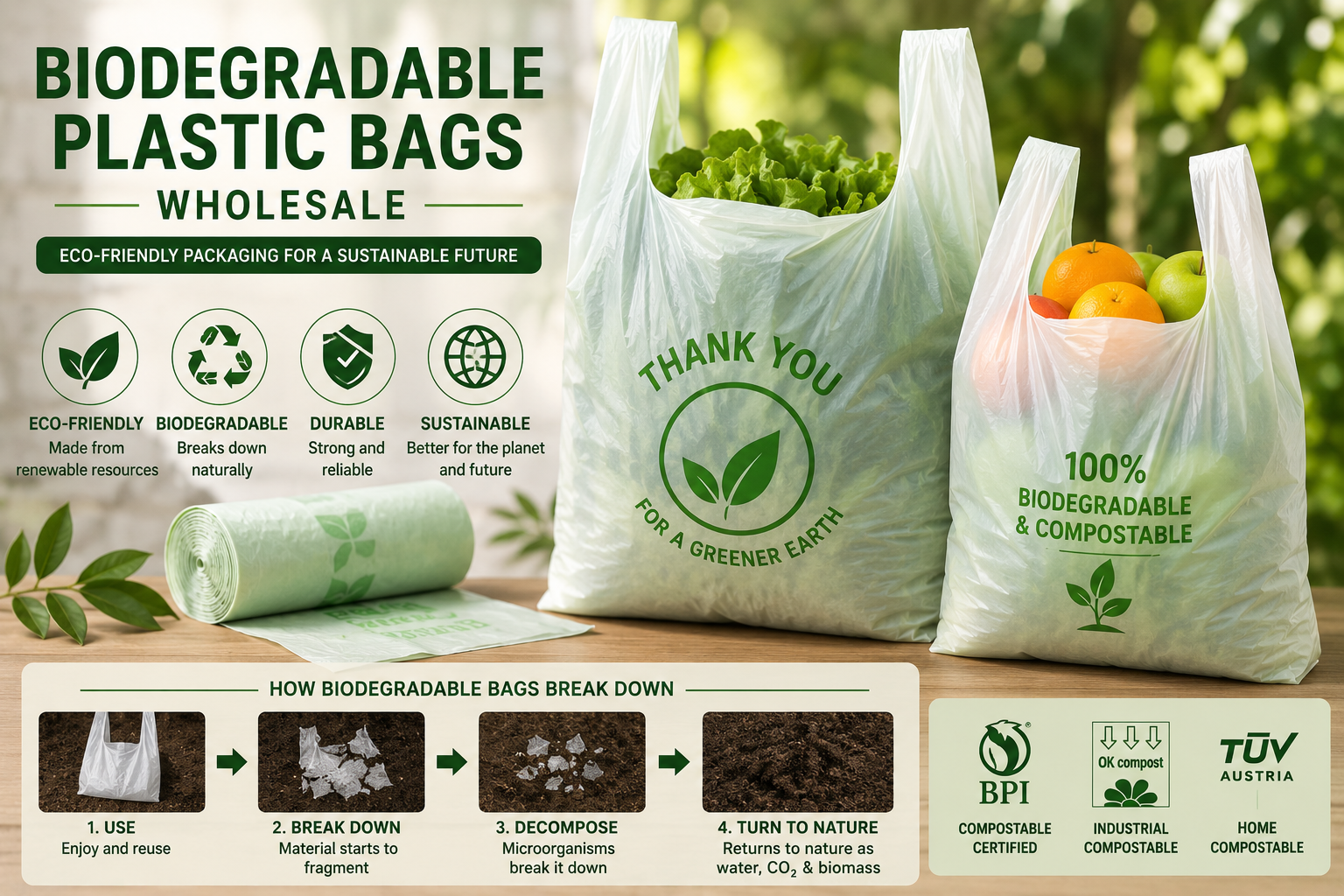
Biodegradable plastic bags are alternatives to conventional petrochemical-based plastic bags. These bags are designed to break down under specific environmental or composting conditions, depending on their material composition.
How They Differ from Traditional Plastic
- Traditional plastic bags can remain in the environment for long periods if they are not properly collected or recycled.
- Biodegradable bags are designed to break down more readily under suitable conditions, although decomposition time depends heavily on material type and disposal environment.
Key Characteristics
- Available in biodegradable or compostable material formulations
- Flexible and suitable for many common packaging applications
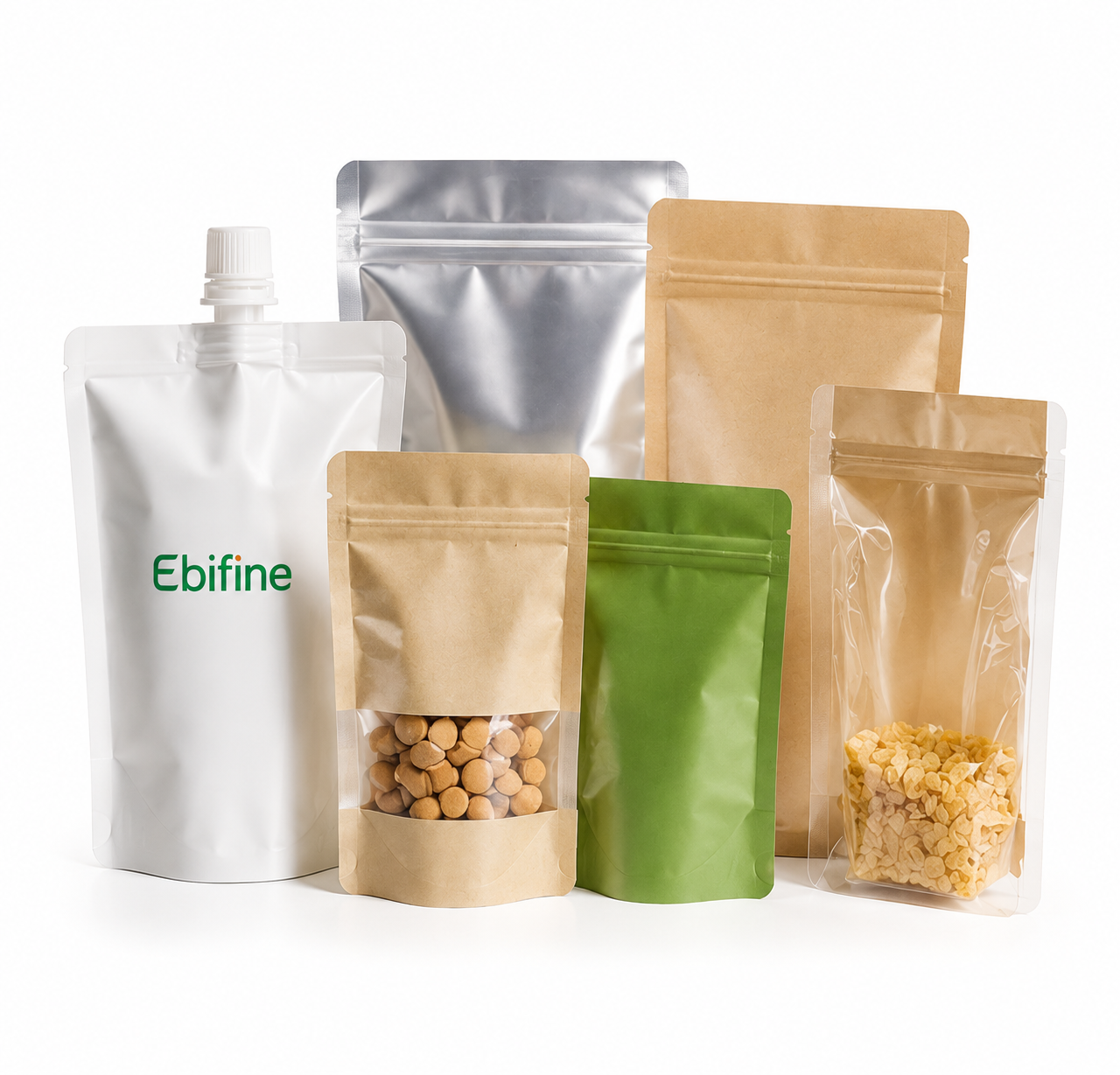
- Can be customized in size, color, thickness, and printing
- Suitable for retail, food service, promotional, and general packaging uses
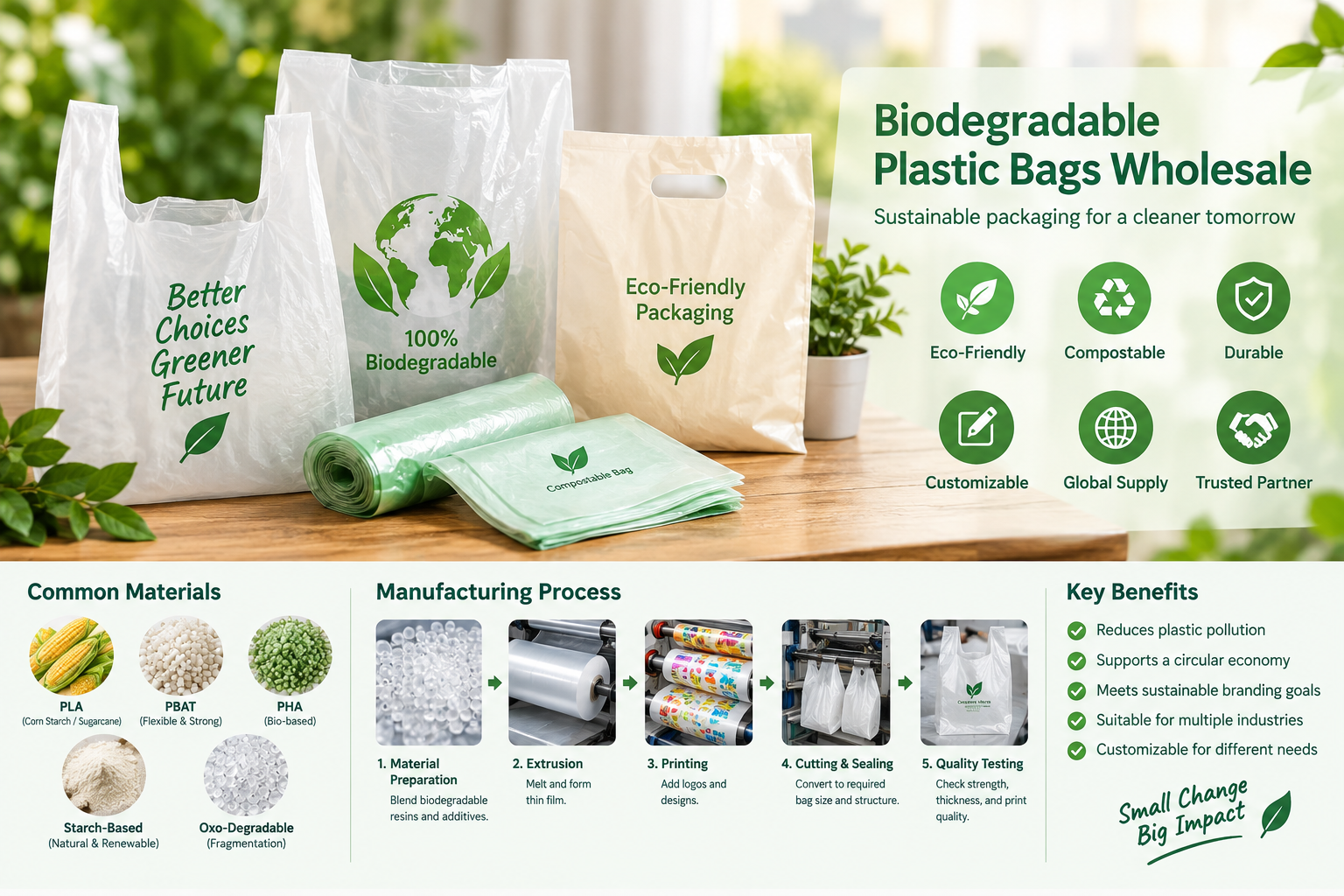
Common Materials Used in Biodegradable Bags
There are several materials used in biodegradable and compostable bag production. Each has different properties and end-of-life requirements.
1. PLA (Polylactic Acid)
PLA is derived from renewable sources such as corn starch or sugarcane. It is commonly used in compostable packaging applications and is often blended with other materials to improve flexibility.
2. PBAT (Polybutylene Adipate Terephthalate)
PBAT is a flexible biodegradable polymer commonly blended with PLA or starch-based materials to improve toughness and elasticity.
3. PHA (Polyhydroxyalkanoates)
PHA refers to a family of bio-based polymers produced through microbial fermentation. It is used in certain biodegradable packaging applications.
4. Starch-Based Polymers
Starch-based formulations combine natural starch with biodegradable polymers to create flexible films suitable for bags and packaging.
5. Oxo-Degradable Plastics
Some conventional plastics contain additives designed to accelerate fragmentation through oxidation.
However, oxo-degradable plastics should not automatically be treated as equivalent to certified biodegradable or compostable plastics, because fragmentation does not necessarily mean complete biodegradation.
Manufacturing Process of Biodegradable Bags
The production of biodegradable plastic bags generally includes several stages:
- Step 1: Material Preparation — Biodegradable resins and additives are blended according to the required performance.
- Step 2: Extrusion — The material is melted and converted into thin film.
- Step 3: Printing — Logos, branding, and product information can be printed onto the film.
- Step 4: Cutting and Sealing — Film is converted into the required bag size and structure.
- Step 5: Quality Testing — Finished bags can be checked for thickness, sealing strength, tensile performance, printing, and other specifications.
Key Advantages of Biodegradable Plastic Bags
Switching to biodegradable or compostable bag materials can provide several potential benefits:
- Sustainability Positioning: Supports brands seeking alternatives to conventional plastic packaging.
- Customer Appeal: Can strengthen environmentally focused brand messaging.
- Regulatory Adaptability: Certain certified materials may help brands meet specific local packaging requirements.
- Versatility: Suitable for retail, food service, cosmetics, e-commerce, and promotional applications.
- Customization: Available with different structures, printing, sizes, and thicknesses.
Business Benefits
- Helps brands respond to increasing demand for sustainable packaging.
- Provides additional material choices for retailers and distributors.
- Supports custom branding and packaging differentiation.
Applications and Use Cases
1. Retail and Shopping
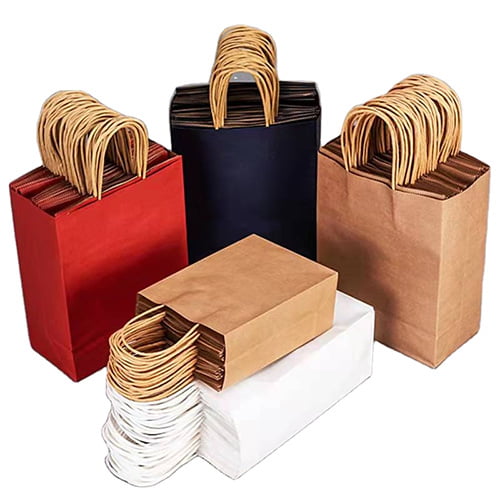
Biodegradable bags can be used by supermarkets, fashion retailers, boutiques, and other businesses seeking alternatives to conventional shopping bags.
2. Food and Beverage Packaging
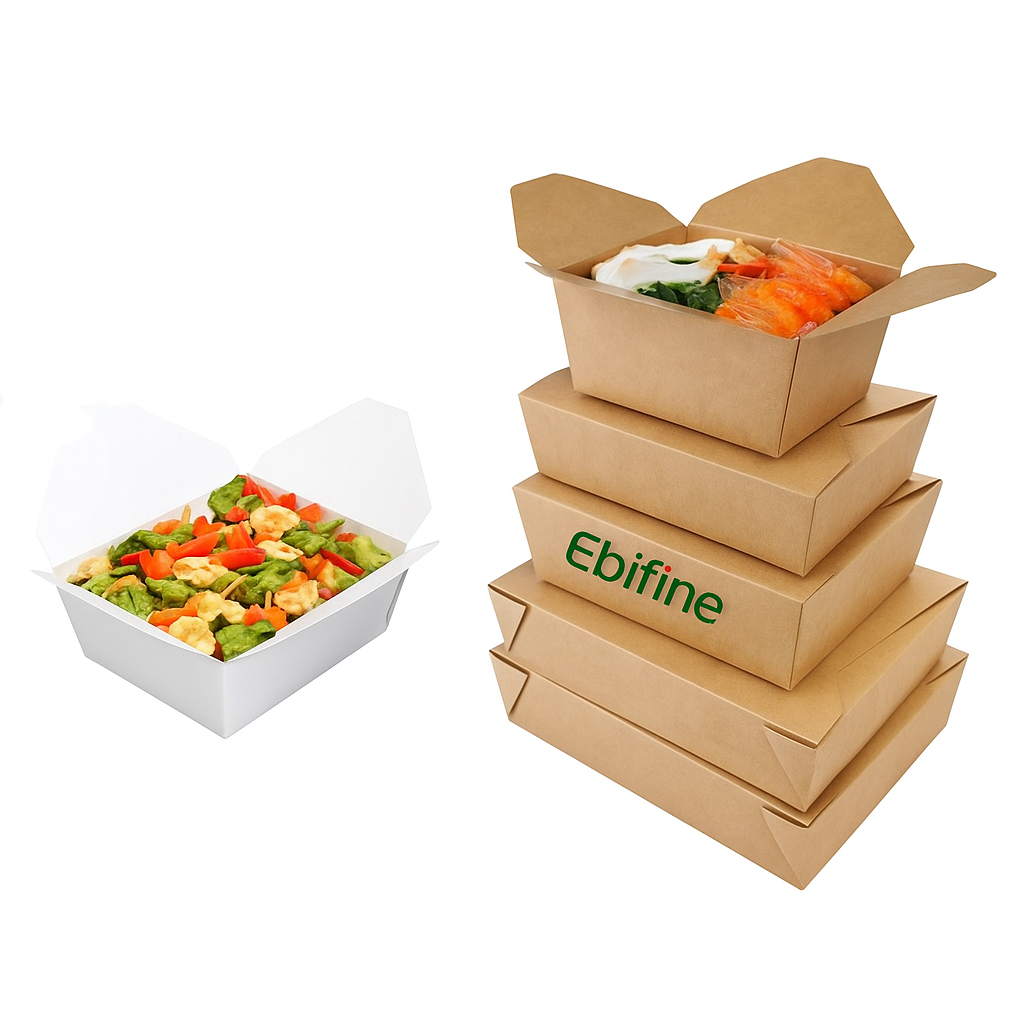
Depending on material specification and compliance requirements, biodegradable packaging can be used for bakery goods, fresh produce, takeaway packaging, and other food-related applications.
3. Cosmetics and Personal Care
Biodegradable and compostable flexible packaging can also be considered for selected cosmetic, personal care, and sample packaging applications.
4. Promotional Events
Custom biodegradable bags can be printed for trade shows, promotional campaigns, exhibitions, and branded events.
Choosing the Right Biodegradable Bag for Wholesale Orders
Rather than selecting a material based only on the word “biodegradable,” buyers should first define the actual application.
Important specifications include:
- Required bag size
- Thickness
- Load capacity
- Handle or closure style
- Transparency or opacity
- Printing requirements
- Intended product
- Target market regulations
- Expected disposal environment
- Order quantity
For example, a lightweight retail bag may require a different material formulation from a food-contact bag or heavy-duty shopping bag.
Customization Options
Wholesale biodegradable plastic bags can usually be customized according to project requirements.
Common options include:
- Custom size and thickness
- Different bag structures
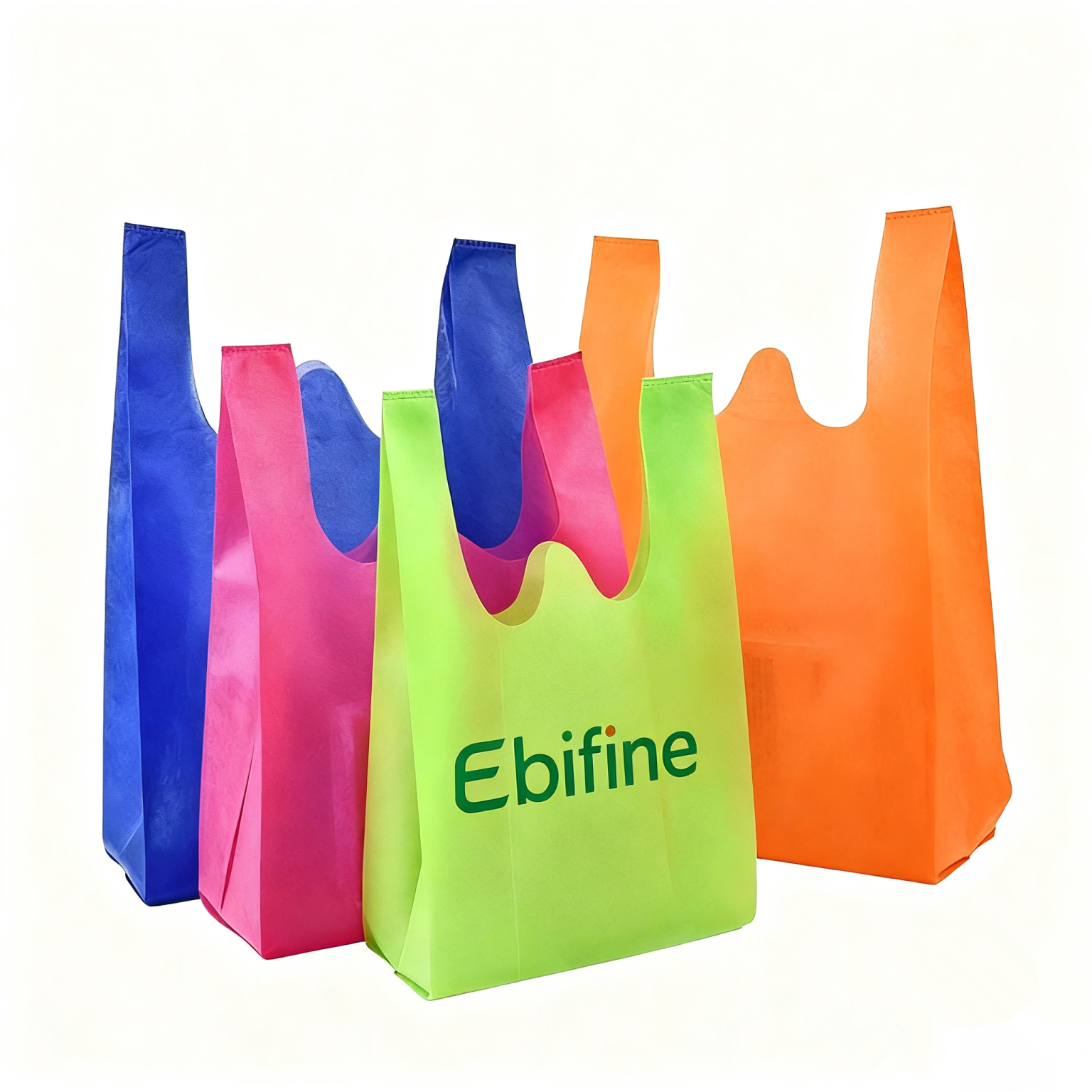
- Die-cut or T-shirt handles
- Gussets
- Custom colors
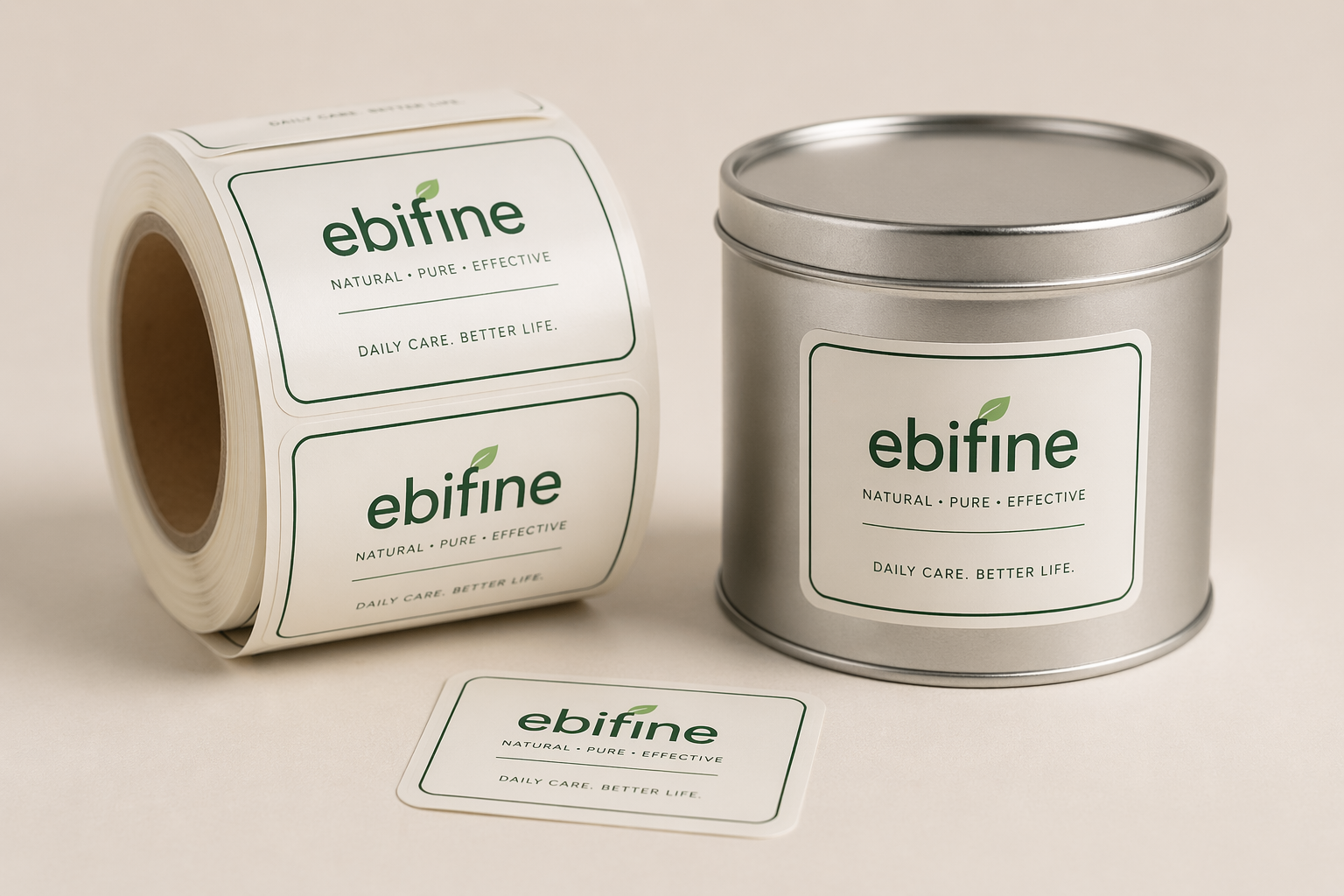
- Logo printing
- Single-color or multi-color printing
- Retail or bulk packing
Providing complete specifications before quotation helps suppliers recommend a more appropriate material and production method.
Key Takeaways Summary
| Aspect | Details |
|---|---|
| Main Materials | PLA, PBAT, PHA, starch-based blends |
| Main Applications | Retail, food service, cosmetics, promotions |
| Customization | Size, thickness, printing, structure, color |
| Key Buying Consideration | Material certification and intended disposal environment |
| Wholesale Advantage | Better unit economics for larger customized orders |
| Supplier Location | Guangzhou, China |
| Established | 2016 |
In summary: Biodegradable plastic bags can provide businesses with additional packaging options when sustainability, customization, and market requirements are important. Buyers should compare material composition, certification, performance, application, and local disposal conditions rather than relying only on environmental marketing terms.
Frequently Asked Questions
1. Are biodegradable plastic bags really eco-friendly?
It depends on the material, certification, disposal method, and local waste-management infrastructure. A biodegradable or compostable claim does not mean a bag will immediately break down in every natural environment.
2. Can biodegradable bags hold heavy items?
Yes, certain biodegradable material blends can provide good strength and flexibility. The correct thickness and material formulation should be selected according to the required load capacity.
3. Can biodegradable bags be customized?
Yes. Customization can include material, size, thickness, color, printing, handle style, and bag structure depending on the project.
4. What industries use biodegradable plastic bags?
They are used in retail, food service, promotional packaging, e-commerce, cosmetics, and other applications where brands are evaluating alternatives to conventional plastic bags.
5. What information should I provide when requesting a quotation?
For a more accurate quotation, provide the bag size, thickness, material preference, quantity, printing artwork, bag structure, intended application, and destination market.