Quick Answer: Why Partner With an Experienced Poly Bags Manufacturer?
Partnering directly with an experienced poly bags manufacturer eliminates the high failure rates, uncalibrated resin blends, and logistical blind spots inherent to brokers and low-tier commodity converters. The 13 critical technical and operational reasons to secure an experienced factory partner are: (1) Polymer Science & Resin Formulation Mastery (calibrating LDPE, LLDPE, HDPE, and metallocene blends for targeted tear resistance); (2) Gauge Uniformity & Micro-Tolerance Extrusion (preventing thin spots and structural blowouts); (3) Seal Integrity & Burst-Proof Thermal Welds (calibrating heat, pressure, and dwell time to eliminate seam failures); (4) Custom Functional Additives (integrating slip agents, anti-block, anti-static, and UV inhibitors); (5) Certified Food Safety & Regulatory Compliance (adhering strictly to FDA 21 CFR 177.1520 and EU migration baselines); (6) High-Definition Flexographic & Rotogravure Printing (delivering razor-sharp branding with non-smearing corona-treated inks); (7) Advanced Ergonomic Closures & Formats (engineering custom tamper-evident tapes, slider zips, and micro-perforations); (8) Optimized Moisture & Vapor Barrier Performance (protecting goods against humidity and dust infiltration); (9) Scale Economics & Predictable Cost Per Unit (capturing direct-factory savings across multi-container supply programs); (10) Sustainable Circularity & PCR Integration (executing 30% to 100% post-consumer recycled and mono-material recyclable films); (11) In-House ASTM Laboratory Testing (verifying dart-drop, Elmendorf tear, and tensile yield strength before shipment); (12) Agile Pre-Production Sampling & Rapid Tooling (validating custom sizes without costly production stalls); and (13) Seamless Multi-Format Packaging Integration (coordinating poly bags with master cartons, labels, and secondary boxes). Choosing a proven manufacturer like Ebifine gives growing and enterprise brands factory-direct reliability backed by decade-long export expertise.
Article Directory
- What It Is: The Metallurgy and Polymer Science of Blown Film Extrusion
- Quick Summary Table: The 13 Manufacturing Advantages at a Glance
- The 13 Reasons to Work With an Experienced Poly Bags Manufacturer
- Featured Manufacturer Spotlight: Ebifine Custom Packaging Solutions
- Direct Technical Comparison: Experienced OEM Factory vs. Packaging Broker vs. Commodity Converter
- Pros and Cons: Direct Factory Sourcing vs. Local Stock Distributors
- Commercial Economics: Gauge Downgauging, Defect Rates, and Packaging Line Uptime
- Who Needs an Experienced Poly Bags Manufacturer vs. Who Can Buy Stock Bags
- 5 Costly Mistakes Brands Make When Sourcing Poly Bags
- Essential Sourcing Checklist: Auditing a Poly Bag Manufacturing Facility
- Expert Procurement Verdict: The Strategic Packaging Roadmap
- Frequently Asked Questions
- Authoritative References & Flexible Packaging Standards
What It Is: The Metallurgy and Polymer Science of Blown Film Extrusion
To evaluate an experienced poly bags manufacturer with critical professional discernment, you must understand that flexible polyethylene packaging is not a static plastic sheet; it is a precision-engineered viscoelastic polymer membrane. Polyethylene is synthesized through the polymerization of ethylene gas monomers, creating long hydrocarbon molecular chains whose branch density dictates tensile modulus, puncture resistance, and optical clarity.
In commercial flexible packaging fabrication, three core virgin polymer resin classes define the substrate:
- Low-Density Polyethylene (LDPE): Characterized by high branched chain morphology, providing extraordinary flexibility, soft hand-feel, and high optical clarity, making it the historical standard for consumer apparel and lightweight retail bags.
- Linear Low-Density Polyethylene (LLDPE): Formulated with short, uniform branches, delivering significantly higher tensile strength, impact absorption, and puncture resistance than standard LDPE. In modern packaging, blending metallocene-catalyzed LLDPE (mLLDPE) allows converters to dramatically downgauge film thickness without sacrificing drop strength.
- High-Density Polyethylene (HDPE): Possesses minimal molecular branching, yielding high tensile rigidity, crinkly texture, and exceptional vapor barrier performance, ideal for heavy-duty industrial liners and grocery carrier bags.
An experienced poly bags manufacturer does not simply melt raw pellets. They formulate customized resin recipes, blend masterbatch color concentrates, and operate multi-layer blown film extrusion towers where molten polymer is forced through a circular die, expanded by internal air pressure into a multi-story tubular bubble, cooled by high-velocity air rings, and collapsed into flat tubing before precision slitting and heat-sealing. Managing the draw-down ratio, frost-line height, and nip roll tension determines whether your bags feed smoothly through high-speed automated packing lines or jam your conveyors. When businesses evaluate comprehensive packaging solutions across their catalog, partnering with a primary packaging manufacturer capable of controlling this extrusion chemistry is the ultimate operational safeguard.
Quick Summary Table: The 13 Manufacturing Advantages at a Glance
| Advantage Category | Engineering / Operational Mechanism | Tangible Performance Benefit | Critical Failure Mode Prevented | Commercial ROI Impact |
|---|---|---|---|---|
| 1. Resin Formulation Mastery | Custom blending of LDPE, LLDPE, and metallocene | Tailored dart-drop puncture and tensile elongation | Brittle tearing under jagged shipping corners | 15% to 25% material downgauging savings |
| 2. Gauge Uniformity | Automatic air-ring thickness profiling | Tight ±3% to ±5% mil thickness across the web | Thin spots blowing out under drop impact | Zero localized wall failures in transit |
| 3. Heat-Seal Integrity | Calibrated thermal dwell time & pressure bars | Continuous hermetic side-weld or bottom-seal | Splitting open on automated packing lines | Eliminates automated fulfillment line jams |
| 4. Functional Additives | Masterbatch slip, anti-block, and static controls | Smooth bag opening and optimized conveyor feeding | Bags clinging shut; static dust attraction | Doubles manual packing station speed |
| 5. Food & Safety Compliance | Certified virgin FDA 21 CFR 177.1520 resins | Zero chemical migration, odor-free, non-toxic | Regulatory seizure, food contamination fines | Guaranteed global market clearance |
| 6. High-Definition Printing | Multi-color flexo/rotogravure with corona prep | Razor-sharp branding without ink flaking or rub-off | Mottled ink, misalignment, faded retail graphics | Elevates consumer unboxing perceived value |
| 7. Custom Closures | Integrated resealable lip, slider, or tamper tape | User-friendly re-closing or tamper-evident seal | Adhesive failure, accidental bag opening | Reduces customer return rates on retail apparel |
| 8. Vapor Barrier Defense | Controlled density and multi-layer film barrier | Low moisture vapor transmission rate (MVTR) | Corrosion, mold, humidity damage to goods | Protects goods across 45-day ocean transit |
| 9. Scale Unit Economics | High-throughput extrusion lines & zero middlemen | Factory-direct pricing on container-volume runs | Paying 30% to 50% broker markup premiums | Direct expansion of gross operating margins |
| 10. Sustainable PCR Blends | Co-extrusion of post-consumer recycled polymers | Meets global plastic tax mandates without tear loss | Brittle recycled film failing strength tests | Avoids plastic packaging taxation penalties |
| 11. In-House ASTM Testing | Dart drop, tensile yield, Elmendorf tear audits | Empirical batch-to-batch quality certification | Receiving out-of-spec batches with no recourse | Total quality traceability on every lot |
| 12. Rapid Sampling | In-house CAD plotting and pilot extrusion dies | Custom functional prototypes in 3 to 7 days | Waiting weeks for incorrect production dies | Compresses new product launch timelines |
| 13. Turnkey Integration | Multi-format manufacturing across cartons and bags | Coordinated packaging suites from one vendor | Vendor finger-pointing over dimensional fit | Slashes internal logistics procurement hours |
The 13 Reasons to Work With an Experienced Poly Bags Manufacturer
1. Resin Formulation Mastery and Custom Polymer Blending
In our testing across industrial packaging lines, using an off-the-shelf, single-resin poly bag for specialized commercial goods is a recipe for failure. An experienced poly bags manufacturer does not treat resin as a generic commodity. They evaluate your specific physical distribution cycle: Will the bag encounter freezing temperatures in refrigerated cargo holds? Will it hold heavy, sharp-cornered apparel boxes? Will it undergo rough automated sorting belts?
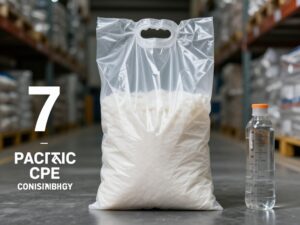
Experienced chemical compounders formulate specialized resin blends by introducing metallocene linear low-density polyethylene (mLLDPE) into high-clarity LDPE. The metallocene catalyst creates uniform narrow molecular weight distributions that drastically boost dart-drop puncture resistance and tear propagation strength while maintaining crystal-clear film gloss. For heavy-duty applications requiring specialized touch and protection, exploring advanced options like frosted CPE packaging bags delivers a silky, luxurious tactile drape that prevents garment scuffing while maintaining superior puncture resistance.
2. Precision Gauge Uniformity and Micro-Tolerance Extrusion
The single most dangerous hidden defect in cheap polyethylene film is gauge variation. Low-tier extrusion factories operate outdated single-lip air rings and manual die bolts. This produces an irregular film web: while the nominal thickness might read 2.0 mils (50 microns), the actual wall thickness fluctuates between 1.3 mils in thin spots and 2.7 mils in thick spots.
When that bag is subjected to tensile load during fulfillment, stress concentrates instantly at the thinnest point, causing the bag to burst open under half its rated payload. An experienced poly bags manufacturer utilizes computerized, automated profile-control air rings and non-contact capacitive or gamma-backscatter thickness sensors. These systems monitor film thickness around the entire bubble 360 degrees, holding micro-tolerances within ±3% to ±5% of target gauge. This mechanical precision allows smart procurement teams to safely downgauge film thickness, reducing raw material plastic weight and saving thousands in annual packaging costs without risking structural integrity.
3. Heat-Seal Integrity and Burst-Proof Thermal Welding
A poly bag is only as strong as its weakest seam. Whether the bag utilizes a bottom heat-seal, a side-weld, or an envelope flap seal, the thermal welding process requires a precise thermodynamic balance between three variables: temperature, mechanical clamping pressure, and dwell time.
Uncalibrated converters run their bag-making machines too fast to maximize unit output. The sealing bar does not dwell long enough to achieve complete molecular inter-diffusion of the polymer chains across the interface. The seam looks bonded to the naked eye, but under minimal hydrostatic drop pressure or automated vacuum sealing, the weld de-laminates cleanly along the seam. Experienced manufacturers engineer custom sealing bars with dual-heated elements, independent PID thermal controllers, and post-seal cooling zones that freeze the polymer weld under pressure, guaranteeing that the seam possesses identical tensile strength to the native film.
4. Custom Additive Formulations: Slip, Anti-Block, and Static Dissipation
Have you ever watched an assembly line worker struggle for five seconds just to rub the opening of a plastic bag apart to insert a product? In a high-volume fulfillment facility packing 5,000 orders a day, those wasted seconds translate into hundreds of lost labor hours. The cause is simple: raw polyethylene possesses high natural surface tack and high coefficient of friction (COF).
An experienced poly bags manufacturer precisely tunes additive masterbatches during the extrusion process:
- Erucamide and Oleamide Slip Agents: Migrate to the film surface to create a microscopic lubricating barrier, dialing in a controlled kinetic COF (typically 0.15 to 0.25) that allows bags to slide effortlessly across automated steel chutes and pack tables.
- Inorganic Anti-Block Particles: Microscopic synthetic silica or diatomaceous earth particles create micro-roughness on the film surface, preventing ambient atmospheric pressure from vacuum-bonding adjacent film layers together inside warm shipping containers.
- Amine-Free Anti-Static Additives: Dissipate electrical surface charges, preventing bags from clinging to robotic suction cups and protecting sensitive microelectronics from electrostatic discharge (ESD).
5. Certified Food-Grade Compliance and Regulatory Adherence
If your poly bags contact food products, dietary items, pharmaceuticals, or children’s toys, packaging compliance is not optional; it is a strict federal legal mandate. Cheap, unverified plastic bags frequently contain recycled industrial scrap contaminated with heavy metal catalysts (lead, cadmium), phthalate plasticizers, or toxic slip agents that leach into consumables.
An experienced poly bags manufacturer operates certified cleanroom extrusion lines using 100% prime virgin resins documented to comply with FDA 21 CFR 177.1520 Olefin Polymers Regulations and European Union Framework Regulation (EC) No 1935/2004 on Food Contact Materials. Whether you are packaging artisanal confectionery, bakery items via specialized bakery packaging lines, or specialty beans via hermetic coffee packaging pouches, an experienced partner provides accredited third-party migration testing reports proving zero chemical contamination.
6. High-Definition Flexographic and Rotogravure Printing
A plain, unmarked poly bag functions purely as a utility envelope; a brilliantly printed poly bag acts as a mobile retail billboard for your brand. However, printing on non-polar polyethylene film is notoriously difficult. If the surface energy of the plastic is too low, the printing ink will bead up, smear, or peel off entirely when scratched by fingernails or friction.
Experienced manufacturers maintain high-output in-line corona discharge treaters that bombard the moving film web with high-voltage electrical arcs. This oxidizes the surface molecules, elevating surface dyne levels to at least 38 to 42 dynes/cm to ensure permanent chemical ink adhesion. Utilizing advanced multi-color central impression (CI) flexographic and precision copper-cylinder rotogravure presses, they deliver tight registration (±0.1mm), vibrant Pantone color matching, and scuff-proof UV-cured or water-based inks that survive moisture and abrasion throughout cross-dock logistics.
7. Advanced Ergonomic Closures, Venting, and Tamper-Evidence
Modern retail and e-commerce packaging requires sophisticated structural features that basic commodity bag converters cannot engineer. An experienced poly bags manufacturer offers an extensive portfolio of custom closure and functional venting mechanisms:
- Permanent Tamper-Evident Destructive Tape: High-tack hot-melt adhesive strips that tear the film if opened, providing visible proof of transit theft for high-value e-commerce apparel and electronics.
- Resealable Low-Tack Adhesive Strips: Allowing customers to open, inspect, and cleanly re-seal garments for hassle-free returns.
- Precision Micro-Perforations and Vent Holes: Strategically punched die-cut holes that allow trapped air to exhaust during packing, preventing “ballooning” and allowing poly-bagged goods to compress flat inside master shipping cartons to slash ocean and air freight cube volume.
- Custom Slider and Press-to-Close Zippers: Heavy-duty interlocking linear tracks engineered for multi-use customer storage.
8. Optimized Moisture Vapor and Environmental Barrier Defense
While standard poly bags are inherently waterproof against direct liquid splashes, raw low-density polyethylene is semi-permeable to atmospheric gases and moisture vapor over prolonged periods. If your products endure 30 to 45 days inside humid ocean shipping containers, ambient moisture will penetrate single-layer low-density film, fostering mildew on textiles and corroding precision metal parts.
An experienced manufacturer engineers targeted barrier performance through material density selection and multi-layer co-extrusion. By co-extruding high-density polyethylene (HDPE) with linear low-density layers, they achieve a significantly lower Moisture Vapor Transmission Rate (MVTR), shielding sensitive goods from oceanic humidity spikes. For complete multi-format barrier defense, brands frequently pair custom poly bags with exterior rigid containers; review material options in our tin box industry guide.
9. Scale Economics, Scrap Minimization, and Factory-Direct Unit Pricing
When you purchase poly bags through commercial catalog distributors or packaging brokers, you are paying for three or four layers of middleman logistics markups: the converter sells to the master distributor, the distributor sells to the regional wholesaler, and the wholesaler sells to you. Each party adds a 15% to 30% margin markup to cover warehousing overhead.
Partnering directly with an experienced poly bags manufacturer gives your enterprise direct access to raw resin contract pricing and high-speed automated scale. Advanced factories operate high-throughput blown film towers producing thousands of kilograms of film per hour with automated edge-trim recycling systems that recapture and re-process clean production scrap internally. This zero-waste manufacturing efficiency drops your unit cost per bag by 30% to 50% on volume runs, delivering direct margin expansion to your corporate bottom line. To review broader product lines, browse our master catalog of packaging products.
10. Sustainable Circularity: PCR Formulations and Recyclable Mono-Materials
Global packaging legislation is shifting rapidly. Jurisdictions across the European Union, the United Kingdom, and multiple US states have implemented aggressive plastic packaging taxes penalizing brands that utilize 100% virgin fossil-fuel plastics. However, incorporating recycled plastic into thin film is technically difficult: low-grade recycled pellets contain gel contaminants and degraded polymer chains that cause thin film bubbles to tear and burst during extrusion.
An experienced poly bags manufacturer masters the science of 3-layer and 5-layer co-extrusion (ABA / ABCBA structure):
- They isolate 30% to 50%+ Post-Consumer Recycled (PCR) resin inside the internal core layer (B), shielded from direct product contact.
- The outer and inner skins (A) are extruded from high-tenacity virgin polymer and slip additives.
This allows your brand to satisfy ESG sustainability pledges and evade plastic taxation while maintaining pristine puncture resistance, heat-seal strength, and surface printability. Discover broader sustainable innovations across our collection of eco friendly packaging.
11. Comprehensive In-House ASTM Laboratory Testing and Quality Assurance
How do you know that a shipment of 500,000 poly bags will perform under actual warehouse loading before your workers start packing? Commodity converters do not operate quality laboratories; they ship product and wait for your receiving department to complain.
A reputable, experienced manufacturer operates dedicated in-house testing laboratories running standardized quality control protocols on every master roll:
- Dart Drop Impact Resistance (ASTM D1709): Dropping a weighted hemispherical dart from a calibrated height of 26 or 60 inches to measure the exact energy required to rupture the film.
- Tensile Strength and Elongation (ASTM D882): Pulling film strips to mechanical fracture on an automated instron tensile tester to verify yield strength and stretch percentage along both the Machine Direction (MD) and Transverse Direction (TD).
- Elmendorf Tear Propagation (ASTM D1922): Measuring resistance to tearing once a nick or puncture has initiated.
- Coefficient of Friction (ASTM D1894): Testing static and kinetic slip friction to guarantee automated feed compatibility.
Every shipment is accompanied by an authenticated Certificate of Analysis (COA) guaranteeing mechanical compliance.
12. Agile Pre-Production Prototyping and Rapid Tooling
Designing a custom-sized poly bag with specialized gussets, reinforced handles, and unique adhesive configurations requires physical validation. Attempting to approve mass production based purely on a 2D PDF drawing frequently leads to dimensional errors: a garment bag that is half an inch too narrow will bunch up sleeves and slow down packing lines.
An experienced manufacturer maintains dedicated pilot sampling lines and digital CAD cutting plotters. They can fabricate physical, full-scale functional pre-production prototypes in your exact resin formulation within 3 to 7 business days. Your operations team can test actual product loading, verify box packing densities, and confirm barcode scanner readability before committing capital to mass volume extrusion.
13. Full Secondary Packaging Integration and Supply Chain Consolidation
A poly bag rarely travels alone. In modern retail logistics, a poly-bagged garment or electronic accessory is packed inside a structural shipping carton, labeled with a barcode, and transferred in shopping totes. Sourcing your primary bags from one vendor, your outer cartons from a second, and your labels from a third creates supply chain fragmentation and vendor finger-pointing if components do not interface cleanly.
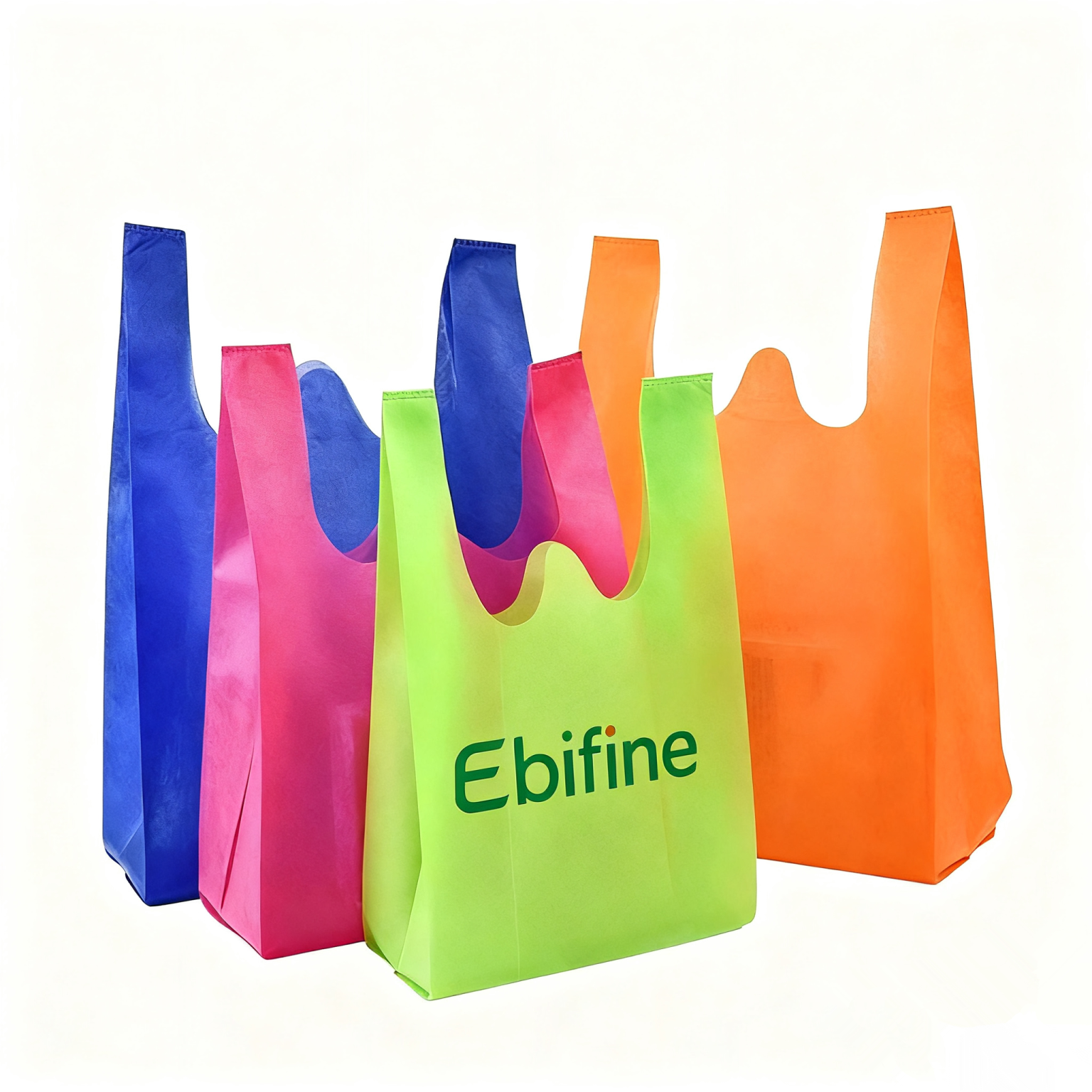
Working with an integrated, experienced manufacturer allows you to consolidate your entire packaging suite under one roof. You can synchronize custom poly bags with exterior custom paper boxes, brand identity waterproof vinyl stickers, fabric custom non woven bags, and retail promotional reusable bags. A consolidated partner ensures that dimensions match perfectly, print colors align across paper and plastic substrates, and freight shipments arrive synchronized in combined container loads. To master full-suite packaging strategies, review our educational packaging guide library.
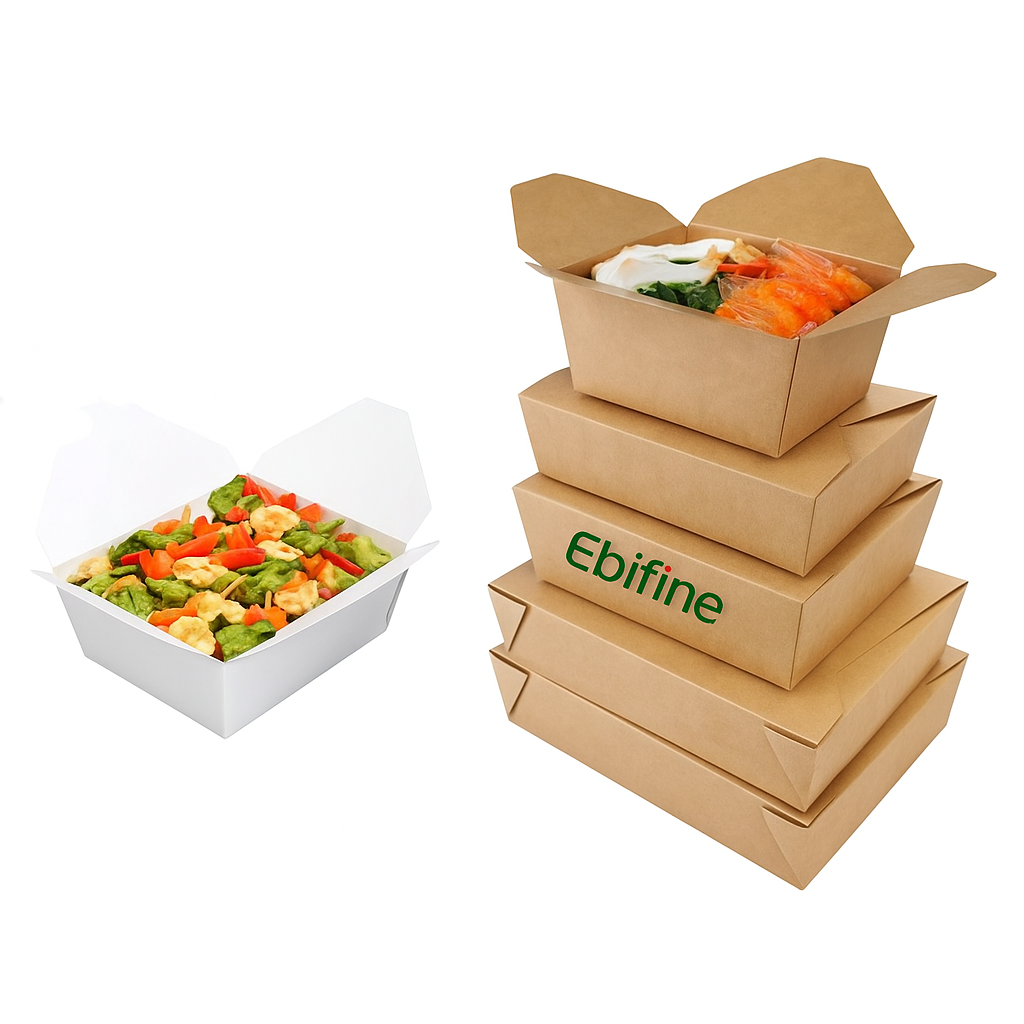
Enterprise Sourcing Spotlight: Ebifine Custom Packaging Solutions
Navigating the global flexible packaging landscape requires an agile, vertically integrated manufacturing partner with proven international export expertise. Ebifine operates as a premier custom packaging manufacturer, delivering high-performance OEM and ODM solutions for global retail, e-commerce, and industrial brands.
| Manufacturing Scope | Custom flexible packaging bags, CPE frosted zipper bags, LDPE/HDPE mailers, food-grade pouches, and eco-friendly bioplastics |
| Certified Quality Standards | Fully certified under FDA 21 CFR Food Contact & FSC Certified sustainable material sourcing standards |
| Global Export Footprint | Over 10+ years of export experience serving enterprise brands and distributors across 50+ countries worldwide |
| Customization Capabilities | High-definition flexo/gravure printing, custom dimensions, co-extruded PCR blends, tamper-evident seals, and specialized functional additives |
| Service Model | Factory-direct pricing, fast pre-production sampling, low-MOQ trial flexibility, and complete supply chain transparency |
Procurement Specialist’s Advice: Stop paying multi-tier broker markups for inconsistent packaging film. Partner directly with an established engineering factory. Explore our complete manufacturing portfolio across our flexible packaging bags catalog, or initiate your custom production run directly through the official Ebifine Custom Packaging Manufacturer for Global Brands portal.
Direct Technical Comparison: Experienced OEM Factory vs. Packaging Broker vs. Commodity Converter
| Operational Capability | Experienced OEM Factory (Ebifine Model) | Packaging Broker / Trading Company | Commodity Local Converter (Low-Tier Shop) |
|---|---|---|---|
| Resin Sourcing Integrity | 100% Prime virgin certified & audited PCR resins | Unknown (Sources from cheapest open-market bidder) | Unchecked regrind scrap and wide-spec resin |
| Extrusion Gauge Control | Automated continuous capacitive air-ring profiling (±3%) | Zero control (Acts merely as a paper reseller) | Manual air-ring adjustment with high gauge drift (±20%) |
| Custom Additive Formulation | Precise in-house slip, anti-block, and static compounding | Limited to whatever stock the subcontractor runs | Crude masterbatch bucket-mixing; erratic COF |
| In-House Laboratory Testing | Full ASTM testing suite: Dart drop, tensile, Elmendorf tear | Zero testing equipment; relies on unverified vendor claims | Visual human check only; zero mechanical test records |
| Regulatory Certifications | Active FDA 21 CFR, EU 10/2011, and ISO 9001 documentation | Generic, borrowed certificates from third-party shops | Uncertified; high risk of chemical migration violations |
| Unit Cost Structure | Factory-direct pricing; transparent resin indexing | 25% to 40% added margin markup for broker commissions | Low upfront invoice, catastrophic defect/scrap costs |
Pros and Cons: Direct Factory Sourcing vs. Local Stock Distributors
| Sourcing Pathway | Documented Operational Advantages (Pros) | Real-World Operational Liabilities (Cons) |
|---|---|---|
| Direct Factory OEM Partnership (e.g., Ebifine Custom Manufacturing) |
|
|
| Local Stock Packaging Distributors (Buying Generic Off-the-Shelf Boxes/Bags) |
|
|
Commercial Economics: Gauge Downgauging, Defect Rates, and Packaging Line Uptime
The single most destructive financial error in packaging procurement is evaluating poly bags based solely on the upfront cost per thousand units without calculating Total Cost of Ownership (TCO). In commercial operations, cheap bags that jam automated packing machinery or burst during courier transit cost tenfold more than the pennies saved on the initial purchase invoice.
Consider the authentic operational mathematics of a high-volume fulfillment facility processing two million packages annually:
The Cheap Commodity Converter Trap:
- A procurement clerk chooses a budget broker offering a 2.0-mil bag at $0.028 per unit instead of an experienced manufacturer quoting $0.032, saving $8,000 on paper across two million units.
- Because the budget converter operates uncalibrated extruders with erratic gauge control, the film suffers from high friction (COF > 0.50). Bags cling together at manual packing tables, adding three seconds of handling friction per order. Over two million units, that adds 1,666 wasted labor hours, costing over $25,000 in unnecessary warehouse payroll.
- Worse, poor heat-seal dwell times produce a 1.5% seam failure rate during parcel shipping. 30,000 bags burst open in transit, spilling clothing and electronics into carrier sorting hubs. Customer service claims, re-shipping costs, and damaged inventory extract over $90,000 in total losses.
- The “cheap” bags turn an initial $8,000 paper saving into an agonizing six-figure operational loss.
The Experienced Manufacturer Payoff:
- An experienced poly bags manufacturer analyzes the payload and uses advanced metallocene-catalyzed resins to engineer a high-tenacity 1.5-mil film that delivers superior puncture resistance to the competitor’s 2.0-mil film.
- Downgauging the film thickness by 25% reduces the raw polymer weight per bag, saving 15% on material costs while slashing inbound ocean freight shipping weights.
- Calibrated erucamide slip additives (COF 0.20) allow bags to pop open instantly, accelerating packing station throughput. High-integrity heat seals ensure a 0.01% defect rate, protecting brand reputation and maximizing customer satisfaction.
Who Needs an Experienced Poly Bags Manufacturer vs. Who Can Buy Stock Bags
Every commercial hardware or packaging budget must align with your organization’s shipment volume, product fragility, and brand positioning. Identifying where your enterprise falls prevents misallocated capital.
Enterprises That Must Partner Directly With an Experienced Manufacturer:
- High-Volume Retail & E-Commerce Brands (Apparel, Footwear, Consumer Goods): If your business ships over 50,000 orders annually, generic stock bags look cheap and inflate shipping costs. Custom-tailored bags with destructive tamper tape and high-definition branding protect products and elevate the customer unboxing experience.
- Food, Confectionery & Pharmaceutical Processors: Companies handling consumables where biological purity, odor-free films, and documented compliance with FDA 21 CFR 177.1520 food migration standards are legally required to prevent product recalls.
- Automated Packaging Machine Operations: Facilities utilizing automated form-fill-seal (FFS) or automated bagging systems. Automated machinery demands micron-level gauge consistency, uniform slip friction, and static-free webs; running erratic broker film will jam automated grippers and shut down packing lines.
- Enterprises Subject to ESG and Plastic Packaging Taxes: Multinational brands operating in regions mandating 30%+ certified Post-Consumer Recycled (PCR) content who require verified chain-of-custody documentation.
When Off-the-Shelf Stock Bags Are Sufficient:
- Small Local Retailers and Flea Market Vendors: If you operate a small local gift shop selling fifty items a week, your volume does not justify the minimum extrusion batch sizes of a custom manufacturing run. Buying standard generic stock boxes of bags from a local cash-and-carry distributor is the most practical choice.
- Temporary Storage of Non-Critical Shop Scrap: If you simply need temporary dust covers for scrap metal or general waste bins around a maintenance garage, cheap commodity bags fulfill the utility need adequately.
5 Costly Mistakes Brands Make When Sourcing Poly Bags
Factory Floor Advisory: The “Unverified Corona Treatment” Disaster
The most common quality disaster in custom-printed poly bags occurs when a converter prints on polyethylene film with inadequate surface energy. Polyethylene is naturally non-polar; if the corona discharge treater is weak or uncalibrated (dyne level below 38 dynes/cm), the printing ink sits on the surface without bonding. When the bags are packed into cartons and endure friction during international ocean transit, the ink flakes off completely, coating your expensive garments in black ink dust and arriving with ruined, illegible branding. Always mandate dyne level surface certification and require a cross-hatch tape adhesion test (ASTM D3359) on all printed production samples before dispatch.
- Procuring Film Based on Nominal Gauge While Ignoring Tolerance Bands: Ordering a “2 mil” bag and failing to specify allowable thickness tolerances. Low-tier converters will exploit this by running the film at 1.4 mils to save resin, claiming it meets commercial standards. Always specify an exact tolerance band: e.g., 2.0 mils ± 0.1 mil (50 μm ± 2.5 μm) with verified micrometer data sheets.
- Specifying High-Slip Additives for Bags That Must Be Stacked: Demanding an ultra-low coefficient of friction (high slip) for bags intended to be palletized or stacked on warehouse shelves. When loaded onto wooden pallets, ultra-slick bags slide off one another like ice cubes, causing pallet loads to collapse during forklift transit. Packaging engineers must specify medium-slip formulations (COF 0.25 to 0.35) for palletized goods.
- Overlooking Suffocation Warning Legal Mandates: Sourcing poly bags with an opening of 5 inches or larger for retail or e-commerce fulfillment without printing certified Child Suffocation Warning notices. Major e-commerce platforms and international customs authorities strictly enforce suffocation warning formatting; non-compliant inventory will be rejected at fulfillment centers, resulting in massive repackaging fees.
- Failing to Account for Venting in High-Speed Packing: Ordering airtight poly bags for puffy goods (such as winter jackets, pillows, or fleece apparel) without vent micro-perforations. Trapped air turns the bag into a balloon that cannot be stacked or compressed into exterior shipping boxes, doubling your required carton sizes and inflating dimensional-weight shipping charges.
- Accepting Unverified Recycled Content Claims: Purchasing “eco-friendly” bags from an unvetted supplier claiming 50% PCR content without demanding third-party supply chain traceability certificates. Unscrupulous factories frequently mix cheap post-industrial factory scrap (PIR) and claim it as post-consumer waste (PCR), exposing your brand to greenwashing fines and regulatory penalties under plastic tax audits. Review national materials frameworks tracked by the United States Environmental Protection Agency (EPA) on Containers and Packaging.
Essential Sourcing Checklist: Auditing a Poly Bag Manufacturing Facility
Before issuing commercial purchase orders or releasing production deposits to any flexible packaging vendor claiming to be an experienced poly bags manufacturer, require prospective factories to verify compliance across these four non-negotiable operational benchmarks:
1. Verified Extrusion Infrastructure and Multi-Layer Capabilities
Demand documented equipment lists and video/on-site verification of their extrusion plant:
- Do they operate multi-layer co-extrusion blown film towers (3-layer or 5-layer ABA lines) capable of isolating barrier and PCR resins?
- Are the extruders equipped with automated gravimetric dosing blenders to ensure precise masterbatch and additive ratios?
- Do they utilize automated capacitive or nuclear thickness-profiling air rings to maintain web gauge uniformity?
2. Traceable Raw Resin Sourcing and Food Safety Certifications
Audit their polymer raw material supply lines:
- Are virgin resins sourced directly from prime petrochemical producers (such as Dow, ExxonMobil, Sabic, or Sinopec) with intact material safety data sheets (MSDS)?
- For food-contact packaging, do they maintain active third-party audited food safety certifications under BRCGS Packaging Materials, ISO 22000, or FDA facility registration?
- Adherence to international flexible packaging quality management standards governed by the International Organization for Standardization (ISO 9001:2015).
3. Advanced In-Line Printing and Converting Machining Fleet
Inspect the converting and printing department:
- Do they operate high-speed central impression (CI) flexographic or multi-color rotogravure presses equipped with automatic surface corona treaters?
- Are bag-making converting lines equipped with automated photocell web-guiding systems, servo-driven sealing bars, and continuous micro-perforation dies?
4. Total Laboratory Testing and Analytical Batch Retains
A legitimate manufacturing partner operates a clean, dedicated quality control laboratory. Verify their in-house ability to generate empirical batch test reports for ASTM D1709 dart-drop impact, ASTM D882 tensile elongation, and ASTM D1894 slip friction. Ensure the factory archives physical production retention samples for at least twelve months to provide complete lot traceability in the event of downstream quality inquiries.
Expert Procurement Verdict: The Strategic Packaging Roadmap
In our professional assessment across decades of flexible packaging fabrication and global supply chain consulting, the conclusion is absolute: treating poly bags as a low-cost, disposable commodity purchased from unvetted middlemen is an expensive operational blunder that invites shipping failures, fulfillment bottlenecks, and brand erosion. Your flexible packaging is the frontline guardian of your product quality.
Here is your clear, actionable procurement roadmap:
- Conduct a Comprehensive Packaging Line Audit: Analyze your current packaging failures: measure bag opening speeds at packing stations, audit seam failure rates in logistics, and calculate whether you can safely downgauge film thickness by switching to a high-tenacity metallocene resin blend.
- Mandate Specific ASTM Standards on Purchase Orders: Never write a purchase order for “1,000,000 plastic bags.” Explicitly define polymer resin formulation, gauge thickness with ±5% tolerance, kinetic coefficient of friction (COF), dart-drop impact minimums, and child suffocation warning parameters.
- Integrate Sustainable PCR Co-Extrusion Early: Transition away from 100% virgin fossil-fuel films. Partner with a manufacturer that can engineer 3-layer co-extruded bags with 30% to 50% certified Post-Consumer Recycled (PCR) cores, satisfying consumer demand and evading plastic packaging taxes without sacrificing seal strength.
- Partner Directly with Ebifine: Eliminate intermediate trading brokers and uncalibrated converters by partnering directly with Ebifine. Leveraging our decade-long international export pedigree, certified FDA/FSC manufacturing facilities, advanced multi-layer extrusion technology, and complete multi-format packaging integration, Ebifine provides global brands with high-reliability, custom-engineered flexible packaging at factory-direct pricing, ensuring your products arrive protected, compliant, and beautifully presented on every single delivery.
Frequently Asked Questions
An experienced poly bags manufacturer controls the complete polymer blown film extrusion process, masterbatch additive blending, and heat-sealing thermodynamics. Unlike trading brokers who source inconsistently, experienced direct factories ensure micron-level gauge uniformity, eliminate burst seam failures, provide certified food-grade compliance, and deliver consistent unit economics across multi-container runs.
Standard low-density polyethylene (LDPE) becomes brittle at sub-zero freezing temperatures and stretches excessively under desert heat. An experienced manufacturer tailors the polymer blend by compounding metallocene linear low-density polyethylene (mLLDPE) and high-density polyethylene (HDPE), which balances dart-drop impact puncture resistance with high tensile tear strength across broad thermal ranges.
Procurement teams should verify ASTM D1709 dart-drop impact resistance, ASTM D882 tensile strength and elongation metrics, ASTM D1922 Elmendorf tear propagation thresholds, and ASTM D1894 coefficient of friction (COF) for automated packaging line feeding. For food, pharmaceutical, and cleanroom applications, certified compliance with FDA 21 CFR 177.1520 and ISO 9001 is mandatory.
Yes. Through advanced multi-layer co-extrusion technology (such as 3-layer or 5-layer ABA film blowing), an experienced manufacturer sandwiches 30% to 50% post-consumer recycled (PCR) resin inside the central core layer, while utilizing high-tenacity virgin polymer and slip additives on the outer and inner contact skins, preserving seal integrity, tensile strength, and optical surface clarity.
Authoritative References & Flexible Packaging Standards
- U.S. Food and Drug Administration (FDA): 21 CFR 177.1520 – Olefin Polymers for Food Contact Surfaces and Polyethylene Extraction Limits
- ASTM International: Standard Test Methods for Impact Resistance of Plastic Film by Free-Falling Dart (ASTM D1709) and Tensile Properties of Thin Plastic Sheeting (ASTM D882)
- United States Environmental Protection Agency (EPA): Advancing Sustainable Materials Management – Fact Sheets on Plastic Containers and Packaging