As sustainability becomes increasingly important in the food and beverage industry, many tea brands are paying closer attention to the materials used in tea bag packaging.
While some tea bags are marketed as eco-friendly, certain tea bag designs still contain plastic-based materials used for sealing, durability, or filtration support.
Understanding tea bag materials is important for brands that want to improve sustainability while maintaining product freshness, shelf appeal, food-contact safety, and packaging performance. The U.S. Food and Drug Administration explains how food-contact substances used in packaging are evaluated and regulated.
Why Some Tea Bags Still Contain Plastic
Some conventional tea bags use plastic-based polymers for heat sealing or structural support. These materials can help the tea bag maintain its shape and withstand hot water during brewing.
Plastic components may be used because they can provide:
- Better sealing strength
- Improved hot-water resistance
- Faster automated production
- Lower manufacturing costs
- More stable tea bag structures
However, concerns about plastic waste and microplastic exposure have encouraged greater interest in alternative materials.
A study published in Environmental Science & Technology examined plastic tea bags made from nylon and polyethylene terephthalate and found that they could release micro- and nanoscale plastic particles when steeped in hot water. You can read the peer-reviewed research published by the American Chemical Society.
Common Materials Used in Tea Bag Packaging
Different tea brands choose different packaging materials depending on their sustainability goals, target market, brewing performance, cost, and product positioning.
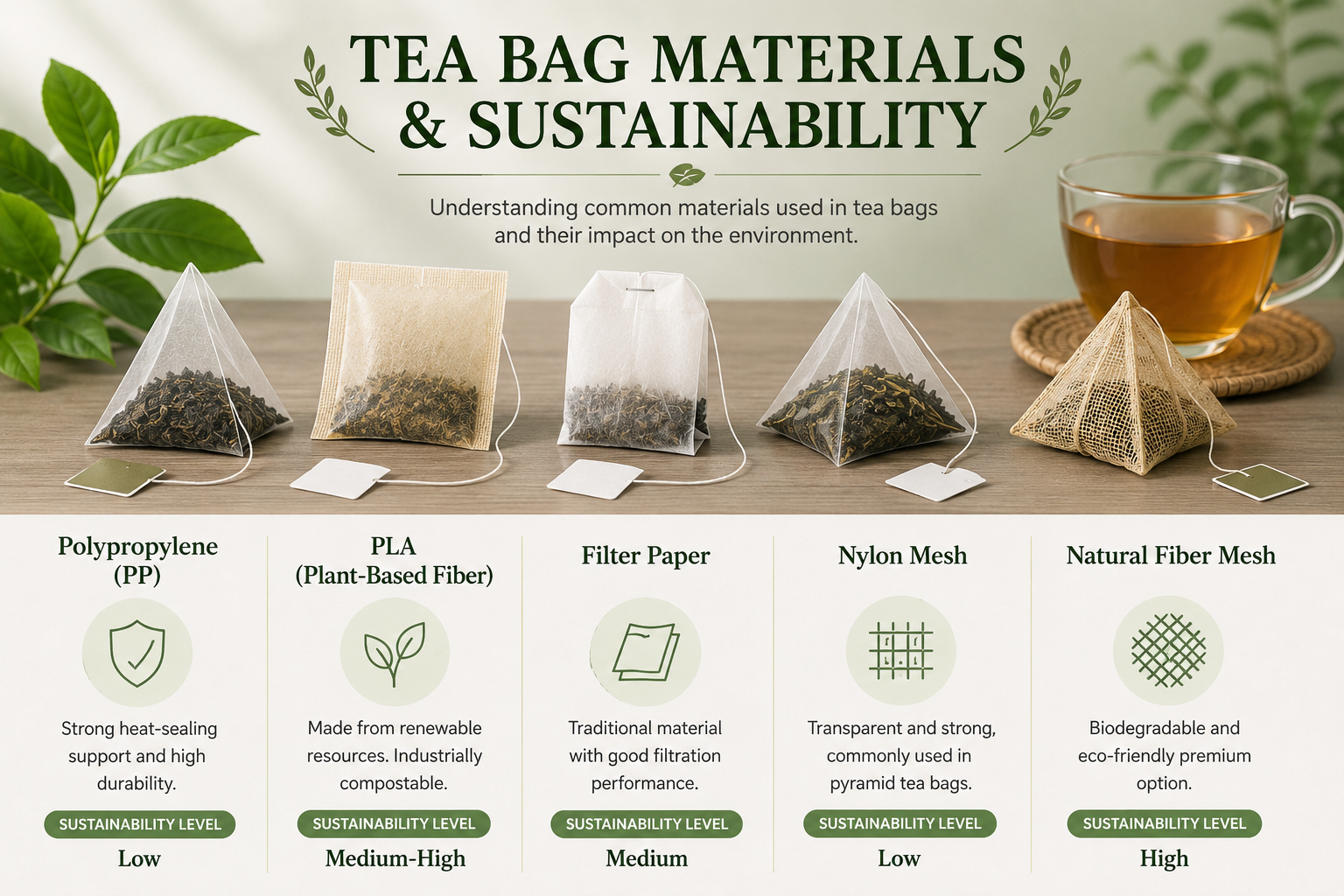
Common tea bag materials include:
Polypropylene (PP)
Polypropylene is a plastic polymer that may be used in certain traditional tea bag structures, particularly where heat sealing or additional structural support is required.
PLA (Plant-Based Material)
PLA, or polylactic acid, is a biobased plastic commonly produced from renewable feedstocks such as corn starch or sugar-based materials.
PLA is often used in packaging marketed as compostable, but biobased does not automatically mean biodegradable under all conditions. The European Commission explains the differences between biobased, biodegradable, and compostable plastics.
Filter Paper
Traditional filter-paper tea bags remain widely used because they provide efficient filtration, relatively low material costs, and compatibility with high-speed packing equipment.
Nylon Mesh
Nylon mesh is often associated with premium pyramid-style tea bags because its transparency and three-dimensional structure allow consumers to see larger tea leaves and ingredients.
Natural Fiber Mesh
Plant-derived and natural-fiber-based tea bag materials are increasingly considered by brands looking to reduce dependence on conventional fossil-based plastics.
Material properties vary significantly between suppliers, so tea brands should verify food-contact compliance, temperature resistance, sealing performance, and end-of-life claims before selecting a material.
Environmental Concerns of Plastic Tea Bags
Plastic-containing tea bags can create end-of-life challenges, particularly when paper, plastic, adhesives, strings, labels, or other components are combined in a single product.
Key concerns may include:
- Microplastic release from certain plastic tea bag materials
- Long-term plastic waste
- Difficulty separating mixed materials
- Limited recycling options
- Confusion surrounding biodegradable and compostable claims
Consumers, retailers, and packaging buyers are paying increasing attention to how packaging materials are sourced, used, and disposed of.
As a result, some tea brands are exploring plastic-reduced, recyclable, responsibly sourced, or compostable packaging alternatives.
What Makes Tea Packaging More Sustainable?
More sustainable tea packaging generally focuses on reducing unnecessary materials while maintaining food safety, barrier performance, transport protection, and product presentation.
Possible packaging strategies include:
- FSC-certified paper materials
- Compostable tea bag materials where suitable disposal infrastructure exists
- Recyclable outer packaging
- Reduced plastic lamination
- Lightweight packaging structures
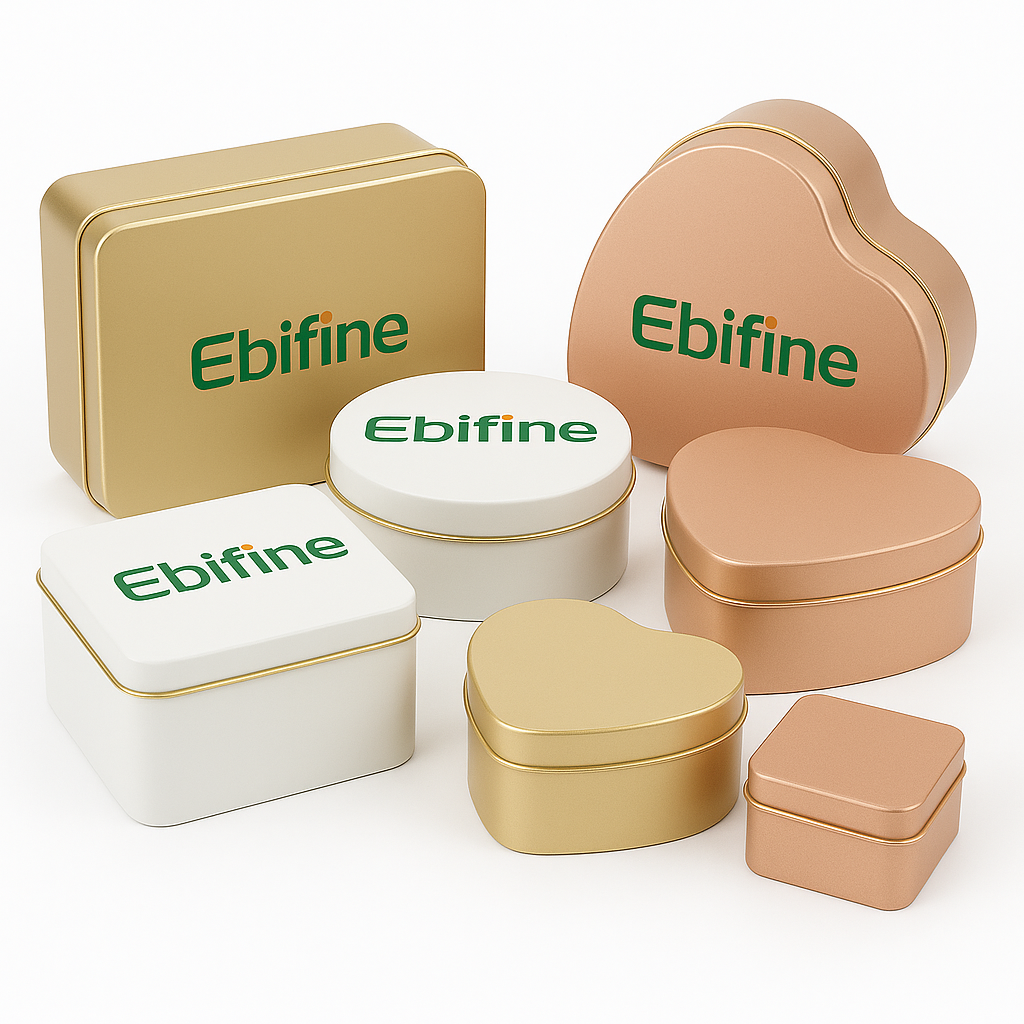
- Reusable tea tins
- Paper-based secondary packaging
- Packaging designed with fewer mixed materials
For paper-based cartons, wrappers, and secondary packaging, brands may consider responsibly sourced forest materials. The Forest Stewardship Council provides information about FSC-certified paper and packaging.
However, sustainable packaging should not be judged by a single material claim alone. Brands should also consider sourcing, manufacturing, transportation, product protection, recyclability, compostability, and the disposal infrastructure available in the target market.
Many premium tea brands therefore try to balance environmental performance with packaging appearance and functionality.
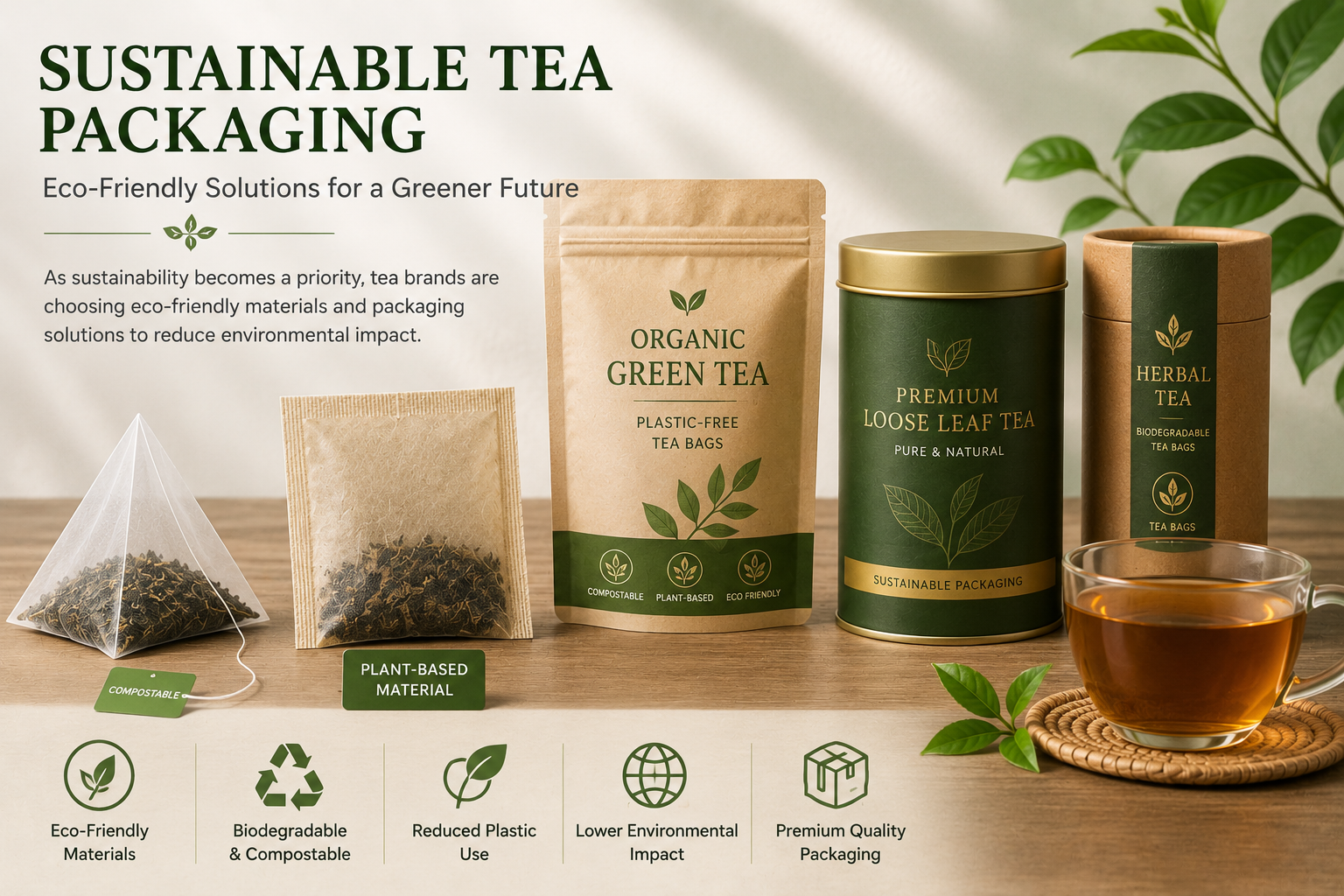
Custom Sustainable Tea Packaging Solutions
Modern tea brands often require packaging that balances sustainability, product protection, branding, and shelf appeal.
Ebifine provides custom tea packaging solutions for global tea brands, importers, distributors, and packaging buyers, including:
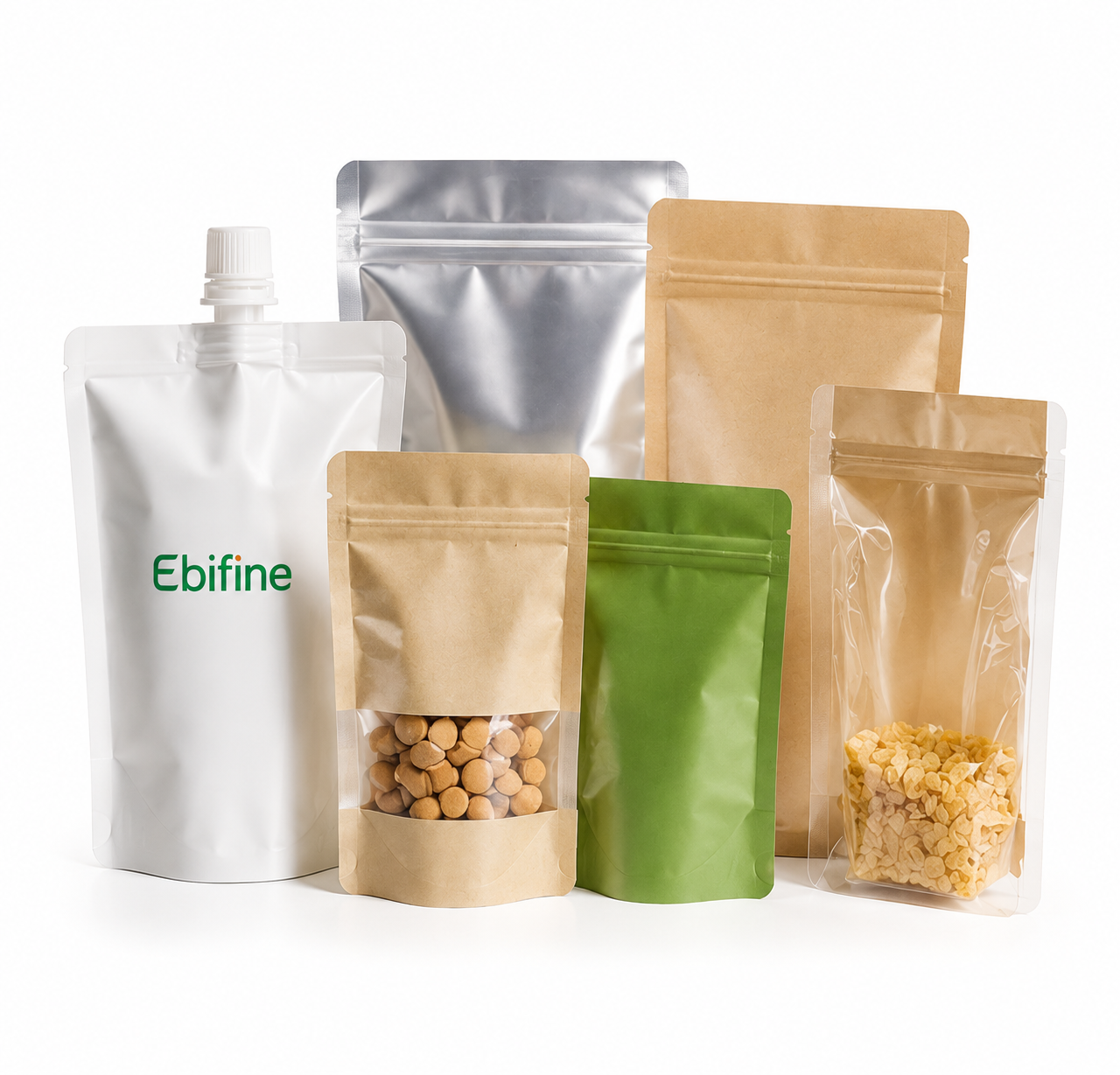
- Custom tea pouches
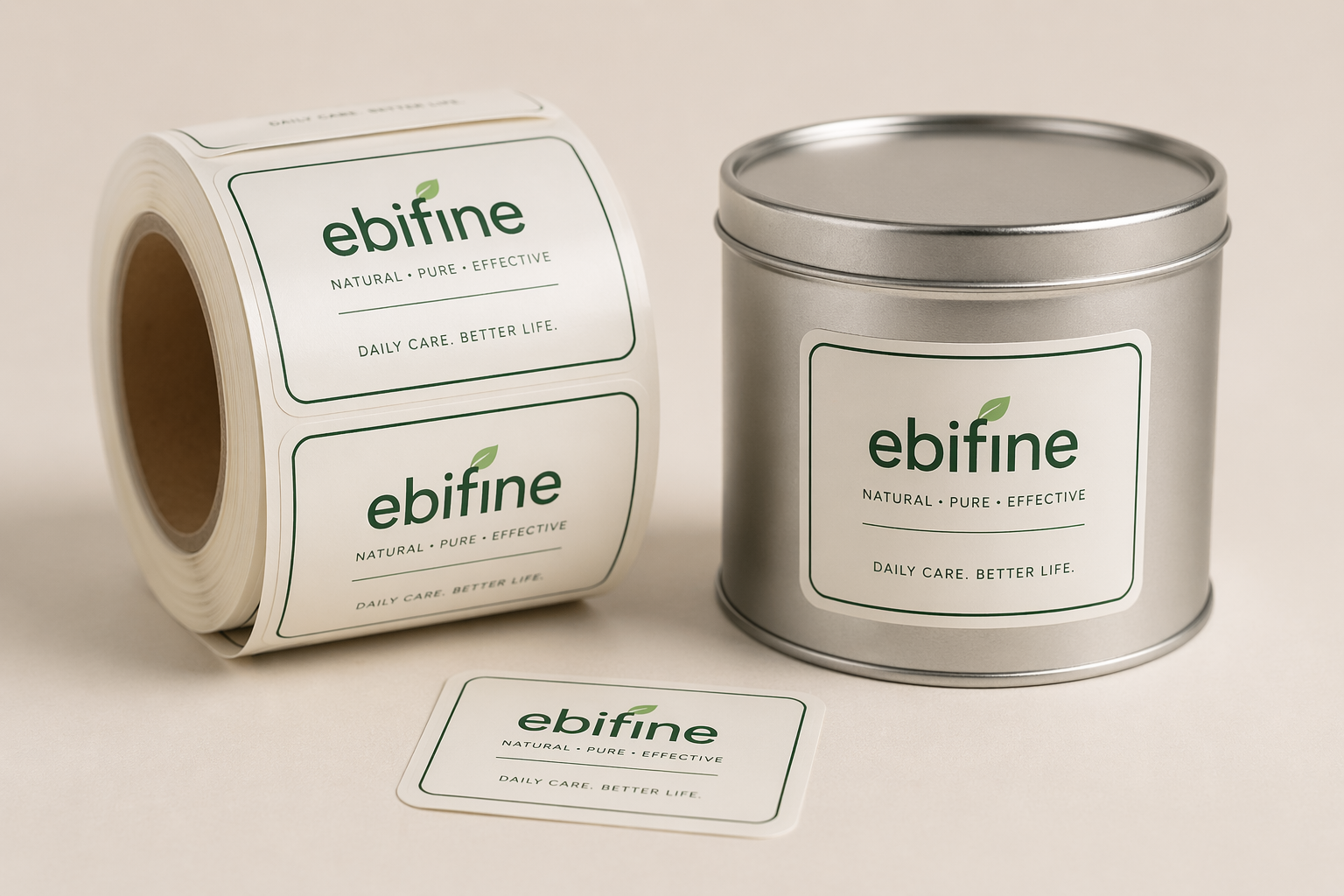
- Tea tin boxes
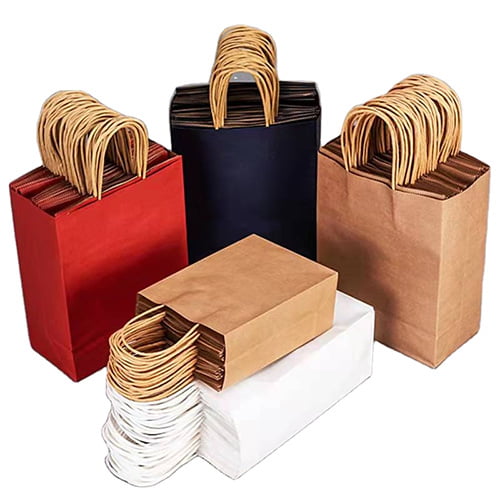
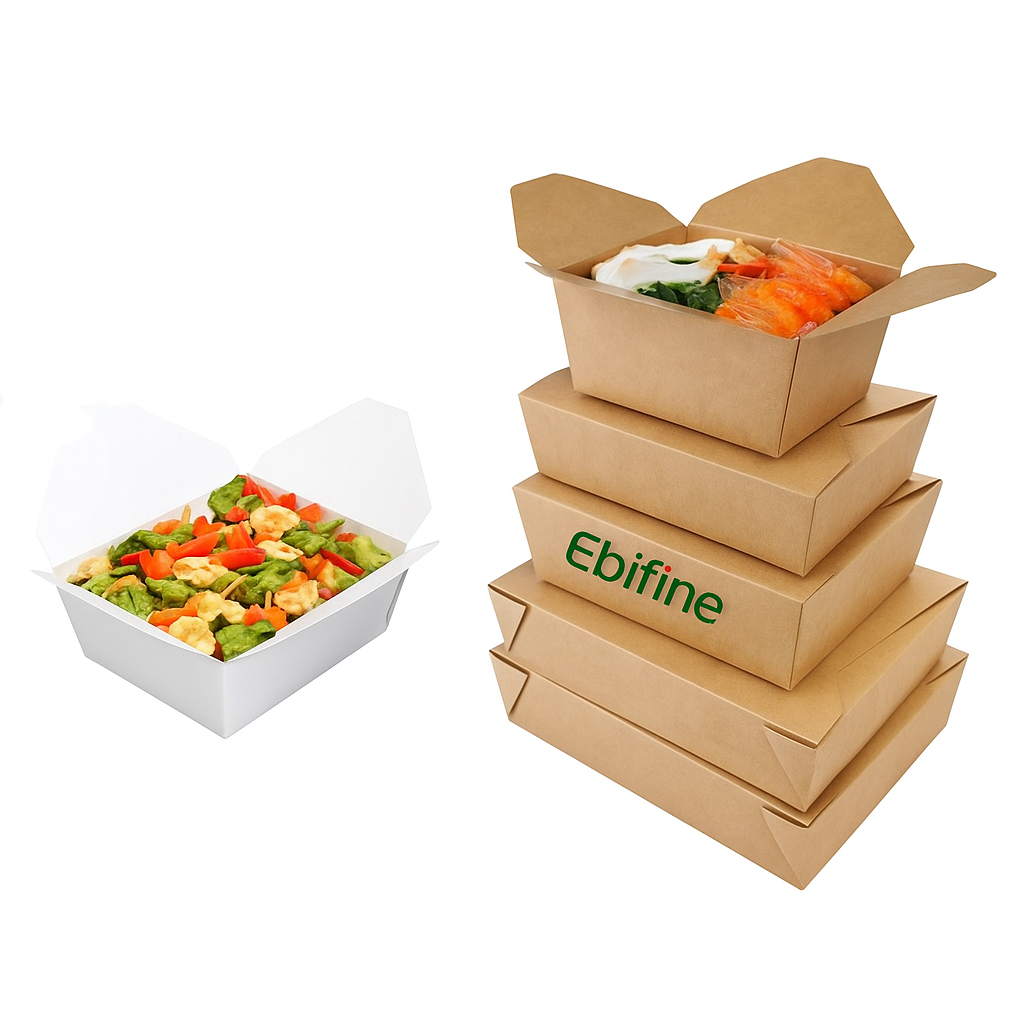
- Kraft paper tea packaging
- Compostable flexible packaging options
- Paper tube tea containers
- Custom printed tea labels
Depending on the project, customization may include:
- Custom sizes and structures
- Logo printing
- Custom colors
- Matte or glossy finishes
- Embossing and debossing
- Window designs
- Custom labels
- Retail-ready packaging
For tea packaging that comes into direct contact with food, brands should also confirm that the selected materials are appropriate for their intended use and destination market.
Frequently Asked Questions
Are all tea bags plastic-free?
No. Tea bag constructions vary by manufacturer and product type. Some products may contain plastic-based polymers for sealing, mesh construction, or structural support, while others use paper, plant-derived materials, or alternative fibers.
Can tea bags be biodegradable?
Yes. Some tea bags are made from materials designed to biodegrade under specified conditions. However, brands should verify the relevant certification, test standard, and disposal conditions rather than relying only on terms such as "eco-friendly" or "biodegradable."
Are PLA tea bags compostable?
Certain PLA products are designed for industrial composting, but compostability depends on the formulation, certification, and conditions available at the composting facility.
What is the best packaging for loose-leaf tea?
Common options include:
- Airtight tea tins
- Kraft stand-up pouches with suitable barrier layers
- Paper canisters
- Composite paper tubes
- Resealable flexible pouches
The best option depends on the tea type, required moisture and oxygen protection, shelf life, retail positioning, and sustainability goals.
Is sustainable tea packaging more expensive?
It can be. Certified paper, specialty compostable materials, custom structures, and lower-volume production may increase packaging costs.
However, packaging decisions should also consider product protection, brand positioning, retailer requirements, consumer expectations, and the total cost of the packaging system rather than material price alone.
Conclusion
As sustainability expectations continue to evolve, tea packaging is moving toward greater use of plastic-reduced, responsibly sourced, recyclable, and compostable materials.
For tea brands, choosing the right packaging is not simply an environmental decision. Packaging must also protect the tea, comply with relevant food-contact requirements, perform reliably during transportation and storage, and support the brand's position in the market.
Rather than treating one material as universally sustainable, brands should evaluate the complete packaging system, including material sourcing, manufacturing, performance, and end-of-life options.
By combining appropriate materials with thoughtful custom packaging design, tea brands can work toward sustainability goals while maintaining product protection and competitive shelf presentation.