Tea packaging has to do more than look attractive. Loose-leaf tea, matcha, herbal blends, and tea bags can all lose quality when exposed to oxygen, moisture, light, heat, or external odors.
For B2B buyers, the best tea packaging material depends on the product format, target shelf life, filling process, order quantity, brand positioning, and destination market. A premium loose-leaf tea may benefit from a rigid tin with an inner seal, while a high-volume tea brand may prefer a barrier pouch inside a printed paperboard carton.
This 2026 guide compares eight practical materials and packaging structures used for tea, with a focus on barrier performance, branding, cost, recyclability, and wholesale sourcing.
What Tea Packaging Needs to Protect Against
Before comparing materials, it helps to define the main risks to tea quality.
Tea packaging should help reduce exposure to:
- Moisture — tea is hygroscopic and can absorb humidity from the surrounding air.
- Oxygen — oxidation can reduce aroma, flavor, and color quality over time.
- Light — strong light can accelerate quality degradation in sensitive products.
- Odors — tea can absorb surrounding smells if the package does not provide an effective barrier.
- Physical damage — tins, cartons, pouches, and master cases must protect the product during storage and transport.
For food-contact projects, buyers should also confirm that inks, coatings, liners, adhesives, and other contact materials are suitable for the intended use and destination market. The U.S. FDA provides guidance on food-contact substances and packaging.
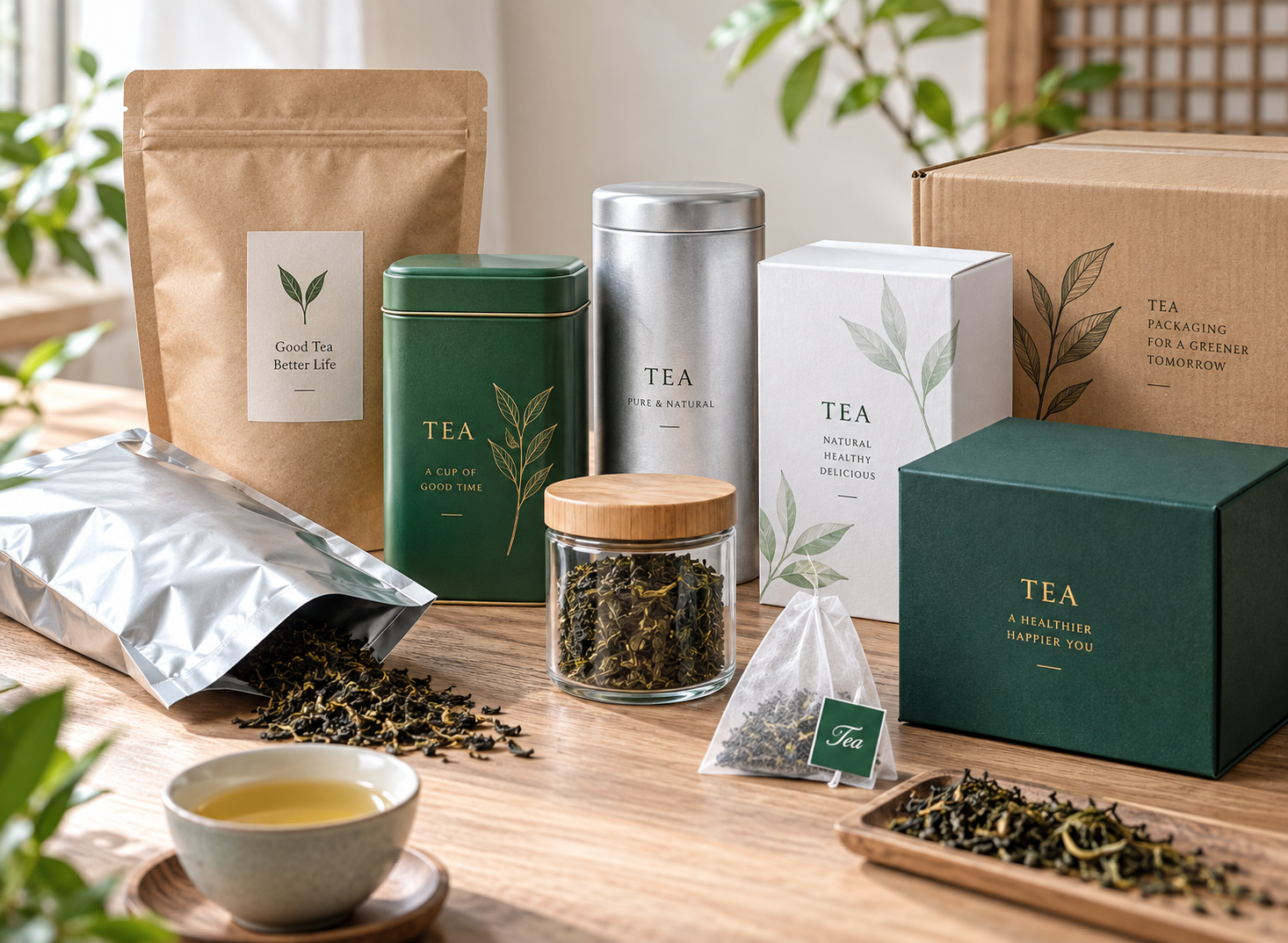
8 Tea Packaging Materials to Compare
1. Tinplate
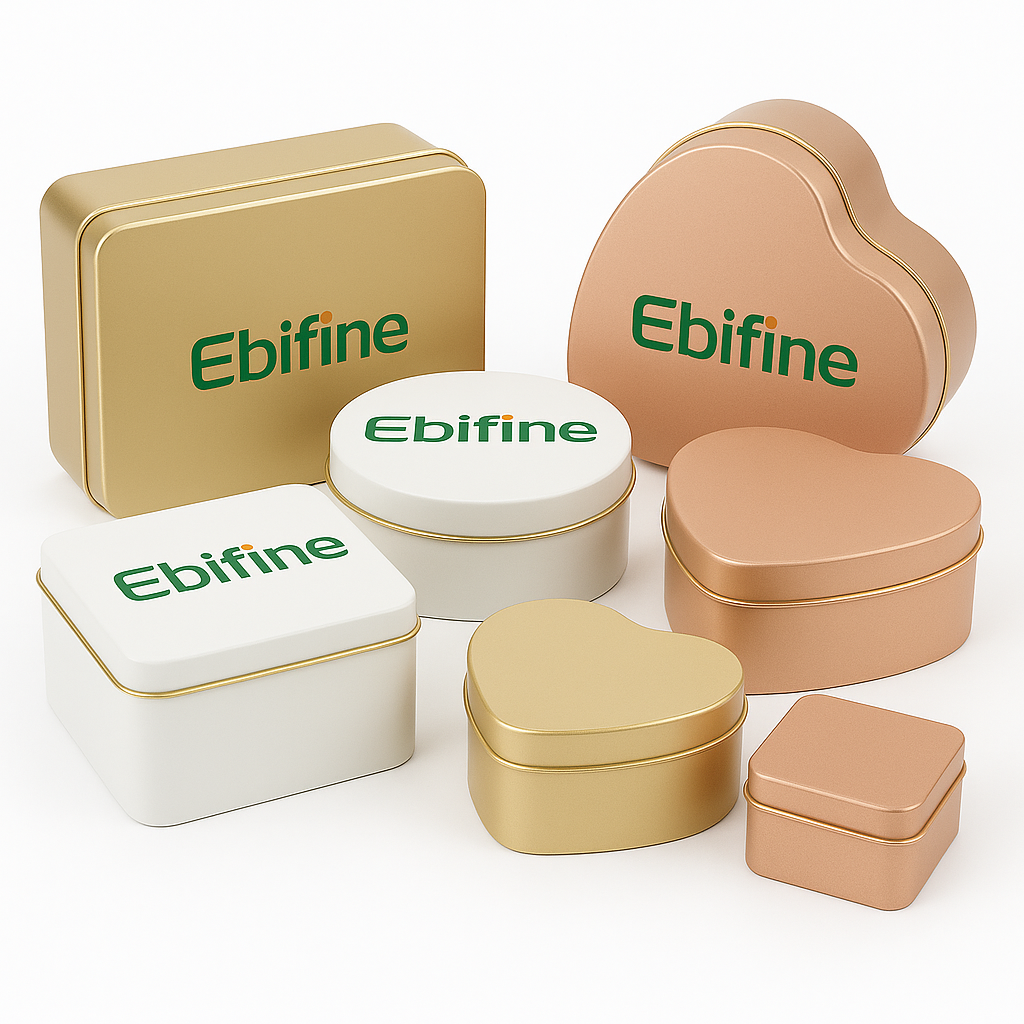
Tinplate is one of the most widely used materials for premium tea tins. It combines rigidity, printability, and strong protection from light.
Typical applications include:
- Loose-leaf tea tins
- Matcha tins
- Gift sets
- Seasonal tea collections
- Premium retail packaging
Main advantages
- Strong structural protection
- Excellent light barrier
- Suitable for offset printing
- Supports embossing and debossing
- Reusable after purchase
- Available in many shapes and sizes
Important sourcing note
The metal body itself provides a strong barrier, but overall freshness also depends on the lid fit, seams, inner coating, and whether an additional inner bag or seal is used.
For premium tea projects, buyers can review Ebifine's tin and metal packaging options.
2. Aluminum
Aluminum is lightweight, corrosion-resistant, and widely used in tea packaging either as a rigid container or as a barrier layer in flexible packaging.
Typical applications include:
- Matcha cans
- Lightweight tea canisters
- Foil liners
- Flexible tea pouches
- Travel-size tea packaging
Main advantages
- Lightweight
- Excellent light barrier
- Strong moisture and oxygen barrier when used as foil
- Good corrosion resistance
- Suitable for premium and functional packaging
Important sourcing note
Rigid aluminum containers and aluminum-foil laminates are very different packaging formats. Buyers should define whether they need a metal canister, foil laminate, or inner liner before requesting a quotation.
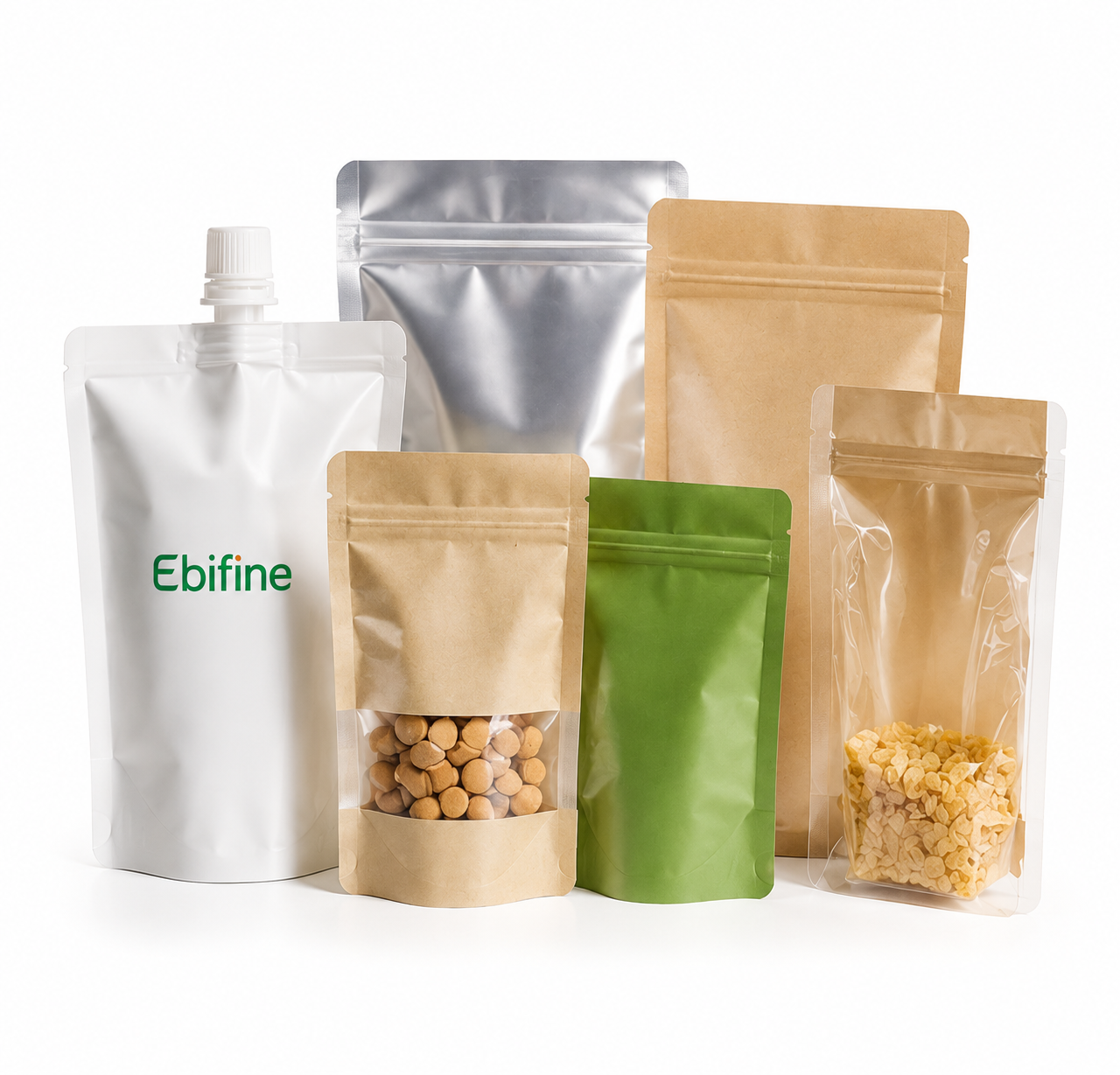
3. High-Barrier Flexible Film
Flexible barrier films are among the most practical materials for commercial tea packaging.
Common structures may combine materials such as:
- PET
- PE
- PP
- Aluminum foil
- Metallized film
- EVOH barrier layers
Typical applications include:
- Stand-up pouches
- Flat-bottom bags
- Sachet overwraps
- Loose-leaf refill packs
- Matcha refill packaging
Main advantages
- Strong moisture and oxygen barrier
- Lightweight for export shipping
- Good printing area
- Available with zipper closures
- Efficient storage and transport
Important sourcing note
Barrier performance depends on the exact film structure. Ask the supplier for the laminate specification rather than relying on a general term such as "food-grade pouch."
4. Kraft Paper with a Barrier Liner
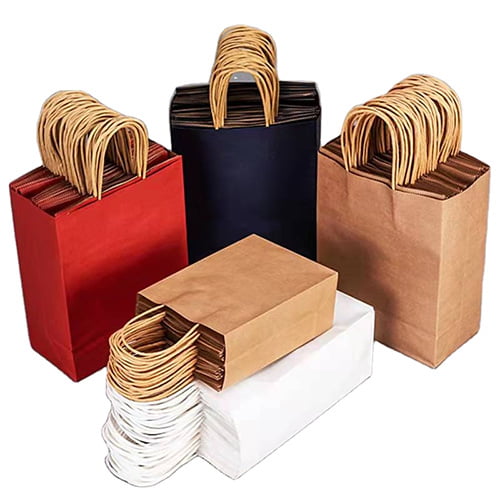
Kraft paper is popular with natural, organic, and artisan tea brands because of its warm, understated appearance.
On its own, however, kraft paper is not an adequate long-term moisture and oxygen barrier for most tea products. It normally requires an inner liner or laminated barrier layer.
Typical applications include:
- Kraft stand-up pouches
- Tea refill bags
- Outer wraps
- Folding cartons
- Gift packaging
Main advantages
- Natural visual appearance
- Good printing and labeling surface
- Works well for rustic or eco-positioned brands
- Can be combined with functional barrier layers
Important sourcing note
Ask what the inner barrier material is. Two kraft pouches may look almost identical from the outside but perform very differently depending on the liner.
5. Paperboard and Folding Carton
Paperboard is commonly used as secondary packaging rather than as the only freshness barrier.
It is especially useful when tea bags, sachets, inner pouches, or tins need an outer branded carton.
Typical applications include:
- Tea bag cartons
- Matcha boxes
- Gift boxes
- Folding cartons
- Paper sleeves
Main advantages
- Excellent printing surface
- Good for branding and retail information
- Lightweight
- Easy to customize structurally
- Works well with inner pouches or sachets
Important sourcing note
Paperboard protects presentation and structure, but it usually needs an inner barrier package for direct tea freshness protection.
Ebifine can also coordinate custom paper packaging for tea brands that need an outer carton around tins, sachets, or flexible pouches.
6. Rigid Paperboard Gift Boxes
Rigid paperboard boxes are used when presentation and gifting value are more important than minimizing packaging cost.
Typical applications include:
- Premium tea gift sets
- Multi-flavor collections
- Corporate gifts
- Magnetic closure boxes
- Drawer-style tea boxes
Main advantages
- Premium unboxing experience
- Good structural protection
- Supports foil stamping, embossing, and specialty papers
- Suitable for inserts and multi-product sets
Important sourcing note
Rigid boxes are normally secondary packaging. Tea should still be sealed inside a suitable pouch, tin, sachet, or other food-contact package.
7. Glass
Glass is sometimes used for premium loose-leaf tea and specialty products where product visibility is part of the presentation.
Typical applications include:
- Loose-leaf tea jars
- Herbal blends
- Display packaging
- Refillable tea containers
Main advantages
- Chemically inert for many food applications
- Reusable
- Premium visual presentation
- Allows consumers to see the product
Limitations
- Heavy for international shipping
- Fragile
- Transparent glass does not block light unless tinted or protected by secondary packaging
- Higher breakage risk than metal or flexible packaging
For light-sensitive teas, tinted glass or an opaque outer carton may be more suitable than clear glass alone.
8. Corrugated Board
Corrugated board is not usually the primary tea-contact material, but it is essential for shipping and distribution.
Typical applications include:
- Master cartons
- E-commerce shipping boxes
- Export cartons
- Subscription tea boxes
- Inner partitions
Main advantages
- Good compression strength
- Protects retail packs during transport
- Lightweight relative to rigidity
- Easy to print
- Suitable for dividers and inserts
Important sourcing note
For export orders, carton strength should be matched to product weight, stacking height, palletization, and shipping method.
Quick Comparison by Use Case
Instead of choosing one "best" material for every project, match the material to the actual product.
Best for premium loose-leaf tea:
Tinplate with an inner seal or barrier pouch.
Best for lightweight refill packaging:
High-barrier flexible film.
Best for natural or artisan branding:
Kraft paper with a proper inner barrier layer.
Best for tea bags and sachets:
Paperboard carton plus sealed inner sachets or pouches.
Best for luxury gift sets:
Rigid paperboard box with tins or barrier pouches inside.
Best for product visibility:
Glass, preferably tinted or protected from light.
Best for export protection:
Corrugated board master cartons.
How to Choose the Right Material for Your Tea
The best choice depends on more than appearance.
Consider:
- Tea type
- Product weight
- Desired shelf life
- Direct or indirect food contact
- Moisture sensitivity
- Light sensitivity
- Filling method
- Resealability
- Retail display requirements
- Shipping distance
- MOQ
- Printing method
- Target price
- Destination-market compliance
A premium tea brand may use several materials together—for example, a barrier pouch inside a printed tin, packed inside a rigid gift box and then protected by a corrugated export carton.
Questions to Ask Your Tea Packaging Supplier
Before approving a quotation, ask:
- What is the exact material structure?
- Is the package intended for direct food contact?
- What barrier layer is used?
- Is the inner coating or liner suitable for tea?
- What printing process will be used?
- Can I approve a physical sample?
- What is the MOQ for stock size and custom size?
- What are the tooling or plate charges?
- How will finished packaging be protected during export?
- What test reports or compliance documents can be provided for my destination market?
For broader information on packaging waste and material recovery, buyers can review the U.S. EPA's containers and packaging resources.
Where Ebifine Fits for Tea Packaging Buyers
Ebifine Import And Export Company Limited was established in 2016 in Guangzhou, China and operates as a packaging solutions provider for international buyers.
For tea packaging projects, Ebifine can help coordinate combinations such as:
- Tin boxes
- Aluminum containers
- Flexible pouches
- Paperboard cartons
- Rigid gift boxes
- Paper sleeves
- Inserts
- Export cartons
This is useful for buyers who need more than one packaging component and want to coordinate dimensions, artwork, sampling, production, and shipment through one supplier relationship.
Sustainability Considerations
No packaging material is automatically sustainable in every situation.
Sustainability depends on:
- Material quantity
- Product protection
- Reuse potential
- Transportation weight
- Local collection systems
- Recycling infrastructure
- Number of packaging layers
- Product waste prevented by better protection
Metal tins may be reusable and recyclable, while lightweight pouches can reduce shipping weight. Paper-based packaging may have advantages in some markets, but barrier coatings and laminations can affect recyclability.
For background on tin recycling, see the International Tin Association.
Frequently Asked Questions
Is tinplate the best material for loose-leaf tea?
It is one of the strongest options for premium loose-leaf tea because it provides excellent light protection, rigidity, and branding opportunities. However, the lid design and inner seal are also important for freshness.
Can kraft paper be used directly for tea?
Plain kraft paper alone is generally not enough for long-term moisture and oxygen protection. It is normally combined with an inner liner or barrier film.
Is aluminum better than tinplate?
Neither is universally better. Aluminum is lighter and corrosion-resistant, while tinplate is highly rigid, widely available, and well suited to decorative printing. The best choice depends on the product and budget.
Do tea bags need an outer carton?
Not always, but an outer paperboard carton can improve branding, stacking, retail presentation, and protection of the inner sachets.
Which material is best for matcha packaging?
Matcha is highly sensitive to oxygen, moisture, and light. High-barrier metal tins or barrier pouches are common choices, often with an additional inner seal.
What information should I send for a tea packaging quotation?
Provide:
- Tea type
- Fill weight
- Preferred package style
- Package dimensions
- Quantity
- Direct-food-contact requirement
- Artwork
- Printing colors
- Finish requirements
- Destination country
Final Recommendation
There is no single best material for tea packaging across every product category.
For most B2B projects:
- Use tinplate when premium presentation and rigidity matter.
- Use aluminum or high-barrier film when barrier performance and low weight matter.
- Use kraft paper with a barrier liner when natural branding is important.
- Use paperboard for printed secondary packaging.
- Use rigid boxes for luxury gifting.
- Use glass when visibility and reuse are central to the concept.
- Use corrugated board for shipping protection.
The strongest packaging strategy is often a combination of materials rather than a single substrate.
For custom tea packaging, buyers can contact Ebifine with their tea type, fill weight, preferred packaging format, quantity, artwork, and destination market for a more accurate sourcing recommendation.