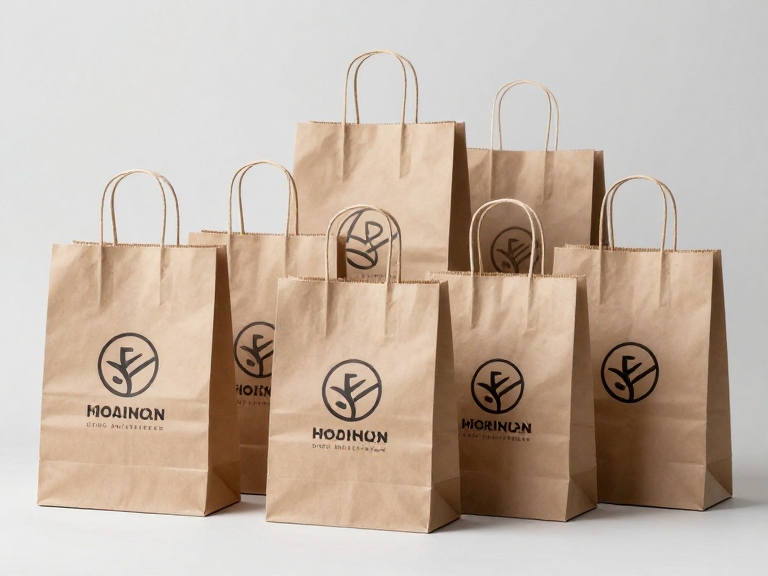
A good paper bag does more than carry a purchase out of your store. It gives customers another branded touchpoint, makes products easier to present as gifts, and can help a small business look more established without investing in an expensive packaging redesign. The mistake is treating every logo paper bag as the same product. Paper weight, handle style, printing method, size and finishing all affect how the bag looks, performs and fits your budget.
Which custom paper bags with logo should a small business choose?
For most small businesses, the best starting point is a simple kraft or white paper shopping bag with a clearly printed logo, a practical size and handles suited to the products being carried. It offers a strong balance of brand visibility, cost control and everyday usefulness. Choose a premium laminated or specialty-finish bag only when the customer experience and product price justify the additional expense.
Our recommendation is to start with one versatile size and one recognizable design, then add a second format for gift packaging, takeaway orders or premium products once demand is proven. A bag that looks impressive but is too expensive, too fragile or poorly sized is not good packaging.
What are custom paper bags with logo?
Custom paper bags with logo are paper carrier or packaging bags printed with a business name, symbol, brand artwork, message or other identifying design. They can be produced in different paper grades, dimensions, colors, handle constructions and finishes. Depending on the application, they may be simple takeaway bags, retail shopping bags, boutique gift bags or packaging for specific products.
Customization is not limited to printing a logo in the center. A complete design can include brand colors, typography, a repeat pattern, a QR code, a short brand message, product information or a carefully planned arrangement of front, back and side-panel artwork.
For a small business, the objective should be recognizable branding rather than decoration for its own sake. A clean logo with enough contrast is often more effective than a crowded design containing every contact detail and promotional message.
How custom paper bag printing works
The production process usually begins with the bag’s intended use. A retailer carrying lightweight accessories needs different specifications from a bakery packing several food items or a gift shop selling heavier boxed products. The manufacturer then confirms the dimensions, paper type, handle construction, printing area and finishing options.
- Define the application: identify what the bag will carry, the expected weight, how customers will use it and where it will be distributed.
- Select the bag structure: choose a flat or gusseted format, suitable base dimensions and a handle style if required.
- Choose the paper: compare kraft, white paper and specialty paper based on appearance, strength and print requirements.
- Prepare artwork: provide a high-resolution logo or vector artwork, brand colors and placement instructions.
- Confirm printing and finishing: review the printing method, ink coverage, coatings, lamination and any special effects.
- Approve a sample: inspect dimensions, print position, color, handles, seams and overall construction.
- Produce and inspect: manufacture against the approved specification and check the finished order before dispatch.
The sample approval stage is important. A digital mock-up can show the layout, but it cannot reliably demonstrate paper stiffness, handle comfort, the appearance of a printed color on a particular paper surface or the strength of the finished base. We recommend approving a physical sample whenever the order size or brand importance makes a production mismatch costly.
7 custom paper bags with logo ideas for small businesses
1. Minimalist kraft paper bags for everyday retail
Best for: gift shops, handmade products, clothing boutiques, bookstores and small lifestyle retailers.
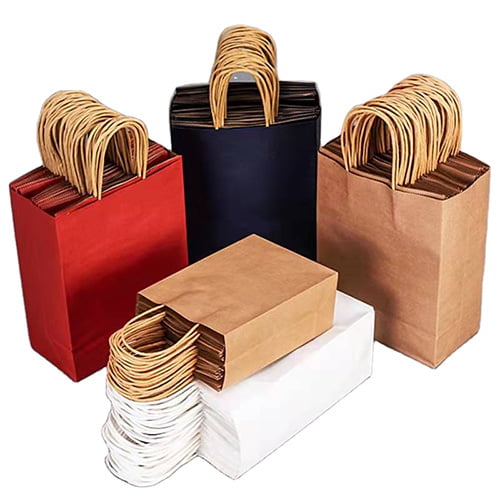
Kraft paper bags are a practical starting point for businesses that want a natural, understated appearance. A single-color logo printed on the front can create a recognizable package without requiring complicated artwork or premium finishing. The restrained look also works well with brands that use simple typography, earthy colors or a handmade visual identity.
From our experience with packaging decisions, the strength of this option is its versatility. One standard size can serve several product categories if the dimensions and carrying capacity are selected carefully. However, do not assume every kraft bag is strong enough for heavy products. Ask for the paper specification and test the base, seams and handles with the actual items you intend to sell.
Our recommendation: use a high-contrast logo and keep the front panel uncluttered. Choose a gusseted construction when products need more internal space.
2. White paper bags with bold, colorful logos
Best for: beauty stores, cosmetics retailers, pharmacies, fashion boutiques and modern consumer brands.
White paper creates a clean background that allows a logo or brand color to stand out. It is a good option when your identity relies on bright colors, precise typography or a contemporary retail aesthetic. A well-positioned logo can make even a simple bag look intentional and professionally branded.
The main consideration is print consistency. Large areas of solid color, small text and fine lines can behave differently depending on the paper surface and printing process. Ask the manufacturer to confirm the printable area and provide a sample that shows the actual artwork, not just a generic color chart.
Our recommendation: use one dominant brand color and avoid placing small text close to folds or seams. If your logo includes thin lines, check that they remain clear at the final print size.
3. Premium matte-finish bags for boutiques and gift stores
Best for: premium clothing, jewelry, fragrance, accessories and higher-value gifts.
A matte finish can give a paper bag a more refined appearance, especially when combined with a restrained logo, carefully selected colors and well-made handles. Depending on the construction, additional options may include specialty paper, foil details, embossing or other decorative treatments.
This style is worth considering when customers are paying for presentation as part of the product experience. It is less compelling for a low-margin business where the bag is used once and immediately discarded. The additional finish should support a clear brand or customer-experience objective.
Our recommendation: choose one premium feature rather than adding several. A clean matte surface with a strong logo can look more sophisticated than a bag overloaded with foil, texture and decorative elements.
4. Product-display paper bags with a window or clear feature
Best for: selected bakery products, confectionery, small gifts and retail items where visibility helps customers identify the contents.
A window can make the packaged product part of the presentation. It is particularly useful when the contents have visual appeal and customers benefit from seeing the item before purchase. The logo can be placed above, below or beside the window, depending on the bag structure.
Do not choose a window simply because it looks different. It reduces the amount of uninterrupted printable area and may affect the structure of the package. For food applications, the complete packaging construction must be suitable for the intended food contact and storage conditions. Confirm the material and any applicable compliance documentation with the supplier.
Our recommendation: use a window only when product visibility improves the buying decision. If the product does not need to be seen, a conventional printed bag may be more economical and easier to produce.
5. Boutique gift bags with rope or ribbon-style handles
Best for: gift shops, fashion boutiques, event businesses, cosmetics stores and seasonal retail.
Handles influence how a customer experiences a bag. Rope or ribbon-style handles can create a more premium appearance than a basic twisted-paper handle, particularly when their color complements the brand. They can also make the package feel more suitable for gifting.
However, handle selection must be based on the product’s weight and the expected carrying conditions. A decorative handle is not automatically a strong handle. Check the attachment points, reinforcement and finished bag construction. If customers regularly carry boxed products, test the bag with a realistic load before approving the specification.
Our recommendation: reserve decorative handles for products where presentation matters. For everyday high-volume retail, a simpler handle may deliver better value.
6. Branded paper bags for food service and takeaway
Best for: cafés, bakeries, takeaway counters, food shops and catering businesses.
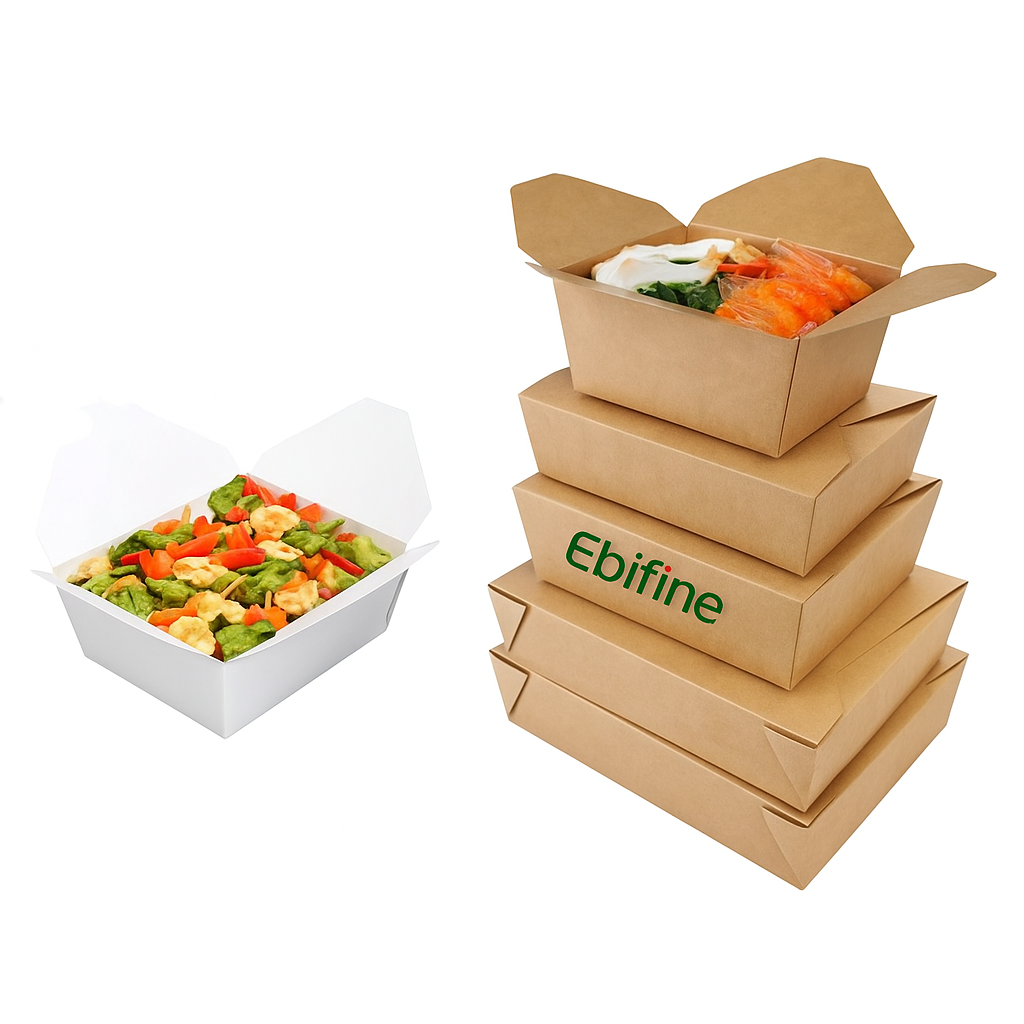
For food businesses, a paper bag can extend the brand experience beyond the counter. A recognizable logo on takeaway packaging helps customers identify the business when carrying orders to work, home or an event. The bag should also be practical: it needs suitable dimensions, a stable base and a construction that matches the packaged items.
Food packaging requires more care than ordinary retail packaging. A bag used to carry packaged bakery goods is not necessarily suitable for direct contact with every food type. Grease, moisture, heat and the duration of contact can change the material requirements. Ask the supplier whether the paper, inks, coatings and any inner layers are appropriate for the specific application, and verify the rules in your sales market.
Our recommendation: specify the food application before requesting a quote. For related packaging needs, explore a food packaging supplier and compare the complete packaging solution rather than choosing a paper bag in isolation.
7. Seasonal and limited-edition logo paper bags
Best for: holiday promotions, product launches, pop-up stores, local events and seasonal collections.
A seasonal bag can make a small business feel more connected to a campaign or occasion. A limited-edition color, short message or small graphic can help distinguish a holiday collection without changing the entire brand identity. This can work particularly well for stores that already have a recognizable standard bag and want a special version for selected periods.
The risk is leftover inventory. A design tied too closely to one holiday or event may become difficult to use after the campaign ends. For a small business, this can turn attractive packaging into dead stock.
Our recommendation: keep the core logo consistent and change only a secondary graphic, accent color or message. Choose a quantity that reflects realistic campaign demand, not an optimistic sales forecast.
Comparison table: which custom paper bag style should you choose?
The best design depends on the job the bag needs to do. Use this comparison to narrow down your options before requesting a quote.
| Bag style | Best business fit | Branding approach | Budget position | Key point to check |
|---|---|---|---|---|
| Minimalist kraft | Everyday retail and handmade goods | Single-color or simple logo | Usually a practical entry option | Paper strength and base construction |
| White printed bag | Beauty, fashion and modern retail | Bold color or clean typography | Depends on print coverage and paper | Color accuracy and print clarity |
| Matte premium bag | Boutiques and higher-value gifts | Minimal logo with premium finish | Higher due to finishing choices | Surface durability and finish quality |
| Window bag | Selected food and display products | Logo positioned around the window | Varies with structure and materials | Window construction and intended use |
| Decorative-handle gift bag | Gift shops and premium retail | Logo with coordinated handle color | Higher if handles and reinforcement are upgraded | Handle attachment and load capacity |
| Food-service bag | Cafés, bakeries and takeaway | Clear logo and practical information | Depends on food-use requirements | Suitability for the actual food application |
| Seasonal bag | Events and promotional campaigns | Core logo plus campaign artwork | Depends on order size and design changes | Inventory risk after the campaign |
For a first order, we generally favor minimalist kraft or white printed bags. They are easier to integrate into daily operations and less dependent on a short-lived trend. Move to premium finishes or special structures when your product positioning and sales volume support the added cost.
Pros and cons of custom paper bags with logo
| Pros | Cons and limitations |
|---|---|
| Builds brand visibility outside the store or delivery point. | Custom printing and finishing can increase unit cost. |
| Creates a more consistent and professional customer experience. | Artwork errors can affect an entire production run. |
| Offers a wide range of paper, handle and design options. | Paper bags may be unsuitable for wet, greasy or very heavy products without an appropriate construction. |
| Can support gift presentation and seasonal campaigns. | Special designs can leave unused inventory after a promotion. |
| Can be specified for different retail and takeaway applications. | Environmental claims need evidence and should not be assumed from the word “paper”. |
Paper is not automatically the best option for every product or every environmental objective. A bag’s actual impact depends on its materials, production, transport, reuse and disposal. Choose paper because it fits the application and brand strategy, not because you assume the material alone makes a package sustainable.
Best use cases: matching paper bags to your business
Small retail stores
For a clothing, gift or accessories store, start with a bag that fits the most common purchase. If customers regularly buy several items together, check the gusset and base dimensions rather than ordering a narrow bag because it costs less. A clear logo and consistent brand color will usually matter more than elaborate finishing.
Beauty and personal-care businesses
Beauty products often have varied shapes and packaging sizes. A small and medium bag may be more useful than one oversized format. Use a clean printed design and make sure the bag can carry the weight of boxed products without the handles pulling away.
Food shops and cafés
Prioritize the product application, food-contact suitability where relevant, grease or moisture exposure, and the way orders are packed. A branded bag should make takeaway operations easier, not slow staff down with a structure that is difficult to fill or close.
Online businesses and subscription brands
For e-commerce, a paper carrier bag may be useful for local collection, events or retail handover, but it is not necessarily a substitute for protective shipping packaging. If the order travels through a parcel network, select packaging that protects the product during handling and transit. Compare paper packaging with other sustainable packaging solutions based on the actual shipping conditions and protection requirements.
Common mistakes when ordering custom paper bags with logo
1. Designing around the screen instead of the finished bag
A logo may look balanced on a flat digital file but become awkward when printed on a folded bag. Folds, gussets, seams and handle positions all affect the visible area. Ask for a dieline or production template and check the artwork against the finished dimensions.
2. Choosing the cheapest paper specification
Thin paper may reduce the quote but can make the bag feel weak or unsuitable for the products. Do not select paper by price alone. Explain the expected contents and ask the manufacturer to recommend a specification, then test the sample with a realistic load.
3. Ignoring handle and base construction
The handle and bottom are critical stress points. A bag can look excellent while empty and fail when filled. Inspect handle attachment, reinforcement, seams and the base. For heavier products, ask about a construction designed for the expected load.
4. Using too many colors and design elements
Small businesses often try to include a logo, slogan, website, phone number, social handles, QR code and product list on one bag. The result can look cluttered. Prioritize the logo and one supporting message. Put detailed information on a label, insert or digital channel when necessary.
5. Ordering too many seasonal bags
Limited-edition designs can be attractive, but they are difficult to reuse once the event ends. Keep seasonal artwork secondary to the core identity and order based on conservative demand estimates.
6. Assuming every paper bag is recyclable or environmentally preferable
Coatings, laminations, inks, adhesives, handles and local recycling systems can affect end-of-life options. Ask for accurate material information and avoid broad claims such as “100% eco-friendly” unless they can be substantiated for the complete product and the relevant market.
Buying considerations: how to choose a custom paper bag manufacturer
A capable manufacturer should do more than accept a logo file. The supplier needs to understand the application, identify practical construction options and provide a specification that can be reproduced. Before placing an order, ask the following questions.
- What paper options are available? Request details about paper type, weight or thickness, finish and suitability for your intended use.
- What is the minimum order quantity? Confirm MOQ by size, color, printing method and design. A supplier’s general MOQ may not apply to every custom configuration.
- Which printing methods are suitable? Ask how the method affects color, detail, print coverage, setup and cost.
- Can you provide a production sample? Confirm sample cost, timing, revisions and whether the sample represents the final materials and construction.
- How are handles and bases reinforced? Request construction details and test the bag with the actual product load.
- What quality checks are performed? Agree on print placement, color tolerance, dimensions, bonding, handle attachment and acceptable defect levels.
- What is included in the quotation? Check printing, finishing, packaging, inspection, delivery terms and any tooling or setup charges.
- Can you support repeat orders? Ask how artwork, approved samples and production specifications are stored for future runs.
- Can you provide material or compliance documents? For food or other regulated applications, clarify what documentation is available and whether it applies to the complete packaging construction.
For a broader packaging range, compare the requirements for paper packaging products with your current bag specification. A supplier that understands different packaging structures may help you coordinate bags with labels, protective packaging or other branded materials.
What should you send when requesting a quote?
To get a useful quotation, prepare your logo in a high-resolution or vector format, the bag dimensions, preferred paper appearance, handle preference, print colors, estimated quantity and intended application. Include photographs or samples of the products that will go inside. If you are unsure about the exact construction, describe the product weight and how customers will carry the bag.
Do not ask manufacturers to quote only from a logo image. Without dimensions, material and usage details, the resulting prices may refer to completely different products and cannot be compared fairly.
Cost-benefit analysis: are custom paper bags with logo worth the investment?
Custom paper bags can be a worthwhile brand investment when they are used consistently and match the value of the products being sold. They are less attractive when the business has very low margins, unpredictable demand or no clear need for branded carry packaging.
Evaluate the total cost rather than focusing only on the unit price. The relevant costs may include paper, bag dimensions, printing coverage, number of colors, handles, lamination or coating, special finishes, sampling, setup, shipping and storage. A larger order may reduce the unit cost but increase the amount of cash tied up in inventory.
When paying more makes sense
Upgrade the bag when it improves a customer-facing part of the experience. A stronger base is worth paying for if it reduces the risk of products falling out. Better handles make sense when customers carry heavier purchases. A premium finish may be justified for a gift or boutique product where presentation contributes to perceived value.
When a basic design is the smarter choice
For high-volume takeaway or everyday retail, a simple logo print may be enough. Spending more on foil, lamination or decorative handles does not automatically increase repeat purchases. If customers mainly need a reliable carrier, prioritize function, legibility and cost control.
Practical ways to control packaging costs
- Use one or two standard sizes instead of creating a different bag for every product.
- Keep the artwork simple and avoid unnecessary print colors.
- Choose a standard handle and paper option when it meets the actual load requirement.
- Order seasonal designs conservatively and keep the main brand design reusable.
- Compare quotes using identical dimensions, paper specifications and finishing requirements.
- Review freight and storage costs before increasing the order quantity to obtain a lower unit price.
For businesses that also need other carrier formats, compare paper bags with custom reusable bags or non-woven bags. These alternatives serve different use cases; they should not be treated as direct replacements without considering durability, customer expectations and local rules.
Ebifine custom paper packaging solutions
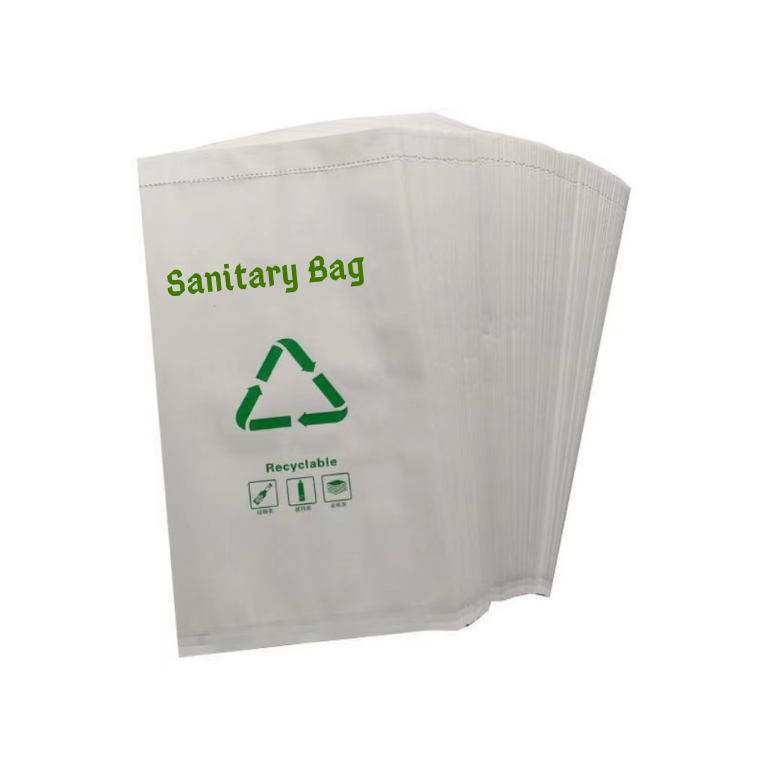
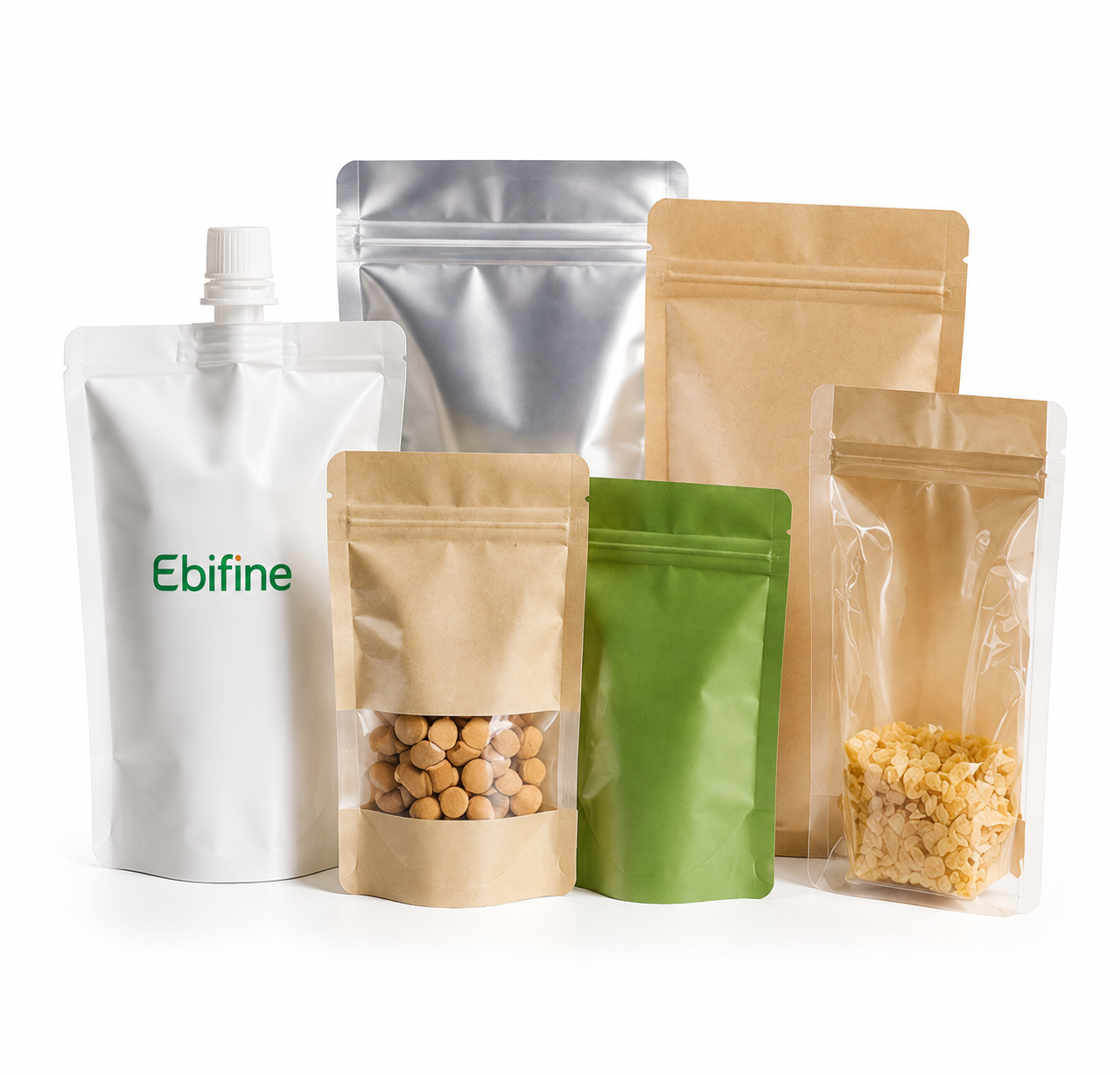
Ebifine provides packaging solutions for businesses that need customized bags and related packaging products. One relevant example is its custom sanitary paper bag offering for hotels, resorts, guest rooms and hospitality amenities. These disposable hygiene bags can be customized with logo printing, sizes, paper materials, colors and packaging options.
The listed product information specifies paper material, a stand-up pouch structure, a stated MOQ of 100 and a lead time of 15–20 days. These details apply to the sanitary paper bag product described and should not be assumed to represent the MOQ or production time for every custom paper shopping bag. Confirm the exact specification, order quantity and schedule for your own project before ordering.
For hotels and hospitality businesses, a discreet branded hygiene bag can help keep guest-room amenities consistent with the property’s identity. For retail businesses, the right solution may instead be a kraft carrier, boutique gift bag or another paper packaging format. The correct structure depends on what the package needs to contain and how it will be used.
Explore the custom logo sanitary paper bags product page for the hospitality application. If you are comparing different packaging materials, you can also review frosted CPE bags and plastic bags and carriers to decide which format best matches your product and distribution requirements.
Expert recommendation: start with a bag your customers will actually use
For most small businesses, the best custom paper bags with logo are not the most complicated ones. They are the bags that fit the product, carry the expected load, represent the brand clearly and stay within a sensible packaging budget.
We recommend beginning with a standard kraft or white bag, one clear logo treatment and a size that covers your most common order. If your business sells premium gifts, consider upgrading the handles or finish. If you operate a café or food store, specify the food application before selecting the paper. If you run a seasonal business, keep special graphics limited so that unsold stock does not become a problem.
Do not approve production until you have checked the artwork, dimensions, material, handles, base construction and sample. Ask the supplier to document the approved specification so that future orders can be compared against the same standard.
Frequently asked questions about custom paper bags with logo
1. What are the best custom paper bags with logo for small businesses?
Kraft and white paper bags are strong starting options for most small retailers. Kraft suits natural or understated branding, while white paper provides a clean background for colorful logos. Choose the size, paper specification and handle based on the products being carried.
2. Can I order custom paper bags with a logo in a small quantity?
Some manufacturers accept smaller orders, but the MOQ depends on bag structure, dimensions, paper, printing method and finishing. Ask for the minimum quantity for your exact design rather than relying on a general MOQ shown for another product.
3. What information do I need to provide to a paper bag manufacturer?
Provide your logo artwork, bag dimensions, preferred paper type, handle style, print colors, estimated quantity and intended use. Product photographs or a physical reference sample can help the manufacturer recommend a suitable construction.
4. Are kraft paper bags better than white paper bags?
Neither is universally better. Kraft is often selected for a natural, simple appearance, while white paper offers a neutral background for colorful or detailed branding. The right choice depends on your visual identity, print requirements and product application.
5. Which printing method is best for custom logo paper bags?
The best method depends on the artwork, paper surface, color requirements, order quantity and production setup. Ask the manufacturer to recommend a process and provide a sample using your actual logo and selected paper.
6. Can custom paper bags be used for food packaging?
Some paper bags are suitable for specific food applications, but not every paper bag is designed for direct food contact, grease exposure or moisture. Confirm the intended use and request applicable material and compliance information before ordering.
7. Are custom paper bags environmentally friendly?
Paper can be a useful packaging material, but environmental performance depends on sourcing, production, coatings, inks, transport, reuse and local disposal systems. Avoid broad environmental claims unless they are supported by evidence for the complete product.
8. Should a small business choose a premium finish?
Choose a premium finish when it supports the product’s price positioning or improves the customer experience. For everyday high-volume retail, a clear logo and reliable construction often provide better value than expensive decorative effects.
9. How can I make sure the paper bag is strong enough?
Tell the manufacturer what products the bag will carry and their approximate weight. Review the paper specification, handle attachment, seams and base construction, then test a physical sample with a realistic load before approving production.
10. Can I use the same logo design for different bag sizes?
Usually, but the artwork may need adjustment to preserve readability and balanced placement. Check the logo scale and position on each bag size, especially where folds, gussets or handles reduce the available print area.
References and packaging guidance
- U.S. Federal Trade Commission – Environmental Claims: Summary of the Green Guides. Guidance on substantiating environmental marketing claims and avoiding broad, unqualified statements.
- Forest Stewardship Council – Chain of Custody Certification. Information about tracing forest-based materials through the supply chain and the role of certification in supporting responsible sourcing claims.
- U.S. Food and Drug Administration – Packaging and Food Contact Substances. Official information relevant to materials intended to contact food in the United States.