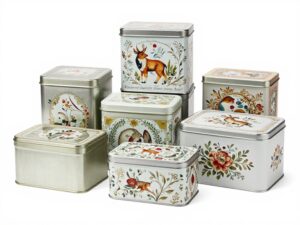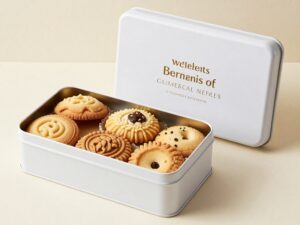
For bakeries, confectionery brands, gift companies, and food distributors, choosing the right way to buy empty cookie tins can affect much more than packaging cost. The sourcing method influences MOQ, customization, lead time, freight, quality control, and how quickly you can replenish inventory.
Empty cookie tins are commonly used for cookies, biscuits, chocolates, holiday gift sets, promotional products, and premium food packaging. Compared with disposable packaging, metal tins can offer stronger protection, better shelf presentation, and a reusable format that customers may keep after the product is consumed.
This guide compares six practical sourcing methods for B2B buyers and explains when each option makes sense.
Quick Comparison: 6 Ways to Buy Empty Cookie Tins
| Sourcing Method | Unit Cost | Customization | Typical MOQ | Lead Time | Best For |
|---|---|---|---|---|---|
| Direct Factory | Lowest at scale | Very High | Medium–High | Longer | Established brands, large orders |
| Packaging Solutions Provider | Competitive | High | Flexible | Medium | Buyers needing sourcing coordination |
| Wholesale Distributor | Medium–High | Low | Low–Medium | Fast | Local replenishment |
| B2B Marketplace | Variable | Variable | Low–High | Variable | Buyers comparing many suppliers |
| Local / Specialty Supplier | Highest | Very Low | Very Low | Very Fast | Small batches and urgent needs |
| Packaging Design Agency | Highest | Very High | Variable | Long | Luxury and highly customized projects |
1. Buy Direct from a Tin Box Factory
For larger commercial orders, buying directly from a factory can offer the lowest unit cost and the highest degree of customization.
Direct factory sourcing is most suitable when you need:
- Custom dimensions
- Special tin shapes
- Full-surface printing
- Embossing or debossing
- Custom inserts
- Specific lid structures
- Large annual volumes
Factories usually require higher MOQs because custom printing, tooling, plate setup, and production-line preparation all create fixed costs.
Advantages
- Lower unit cost for large quantities
- Direct access to production capability
- Broad customization options
- Better control over tooling and specifications
Potential Drawbacks
- Higher MOQ
- Longer production and shipping lead time
- More technical communication required
- Buyer may need to manage quality inspections and logistics
For custom cookie tin projects, it is useful to ask whether an existing mold can be used before paying for new tooling.
2. Work with a Packaging Solutions Provider
For many international buyers, a packaging solutions provider can be more practical than working with a single factory.
A sourcing partner can help coordinate:
- Factory selection
- Existing mold searches
- Quotation comparison
- Sampling
- Printing and finishing
- Insert development
- Quality inspection
- Export packing
- Freight coordination
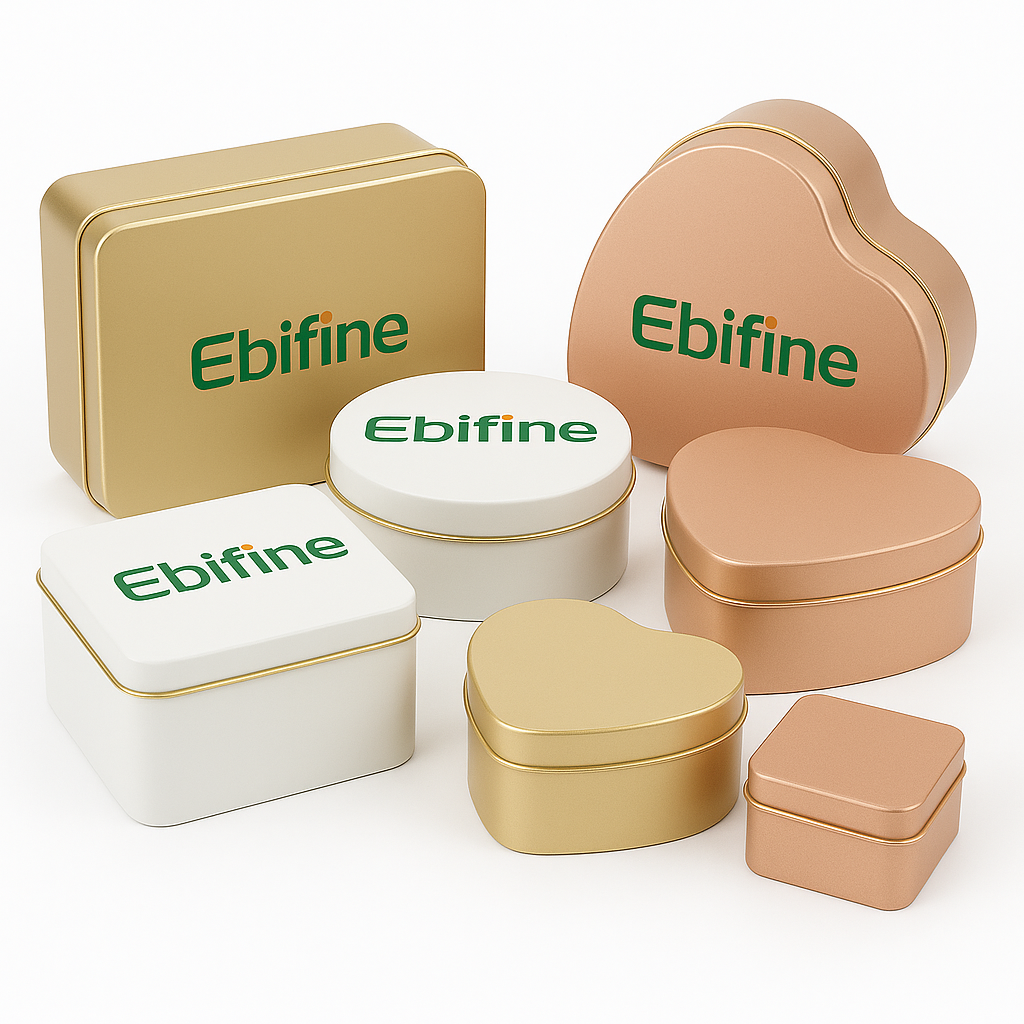
Ebifine Import And Export Company Limited is a Guangzhou-based packaging solutions provider established in 2016. For custom tin projects, Ebifine can help buyers coordinate stock-size and custom-size options according to product dimensions, artwork, quantity, intended use, and destination market.
This model is especially useful when your project requires more than one packaging component—for example, a cookie tin plus an insert, outer carton, paper sleeve, or retail bag.
Best For
- Importers without a China sourcing team
- Brands comparing several production options
- Buyers needing custom tins plus secondary packaging
- Projects requiring export packing and shipping coordination
For more tin packaging options, buyers can also review Ebifine's tin and metal packaging solutions.
3. Buy from Wholesale Packaging Distributors
Wholesale distributors purchase tins in large quantities and hold them in local or regional warehouses.
This sourcing method is useful when you need standard empty cookie tins quickly and do not require extensive customization.
Advantages
- Faster local delivery
- Lower purchase quantities
- No international freight management
- Easy replenishment
Limitations
- Higher unit cost than factory-direct sourcing
- Limited shapes and sizes
- Usually limited to stock colors and designs
- Full custom printing may not be available
Distributors are particularly useful for seasonal inventory shortages or brands testing a standard tin format before moving to fully customized packaging.
4. Source Through Online B2B Marketplaces
B2B marketplaces provide access to a large number of manufacturers, trading companies, and packaging suppliers.
They can be useful for:
- Comparing price ranges
- Discovering common mold sizes
- Finding different tin structures
- Benchmarking MOQ
- Identifying potential suppliers
However, buyers still need to verify the actual supplier behind each listing.
Before Placing an Order, Confirm:
- Whether the company is a manufacturer or trading company
- Factory address
- Existing mold availability
- Printing method
- Sample process
- MOQ
- Lead time
- Export packaging
- Quality-control procedure
Do not compare quotations based only on unit price. One supplier may include printing, individual polybags, inserts, and stronger cartons while another quotation includes only the bare tin.
5. Buy from Local or Specialty Baking Suppliers
Local restaurant-supply stores, craft suppliers, and baking-packaging retailers are useful when you need a small quantity immediately.
This is usually the easiest way to buy empty cookie tins in quantities such as:
- 12 pieces
- 24 pieces
- 50 pieces
- 100 pieces
Advantages
- No MOQ in many cases
- Immediate or very fast delivery
- Simple purchasing process
- Good for test orders
Limitations
- High unit cost
- Little or no customization
- Limited stock sizes
- Not economical for scaling
This method is best for home bakeries, test launches, samples, emergency replenishment, or very small seasonal programs.
6. Partner with a Custom Packaging Design Agency
Packaging agencies focus on concept development, structural design, branding, and project management rather than manufacturing the tins themselves.
This option can make sense when the packaging is a major part of the product's perceived value.
Typical agency-led projects may involve:
- New structural concepts
- Unusual tin shapes
- Premium opening experiences
- Complex inserts
- Gift-set packaging
- Coordinated secondary packaging
- High-end graphic design
Advantages
- Strong creative direction
- Sophisticated structural development
- Premium brand presentation
- One team managing the entire design process
Limitations
- Higher overall cost
- Agency management fees
- Longer development time
- Manufacturing is still outsourced to a factory network
For most standard cookie tin projects, this level of service is unnecessary. It is more suitable for premium gift brands and collectible packaging.
What to Check Before You Buy Empty Cookie Tins
Choosing the sourcing channel is only the first step. B2B buyers should also define the technical specifications before requesting quotations.
1. Tin Size and Shape
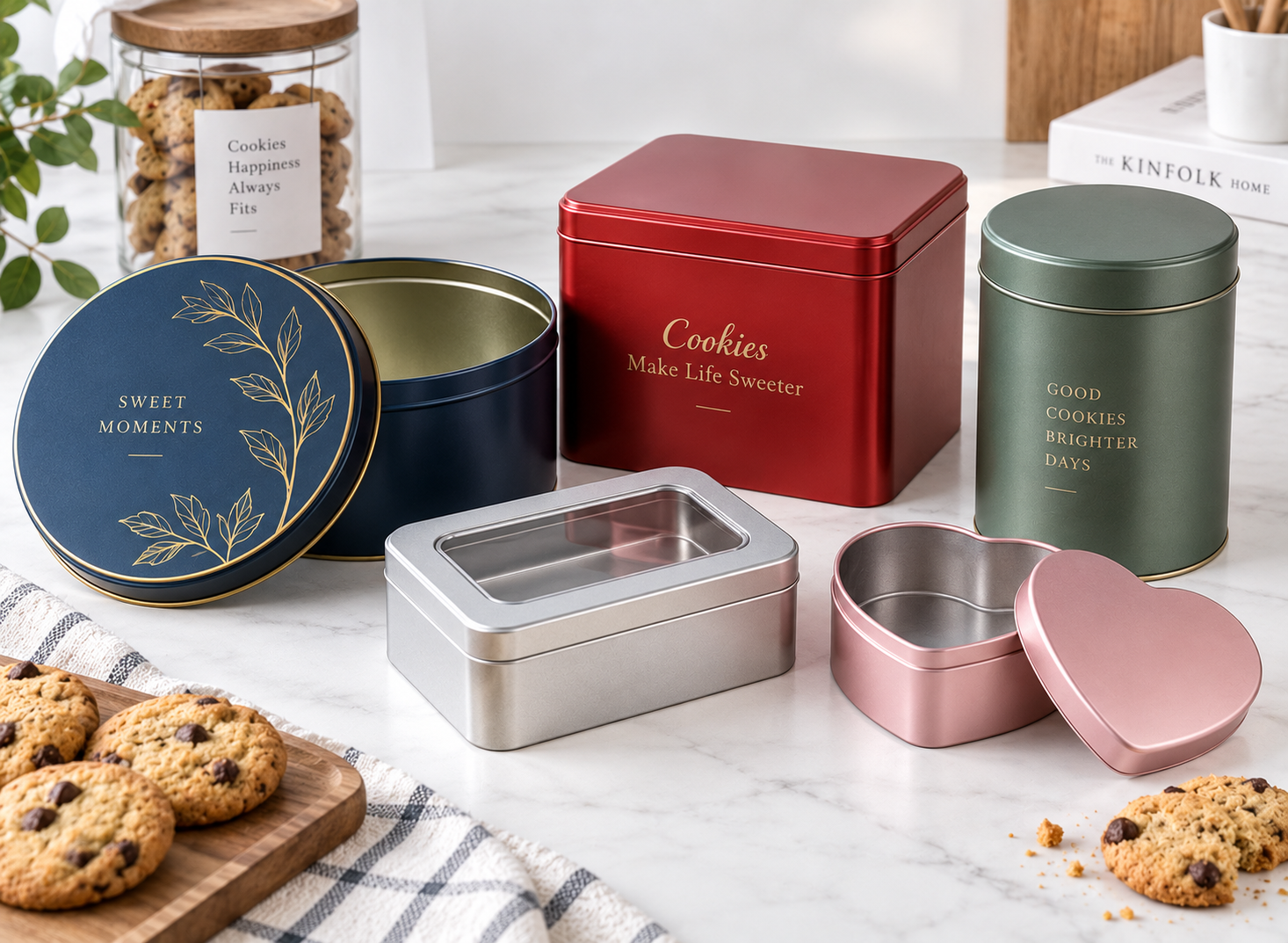
Common cookie tin shapes include:
- Round tins
- Square tins
- Rectangular tins
- Tall tins
- Shallow gift tins
- Hinged tins
- Two-piece lid-and-base tins
If your cookies are fragile, allow enough internal space for separators, trays, or inserts.
2. Food-Contact Requirements
For cookie packaging, buyers should confirm whether the tin will have direct or indirect food contact.
The internal coating, inks, and other food-contact components should be suitable for the intended use and destination market. The U.S. FDA provides guidance on food-contact substances and packaging.
Do not rely only on a supplier saying a tin is "food grade." Ask what testing or documentation can be provided for your actual market.
3. Tinplate Thickness
Material thickness influences rigidity and dent resistance.
The right specification depends on:
- Tin dimensions
- Shape
- Depth
- Product weight
- Stacking
- Shipping method
Larger or deeper tins may require stronger material or additional structural reinforcement.
4. Lid Structure
Common cookie tin closures include:
- Slip lids
- Step lids
- Hinged lids
- Screw lids
- Friction-fit lids
The best choice depends on the required appearance, ease of opening, and freshness expectations.
5. Printing and Finishing
Popular options include:
- CMYK offset printing
- Pantone spot colors
- Silk-screen printing
- Matte varnish
- Gloss varnish
- Metallic effects
- Embossing
- Debossing
For branded tins, request a physical sample or approved color proof before mass production.
6. Interior Inserts
Cookies can break during transportation even when the outer tin arrives undamaged.
Possible inserts include:
- Paper dividers
- Plastic trays
- PET trays
- Foam inserts
- Molded pulp
- Individual wrapping
The insert should be selected according to the cookie shape, fragility, and food-contact requirements.
7. Export Packaging
Tin boxes can dent and scratch during international shipping.
Ask the supplier how they will protect the tins using:
- Individual polybags
- Carton partitions
- Protective liners
- Strong export cartons
- Fragile labels
- Palletization
For international metal packaging projects, transport protection should be discussed before the order is confirmed—not after damage occurs.
Empty Cookie Tins: Stock Size or Fully Custom?
Choose Stock-Size Tins When:
- Your quantity is smaller
- You need a shorter lead time
- You want to avoid tooling costs
- Standard dimensions fit your cookies
- Custom printing is enough to differentiate the packaging
Choose Custom-Size Tins When:
- Your product requires an exact fit
- You need a unique shape
- Packaging differentiation is important
- Your quantity can support tooling costs
- You need special compartments or closure structures
For many first-time importers, the most economical approach is to begin by checking existing molds.
Are Cookie Tins a Sustainable Packaging Option?
Tinplate is steel-based and can enter established metal recycling systems. It is also commonly reused by consumers for storage after the original food is consumed.
For background on tin recycling, see the International Tin Association. Buyers can also review the U.S. EPA's information on containers, packaging, and recycling.
Actual recycling outcomes still depend on local collection and recycling infrastructure, so sustainability claims should be matched to the destination market.
What Information Should You Send for a Cookie Tin Quotation?
A complete RFQ helps suppliers quote faster and more accurately.
Provide:
- Tin dimensions
- Shape
- Quantity
- Cookie type and product weight
- Food-contact requirement
- Artwork or logo
- Printing colors
- Surface finish
- Insert requirement
- Destination country
If you do not yet know the tin size, provide the cookie dimensions and packing arrangement instead.
Frequently Asked Questions
What is the typical MOQ for custom cookie tins?
There is no universal MOQ. Stock tins with simple logo printing may be available in relatively low quantities, while fully custom printed or custom-tooled tins usually require higher volumes.
Can I buy empty cookie tins without printing?
Yes. Plain silver, gold, white, or other stock tins are commonly available from distributors, specialty suppliers, and some factories.
Can cookie tins be customized with my logo?
Yes. Depending on quantity and structure, options may include silk-screen printing, offset printing, full-surface artwork, labels, embossing, or debossing.
How long does a custom cookie tin project take?
Lead time depends on whether an existing mold is used. Stock-size tins with simple printing are generally faster than projects requiring a new mold, new tooling, physical sampling, and complex inserts.
Should cookies be packed directly inside the tin?
That depends on the food-contact coating and the cookie itself. Many brands use an inner food-grade bag, tray, paper cup, or liner in addition to the outer tin.
Is it cheaper to buy locally or import from China?
Local stock suppliers are often cheaper for very small quantities because there is no international freight or large MOQ. For larger custom orders, China sourcing can provide better unit economics, but buyers should compare total landed cost rather than unit price alone.
Final Recommendation
There is no single best way to buy empty cookie tins.
Choose the sourcing method according to your volume and customization needs:
- Very small or urgent orders: local or specialty suppliers
- Standard tins with faster replenishment: wholesale distributors
- Supplier discovery and comparison: B2B marketplaces
- Large, highly customized projects: direct factories
- Projects requiring sourcing coordination: packaging solutions providers
- Luxury, highly design-driven packaging: custom packaging agencies
For international buyers, the most important step is to define the technical specifications before comparing prices.
If you are sourcing custom cookie tins from China, you can contact Ebifine with your required size, quantity, artwork, food-contact requirements, and destination country to discuss suitable stock or custom options.