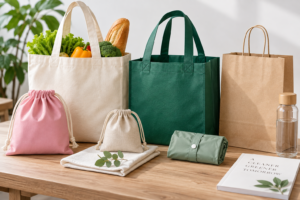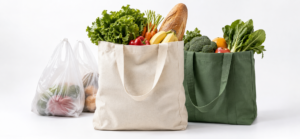
Reusable grocery tote bags are widely used by supermarkets, retailers, promotional companies, event organizers, and brands that want packaging designed for repeated use.
For B2B buyers, the best tote bag is not simply the one with the lowest unit price. Material, GSM, handle construction, printing method, load requirement, MOQ, packing volume, and intended reuse all affect the final sourcing decision.
This 2026 guide compares six practical reusable grocery tote bag styles and explains where each option fits best in wholesale purchasing.
Why Reusable Grocery Tote Bags Are Popular
Reusable tote bags can provide several practical benefits for businesses when the specification matches the intended use.
Common advantages include:
- Repeated-use potential
- Large printable branding area
- Multiple material choices
- Different handle and gusset structures
- Suitability for supermarkets, retail, events, and promotions
- Better brand visibility than plain disposable packaging
- Flexible customization for color, size, and printing
However, "reusable" does not automatically mean every bag is equally durable or sustainable. Performance depends on material, construction, weight, and how often the bag is actually reused.
For buyers developing custom projects, Ebifine's bag and carrier options can be used as a starting point for structure, material, printing, and quantity discussions.
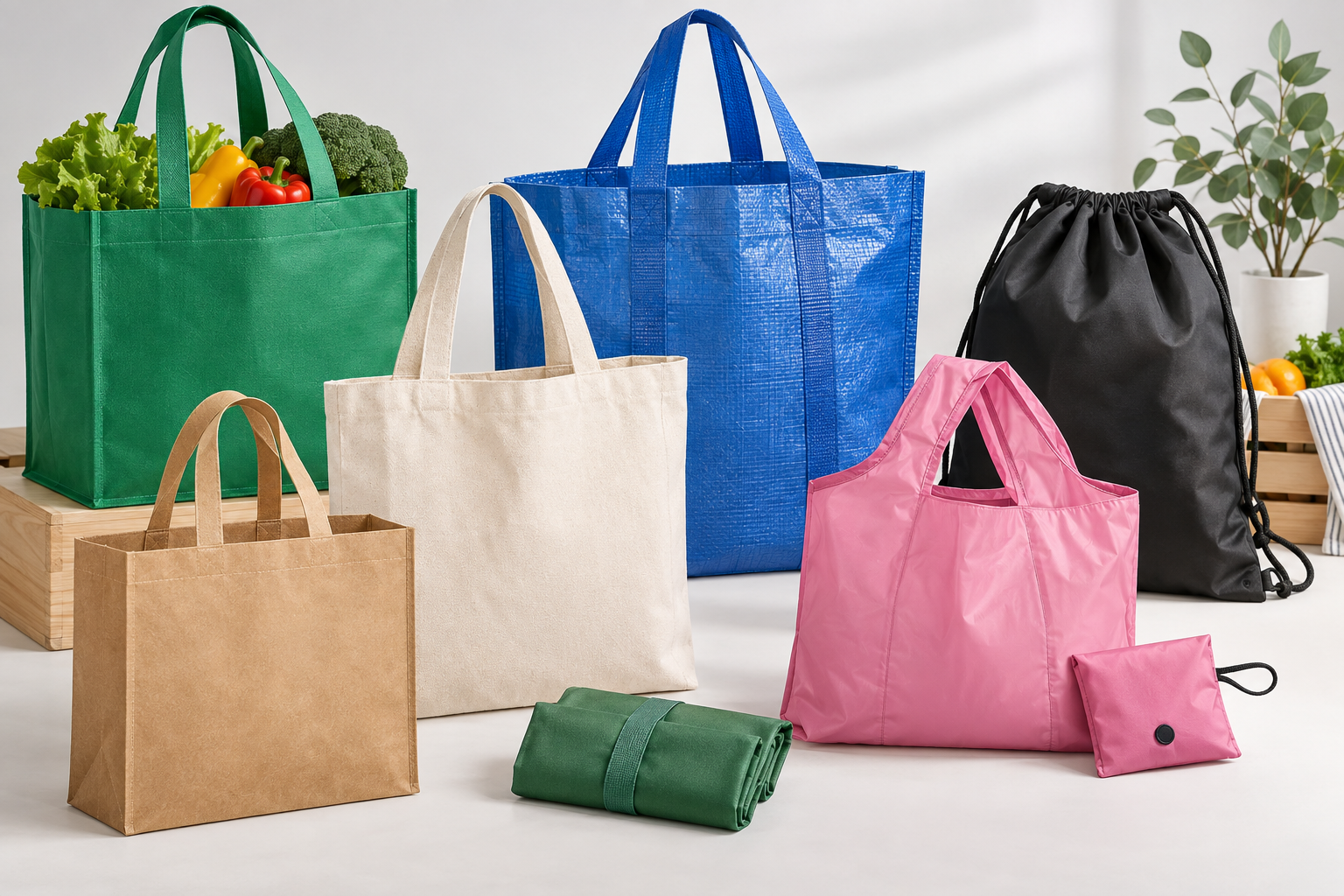
6 Reusable Grocery Tote Bag Styles to Compare
1. Non-Woven Grocery Tote Bags
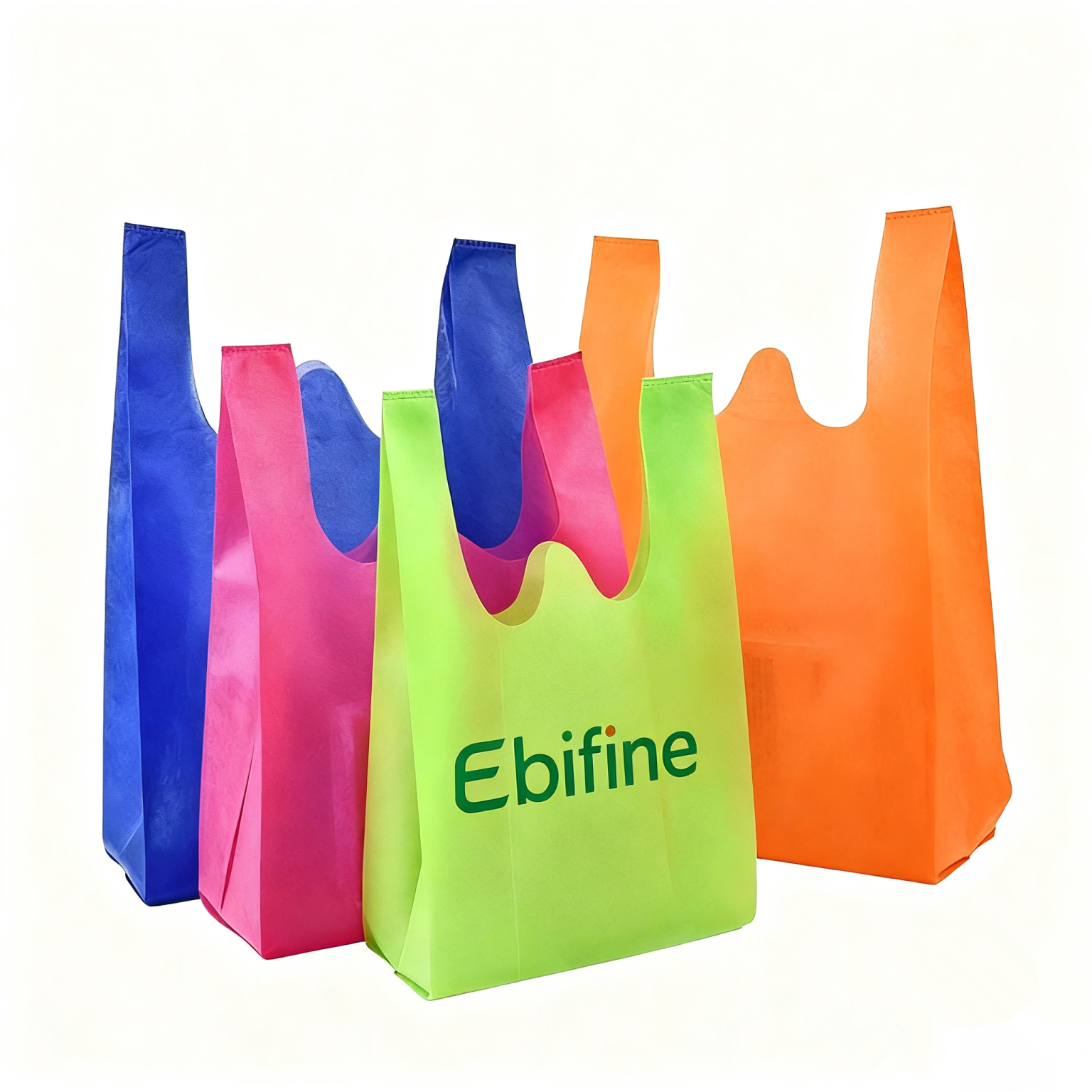
Non-woven polypropylene bags are one of the most common wholesale options for retail and grocery use.
Typical applications include:
- Supermarkets
- Trade shows
- Promotional campaigns
- Retail stores
- General shopping
Main advantages
- Lightweight
- Cost-efficient at volume
- Available in many stock colors
- Suitable for stitched or heat-sealed construction
- Good surface for simple logo printing
What to check
Confirm GSM, handle reinforcement, gusset size, seam method, and target load before production.
For heavier grocery applications, stitched construction may be more suitable than simple heat-sealed seams.
2. Canvas Tote Bags
Canvas totes are typically selected when durability, hand feel, and premium branding matter more than minimizing unit cost.
Typical applications include:
- Premium grocery programs
- Lifestyle brands
- Clothing stores
- Corporate gifts
- Long-term promotional merchandise
Main advantages
- Strong woven structure
- Premium appearance
- Washable in many constructions
- Suitable for screen printing and embroidery
- Good long-term promotional value
What to check
Ask about fabric weight, cotton composition, handle reinforcement, shrinkage, washing instructions, and printing compatibility.
3. Woven Polypropylene Grocery Bags
Woven PP bags are commonly used for heavier grocery loads and large-capacity shopping bags.
Typical applications include:
- Supermarkets
- Warehouse clubs
- Heavy groceries
- Repeated retail use
- Large promotional shopping bags
Main advantages
- Strong load-bearing performance
- Good dimensional stability
- Suitable for lamination
- Large printable surface
- Durable for repeated use
What to check
Confirm fabric weight, lamination structure, handle stitching, bottom reinforcement, and target carrying weight.
4. Foldable Shopping Totes
Foldable reusable bags are designed for convenience and portability.
They may include:
- Built-in pouches
- Snap-button straps
- Elastic loops
- Simple folded structures
Typical applications include:
- Loyalty programs
- Travel campaigns
- Lifestyle brands
- Retail giveaways
- Convenience shopping
Main advantages
- Easy to carry
- Compact storage
- Encourages repeat use
- Strong promotional value
- Suitable for brand campaigns
What to check
The folding mechanism can affect production cost. Confirm whether pouches, snaps, straps, or zippers are included in the quotation.
5. Drawstring Reusable Bags
Drawstring bags are useful when the buyer needs a lightweight closure instead of an open-top grocery tote.
Typical applications include:
- Footwear
- Sportswear
- Hotel laundry
- Event kits
- Promotional products
Main advantages
- Secure closure
- Easy to carry
- Lightweight
- Good logo area
- Suitable for multiple materials
What to check
Confirm cord material, seam strength, eyelets or reinforcement, and whether the drawstring construction is appropriate for the intended load.
6. Custom Printed Reusable Tote Bags
"Custom printed tote bag" is not a separate material, but it is an important sourcing category because branding requirements can significantly change cost and MOQ.
Possible base materials include:
- Non-woven PP
- Woven PP
- Cotton
- Canvas
- Polyester
- rPET
Main advantages
- Strong brand visibility
- Flexible artwork options
- Suitable for retail campaigns
- Useful for promotions and events
What to check
The printing method should match the artwork and bag material.
Simple logos may work well with silk-screen printing, while full-color artwork may require heat transfer, digital printing, or lamination.
How to Choose the Right Material
The right material depends on how the bag will actually be used.
For Lightweight Promotions
Consider:
- Non-woven PP
- Lightweight polyester
- Die-cut or simple stitched structures
For Grocery Shopping
Consider:
- Stitched non-woven PP
- Woven PP
- Heavier reusable structures
For Premium Retail
Consider:
- Canvas
- Cotton
- Premium laminated woven bags
For Foldability
Consider:
- Polyester
- Nylon
- Lightweight rPET
- Thin non-woven structures
Do not choose material based only on appearance. Load requirement, packing volume, washing, reuse, and printing should also be considered.
GSM, Fabric Weight, and Load Capacity
For non-woven and woven bags, GSM is one of the most important specifications.
A higher GSM generally means more material, but performance also depends on:
- Handle design
- Stitching
- Bag dimensions
- Gusset
- Seam construction
- Product weight
The safest approach is to approve a physical sample and request a load test before placing a large order.
Printing Options for Reusable Grocery Bags
Silk-Screen Printing
Suitable for:
- One or two colors
- Simple logos
- Larger quantities
- Non-woven and canvas bags
Heat Transfer Printing
Suitable for:
- Multi-color designs
- Gradients
- Smaller detailed artwork
Laminated Full-Color Printing
Suitable for:
- Woven PP bags
- Premium grocery bags
- Edge-to-edge graphics
- Photographic designs
Embroidery
Suitable for:
- Canvas
- Cotton
- Premium promotional totes
Embroidery usually creates a more premium appearance but is not the most economical choice for large low-cost grocery programs.
Why Wholesale Purchasing Can Make Sense
Wholesale buying can help businesses standardize packaging and control unit cost when demand is predictable.
Potential advantages include:
- Lower unit cost at scale
- More consistent supply
- Better access to custom printing
- Easier brand standardization
- Improved production planning
However, ordering more is not always better.
Large quantities can create:
- Storage costs
- Obsolete inventory
- Artwork-change risk
- Cash-flow pressure
The best order size balances price breaks with realistic usage.
Where Ebifine Fits for Wholesale Buyers
Ebifine Import And Export Company Limited was established in 2016 in Guangzhou, China and works as a packaging solutions provider for international buyers.
For reusable grocery tote bag projects, Ebifine can help coordinate:
- Bag material
- GSM
- Size
- Gusset
- Handle structure
- Printing
- Artwork
- Sample approval
- Packing
- Export shipment
This is especially useful for buyers who want to compare several reusable bag structures or combine bags with other packaging products under one sourcing project.
Quick Comparison by Application
Best for cost-efficient supermarket programs:
Non-woven PP bags.
Best for heavier grocery loads:
Woven PP bags or reinforced stitched totes.
Best for premium branding:
Canvas or cotton totes.
Best for compact everyday carry:
Foldable bags.
Best for footwear, hospitality, or event kits:
Drawstring bags.
Best for promotional campaigns:
Custom printed non-woven, woven, cotton, or polyester totes.
Sustainability Considerations
Reusable bags should be evaluated across their full use cycle rather than judged by material name alone.
Important factors include:
- Material type
- Bag weight
- Number of reuses
- Washing requirements
- Transportation
- Recycled content
- Local recycling infrastructure
- End-of-life handling
The U.S. EPA provides broader guidance on waste reduction and reuse.
The UN Environment Programme also emphasizes evaluating alternatives to single-use plastics through a broader life-cycle perspective.
For supplier quality-management background, buyers can review ISO 9001.
Frequently Asked Questions
Which reusable grocery bag material is the most cost-efficient?
For many high-volume retail applications, non-woven polypropylene is one of the most cost-efficient options. The right choice still depends on load, reuse requirements, printing, and destination market.
Are canvas tote bags better than non-woven bags?
Not universally. Canvas offers a more premium feel and can be highly durable, but it is usually heavier and more expensive. Non-woven PP is often more practical for high-volume retail programs.
Can reusable tote bags be customized with logos?
Yes. Printing options can include silk screen, heat transfer, digital printing, lamination, or embroidery depending on the material.
How do I choose the correct GSM?
Choose GSM according to bag size, handle structure, intended load, seam construction, and reuse requirement rather than selecting the highest GSM automatically.
Is wholesale purchasing always cheaper?
Unit cost usually improves at higher quantities, but total cost should also include storage, freight, inventory risk, and cash flow.
What information should I send for a quotation?
Provide:
- Bag material
- Width × height × gusset
- GSM or fabric weight
- Quantity
- Bag color
- Handle type and length
- Printing artwork
- Number of print colors
- Intended load
- Destination country
Final Recommendation
There is no single best reusable grocery tote bag for every buyer.
Choose according to the actual application:
- Non-woven PP for high-volume retail and promotions
- Woven PP for stronger grocery loads
- Canvas or cotton for premium branding
- Foldable bags for convenience
- Drawstring bags for closed-top applications
- Custom printed totes when brand visibility is the priority
A good wholesale sourcing decision balances material, GSM, construction, printing, load requirement, MOQ, packing volume, and total landed cost.
For custom reusable grocery tote bags, buyers can contact Ebifine with their material preference, dimensions, GSM, quantity, artwork, intended load, and destination country for a more accurate sourcing recommendation.