Decorative tin boxes are widely used for tea, cookies, chocolates, cosmetics, candles, gifts, promotional products, and seasonal retail packaging. For B2B buyers, the right tin structure affects not only appearance, but also product protection, printing options, tooling cost, MOQ, packing efficiency, and shipping risk.
Instead of choosing a supplier based only on a low quote, buyers should first decide which decorative tin box style best fits the product and brand positioning.
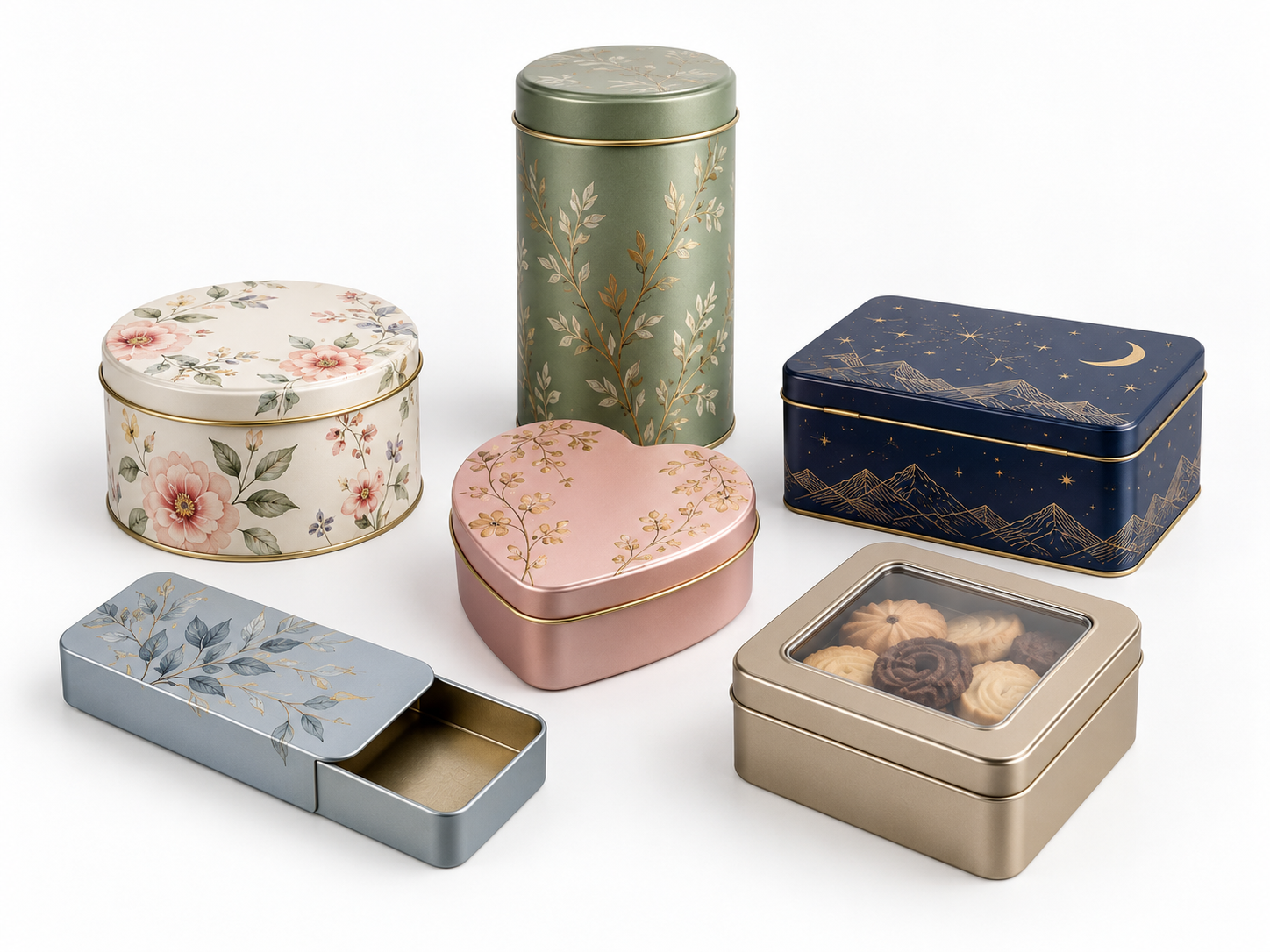
This 2026 guide compares six practical tin box styles for wholesale sourcing and explains what to check before placing an order.
Why Decorative Tin Boxes Are Popular for Wholesale Packaging
Decorative tins are often selected when brands want packaging that feels more premium and reusable than a basic disposable carton or pouch.
Common advantages include:
- Strong structural protection
- Good printability
- Embossing and debossing options
- Multiple lid structures
- Reusable after purchase
- Suitable for seasonal and gift packaging
- Available in stock sizes or custom tooling
- Good compatibility with inserts and sleeves
Tinplate is steel coated with a thin layer of tin. The final package performance depends on the tinplate thickness, lid structure, seams, coating, printing, and whether an inner liner or pouch is used.
For buyers exploring metal packaging options, Ebifine's tin and aluminum packaging category can be used as a starting point for dimensions, structures, and customization ideas.
6 Decorative Tin Box Styles to Compare
1. Two-Piece Lid and Base Tins
This is one of the most common decorative tin structures.
The lid is fully removable from the base, making it suitable for:
- Cookies
- Chocolates
- Tea
- Gift sets
- Candles
- Promotional products
Main advantages
- Familiar opening experience
- Large printable surface
- Easy to produce in round, square, or rectangular shapes
- Suitable for embossing
- Good for premium gift packaging
What to check
Confirm lid fit, tin depth, inner dimensions, and whether the product needs an insert or inner food-grade bag.
2. Hinged Lid Tin Boxes
Hinged tins keep the lid permanently attached to the base.
They are commonly used for:
- Cosmetics
- Small accessories
- Stationery
- Promotional kits
- Gift packaging
- Collectibles
Main advantages
- Convenient repeated opening
- Lid cannot be misplaced
- Premium feel
- Good for compact products
- Suitable for inserts
What to check
Ask about hinge durability, lid alignment, opening angle, and whether the hinge affects stacking or carton packing.
3. Sliding Lid Tin Boxes
Sliding tins use a sleeve-like lid that moves horizontally over the base.
Typical applications include:
- Mints
- Small stationery
- Electronics accessories
- Travel products
- Promotional items
- Small gift sets
Main advantages
- Compact structure
- Distinctive opening experience
- Good for smaller items
- Easy to carry
- Strong branding potential
What to check
Confirm sliding resistance, lid tolerance, edge finish, and whether the structure remains smooth after repeated use.
4. Window Tin Boxes
Window tins combine a metal body with a transparent window, usually in the lid.
They are suitable for:
- Cookies
- Tea
- Confectionery
- Gift sets
- Crafts
- Cosmetics
Main advantages
- Product visibility
- Premium shelf presentation
- Good for decorative food products
- Strong branding surface around the window
What to check
Ask what window material is used, how it is fixed, whether it is food-contact suitable where relevant, and how the window affects recyclability.
5. Shaped Decorative Tins
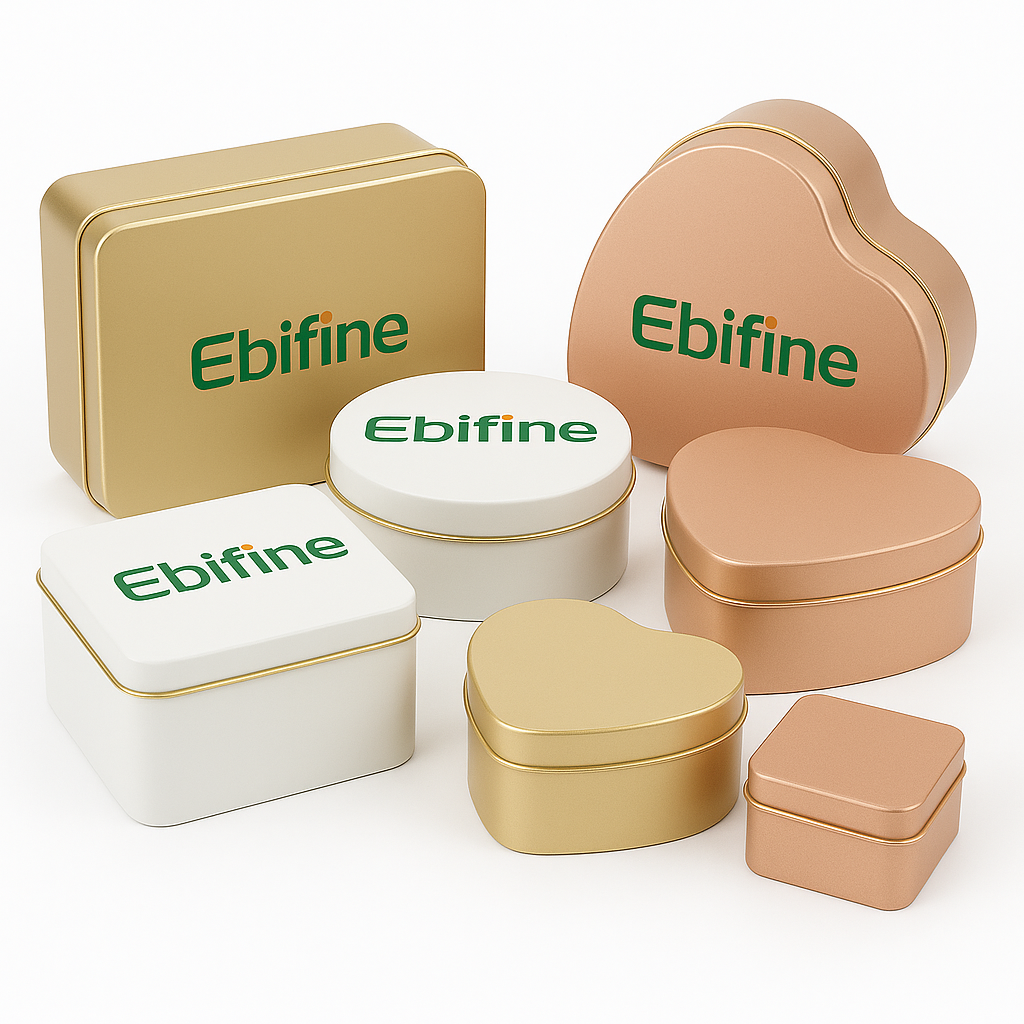
Custom-shaped tins can create stronger visual differentiation than standard round or rectangular boxes.
Common shapes include:
- Heart
- Star
- Book
- House
- Hexagon
- Oval
- Specialty seasonal shapes
Main advantages
- Strong shelf impact
- Memorable gifting presentation
- High branding value
- Suitable for seasonal campaigns
What to check
Unique shapes may require custom tooling, higher MOQs, longer sampling time, and more complex carton packing.
If an existing mold is available, buyers may be able to reduce tooling cost and development time significantly.
6. Tall Canisters and Deep Tins
Tall decorative tins are commonly used for:
- Tea
- Coffee
- Biscuits
- Confectionery
- Gift sets
- Specialty food
Main advantages
- Large capacity
- Premium vertical presentation
- Good shelf visibility
- Suitable for stacking
- Strong full-body printing area
What to check
Deeper tins may require stronger material or structural reinforcement to reduce denting during transport.
Printing and Finishing Options
Decorative tin packaging can support a wide range of branding effects.
Common Printing Options
- CMYK offset printing
- Pantone spot colors
- Silk-screen printing
- Digital printing for selected projects
Common Surface Finishes
- Matte varnish
- Gloss varnish
- Metallic effects
- Brushed effects
- Soft-touch-style coatings
- Embossing
- Debossing
Decorative Details
- Raised logos
- Recessed patterns
- Clear windows
- Paper sleeves
- Printed inserts
- EVA or foam inserts
- Gift ribbons or outer cartons
Before mass production, request a physical sample or color proof whenever artwork accuracy is important.
Stock Size vs. Custom Tooling
Not every decorative tin project needs a new mold.
Choose a Stock Size When:
- You need a lower MOQ
- You want a shorter lead time
- Standard dimensions fit your product
- You only need printing or surface customization
- Budget is more important than a unique shape
Choose Custom Tooling When:
- Product fit is critical
- You need a unique shape
- Structural differentiation is part of the brand
- Existing molds do not meet your size requirement
- Order volume can support tooling cost
For many first-time buyers, checking the supplier's existing mold list before opening new tooling is the most cost-efficient approach.
What to Check Before Ordering Decorative Tin Boxes Wholesale
Before approving a quotation, confirm:
- Tin dimensions
- Tinplate thickness
- Lid structure
- Existing mold availability
- Tooling cost
- Printing method
- Pantone color requirements
- Embossing or debossing
- Window requirement
- Insert requirement
- Individual protective packing
- Export carton strength
- Sample lead time
- Bulk production lead time
- Destination country
For food-related projects, confirm that coatings, inks, liners, and other food-contact materials are suitable for the intended application. The U.S. FDA provides guidance on food-contact substances and packaging.
Where Ebifine Fits for Decorative Tin Packaging Buyers
Ebifine Import And Export Company Limited was established in 2016 in Guangzhou, China and works as a packaging solutions provider for international buyers.
For decorative tin projects, Ebifine can help coordinate:
- Existing mold searches
- Stock or custom sizes
- Shape selection
- Printing
- Surface finishing
- Inserts
- Sampling
- Quality inspection
- Protective packing
- Export shipment
This is especially useful for buyers who need tin packaging together with outer cartons, sleeves, gift boxes, or other secondary packaging.
Quick Comparison by Application
Best for cookies and chocolates:
Two-piece tins or window tins.
Best for tea and coffee:
Tall canisters or deep tins.
Best for cosmetics and accessories:
Hinged tins.
Best for compact promotional items:
Sliding tins.
Best for seasonal gifts:
Shaped decorative tins.
Best for product visibility:
Window tins.
Sustainability Considerations
Tinplate is steel-based and can enter established metal recycling streams. Decorative tins are also often reused by consumers for storage after the original product is consumed.
However, sustainability depends on more than the metal itself.
Consider:
- Total material weight
- Reuse potential
- Window material
- Inserts
- Coatings
- Secondary packaging
- Shipping distance
- Local recycling infrastructure
For background on tin recycling, see the International Tin Association.
For broader information on packaging waste and recovery, buyers can review the U.S. EPA's containers and packaging resources.
Frequently Asked Questions
What is the typical MOQ for decorative tin boxes?
MOQ depends on whether an existing mold is used, the printing method, the tin structure, and the level of customization. Stock-size tins with simple printing can usually support lower MOQs than fully custom-tooled projects.
Can decorative tins be used for food?
Yes, but food-contact coatings, inks, liners, and filling conditions must be suitable for the intended product and destination market.
Can I emboss my logo on the lid?
Yes. Embossing and debossing are common decorative options, but they may require additional tooling.
Are custom-shaped tins expensive?
They can be more expensive because custom tooling, sampling, and more complex packing may be required. Existing molds can reduce these costs.
How should decorative tins be packed for export?
Individual polybags, carton partitions, strong export cartons, fragile labels, and palletization can help reduce scratches and dents during long-distance transport.
What information should I send for a quotation?
Provide:
- Tin dimensions
- Shape
- Quantity
- Product application
- Lid structure
- Artwork
- Printing colors
- Finish requirements
- Insert requirements
- Destination country
Final Recommendation
The best decorative tin box is not necessarily the most complex or expensive design.
Choose the structure according to the product:
- Two-piece tins for classic gift and food packaging
- Hinged tins for repeated use
- Sliding tins for compact products
- Window tins for product visibility
- Shaped tins for strong shelf differentiation
- Tall canisters for tea, coffee, and larger-capacity products
A good wholesale sourcing decision balances structure, tooling, printing, MOQ, packing protection, lead time, and total landed cost.
For custom decorative tin boxes, buyers can contact Ebifine with their dimensions, quantity, artwork, application, and destination country for a more accurate sourcing recommendation.