For supermarkets, retailers, promotional agencies, event organizers, and importers, sourcing reusable grocery bags in bulk is not only about finding the lowest unit price. The right purchasing strategy should balance material, durability, printing, MOQ, lead time, freight, and the number of times the bag is realistically expected to be reused.
Reusable grocery bags can be made from non-woven polypropylene, woven polypropylene, recycled PET, cotton, canvas, and other materials. Each option has a different cost structure and performance profile.
This 2026 guide explains five practical ways to control sourcing costs without using "cheap" as the purchasing standard.
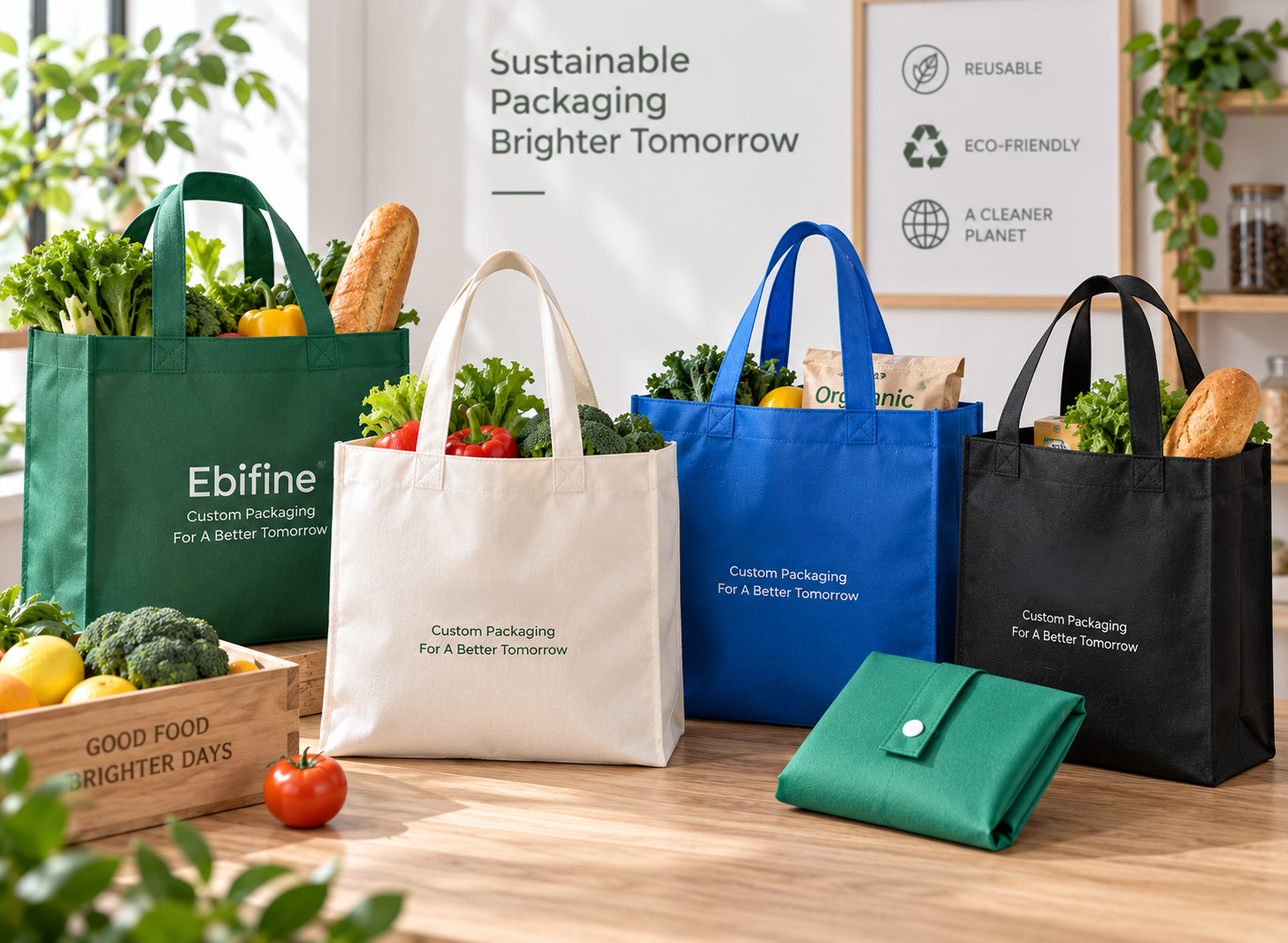
Choose the Right Material for the Actual Use
Material selection is one of the biggest drivers of cost.
A bag designed for a one-day trade show does not need the same fabric weight or construction as a reusable supermarket bag carrying heavy groceries.
Common options include:
Non-Woven Polypropylene
Best for:
- Supermarkets
- Promotional campaigns
- Retail stores
- Trade shows
- General shopping
Main advantages:
- Lightweight
- Cost-efficient at scale
- Good printing surface
- Available in many colors
- Suitable for stitched or heat-sealed construction
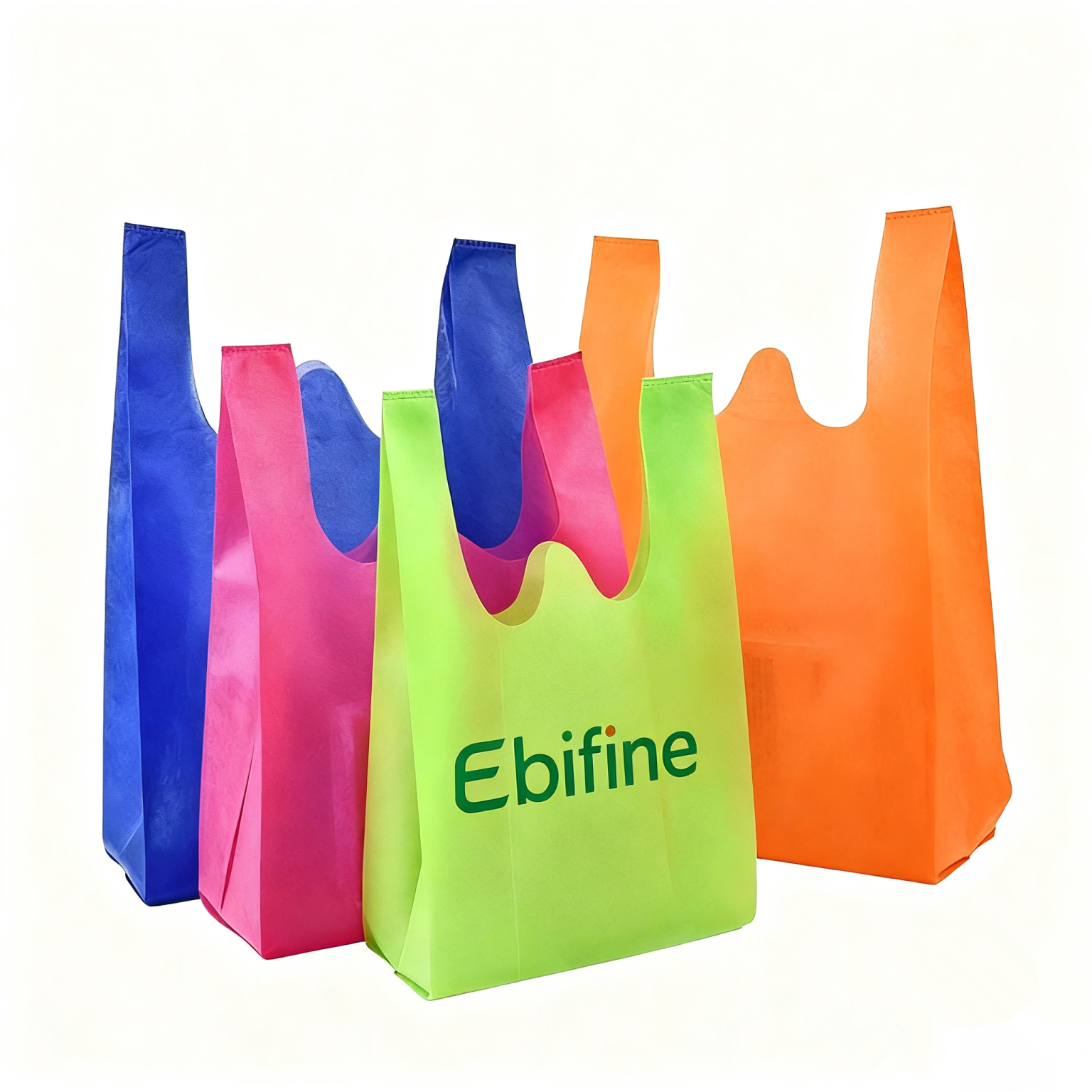
For buyers comparing custom specifications, Ebifine's non-woven bag solutions can be used as a starting point for GSM, size, printing, and handle options.
Woven Polypropylene
Best for:
- Heavy groceries
- Repeated retail use
- Large-capacity bags
- Laminated shopping bags
Main advantages:
- Stronger load-bearing performance
- Good dimensional stability
- Suitable for lamination
- Durable for repeated use
Cotton and Canvas
Best for:
- Premium retail
- Lifestyle brands
- Corporate gifting
- Long-term promotional merchandise
Main advantages:
- Premium hand feel
- Strong brand perception
- Suitable for embroidery and screen printing
- Good for higher-value campaigns
The main trade-off is cost. Cotton and canvas usually require more material and labor than basic non-woven PP bags.
Recycled PET
Best for:
- Brands prioritizing recycled-content messaging
- Retail programs
- Promotional shopping bags
- Lightweight reusable formats
Important sourcing note:
Ask for documentation supporting the claimed recycled content rather than relying only on marketing wording.
Match GSM, Size, and Construction to the Load
Over-specifying a bag increases cost. Under-specifying it increases failure risk.
For non-woven and woven bags, buyers should define:
- Width
- Height
- Gusset
- Handle width
- Handle length
- GSM
- Seam method
- Target load
- Intended number of reuses
A smaller 70–80 GSM promotional bag may be suitable for lightweight items, while heavier grocery applications may require higher GSM, reinforced handles, and stitched seams.
The best way to control cost is not to automatically choose the lightest material. It is to choose the lowest specification that still meets the real performance requirement.
Request a Load Test
Before a large order, ask the supplier to test:
- Handle attachment
- Side seams
- Bottom seam
- Gusset strength
- Repeated loading
A physical pre-production sample is much more useful than relying on a general statement such as "heavy duty."
Simplify Printing Without Weakening the Brand
Printing complexity can significantly affect unit cost.
For high-volume reusable grocery bags, simple artwork often provides the best balance between branding and budget.
Silk-Screen Printing
Best for:
- One or two colors
- Bold logos
- Large quantities
- Non-woven and canvas bags
Advantages:
- Cost-efficient
- Good color coverage
- Simple setup
- Suitable for strong brand marks
Heat Transfer Printing
Best for:
- Multi-color artwork
- Gradient designs
- Smaller detailed graphics
This option usually costs more than simple screen printing.
Laminated Full-Color Printing
Best for:
- Woven PP bags
- Premium grocery bags
- Edge-to-edge artwork
- Photographic designs
Laminated printing can create a stronger shelf presence but usually involves higher setup costs and MOQs.
Cost-Control Tips
- Use one or two print colors where possible
- Print one side instead of both sides when appropriate
- Avoid oversized print areas unless necessary
- Use stock bag colors that already match the brand
- Finalize artwork before sampling to reduce revision costs
Use Order Volume Strategically
Bulk pricing improves when fixed production costs are spread across more units.
However, ordering more is only economical if the bags will actually be used.
Before increasing volume, calculate:
- Monthly bag consumption
- Seasonal demand
- Storage space
- Inventory turnover
- Artwork stability
- Risk of brand updates
- Freight cost per unit
When a Larger Order Makes Sense
A larger production run may be appropriate when:
- The artwork will remain unchanged
- The bag specification is standardized
- Annual usage is predictable
- Warehouse space is available
- Sea freight can be used
- The price break is meaningful
When Smaller Runs Are Better
Smaller quantities may make more sense when:
- You are testing a new bag style
- Branding may change
- Demand is uncertain
- Storage is expensive
- You need several designs rather than one large run
For many buyers, the most economical strategy is not the biggest MOQ—it is the best balance between unit price and inventory risk.
Plan Freight and Packing Before Production
Reusable grocery bags are lightweight but can occupy significant carton volume.
Poor freight planning can erase savings achieved during manufacturing.
Before confirming an order, ask for:
- Pieces per carton
- Carton dimensions
- Gross weight
- Net weight
- Total carton quantity
- Estimated CBM
- Pallet requirements
- Compression packing options
Sea Freight
Usually more economical for large-volume international orders when lead time allows.
Air Freight
Useful for:
- Samples
- Urgent replenishment
- Small quantities
- Launch deadlines
But volumetric weight can make air freight expensive for bulky bags.
Compression Packing
For suitable bag styles, compression can reduce carton volume and lower freight cost.
However, confirm that compression will not permanently crease laminated surfaces, handles, or printed areas.
Where Ebifine Fits for Bulk Bag Buyers
Ebifine Import And Export Company Limited was established in 2016 in Guangzhou, China and works as a packaging solutions provider for international buyers.
For reusable grocery bag projects, Ebifine can help coordinate:
- Material selection
- GSM
- Bag size
- Gusset
- Handle structure
- Printing method
- Artwork
- Sample approval
- Packing method
- Export shipment
This is useful for buyers who want to compare several bag structures or combine reusable bags with other packaging products under one sourcing project.
Quick Comparison by Buying Priority
Best for lowest entry cost at volume:
Heat-sealed non-woven PP bags.
Best for stronger grocery loads:
Stitched non-woven or woven PP bags.
Best for premium branding:
Canvas or cotton bags.
Best for full-color retail graphics:
Laminated woven or non-woven bags.
Best for recycled-content positioning:
rPET bags with supporting material documentation.
Best for simple promotional use:
Die-cut or lightweight non-woven bags.
Sustainability Considerations
Reusable does not automatically mean sustainable.
The environmental performance of a bag depends on factors such as:
- Material
- Weight
- Number of reuses
- Washing frequency
- Transportation
- Recycled content
- Local recycling systems
- End-of-life handling
For broader information on packaging and waste, see the U.S. EPA's containers and packaging resources.
The UN Environment Programme also emphasizes that alternatives to single-use plastics should be evaluated across their full life cycle rather than judged by material alone.
For supplier quality-management background, buyers can review ISO 9001.
What to Include in Your RFQ
A complete RFQ helps suppliers quote faster and reduces misunderstandings.
Provide:
- Bag material
- Width × height × gusset
- GSM
- Quantity
- Bag color
- Handle type
- Handle length
- Printing artwork
- Number of print colors
- One-side or two-side printing
- Intended load
- Destination country
If you are unsure which construction is suitable, provide the product type and approximate carrying weight instead.
Frequently Asked Questions
What is the most cost-efficient reusable grocery bag material?
For many high-volume retail applications, non-woven polypropylene is one of the most cost-efficient options. However, the best choice depends on load, reuse expectations, printing, and destination-market requirements.
Is a higher GSM always better?
No. Higher GSM generally increases material usage and rigidity, but it also increases cost and shipping weight. The correct GSM should match the intended load and reuse requirement.
Is one-side printing cheaper than two-side printing?
Usually yes, because one-side printing reduces ink usage, setup, and machine time.
Should I order all of my annual demand at once?
Only when demand is predictable, artwork is stable, storage is available, and the unit-price reduction justifies the inventory commitment.
Can reusable grocery bags be custom colored?
Yes. Stock colors are usually more economical, while custom fabric colors may require higher MOQs and longer lead times.
How can I reduce shipping cost?
Use sea freight for larger orders when lead time allows, optimize carton packing, and ask whether compression packing is suitable for the selected bag structure.
Final Recommendation
The best way to reduce the cost of reusable grocery bags is not to search for the "cheapest" bag.
Instead:
- Match the material to the application
- Avoid unnecessary GSM
- Simplify printing
- Order at a sensible volume
- Optimize carton packing
- Plan sea freight early
- Approve samples before mass production
These steps help reduce total landed cost while maintaining a bag that performs properly in real retail use.
For custom reusable grocery bags, buyers can contact Ebifine with their material preference, size, GSM, quantity, artwork, target load, and destination country for a more accurate sourcing recommendation.