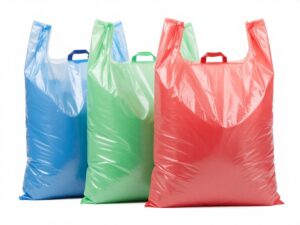
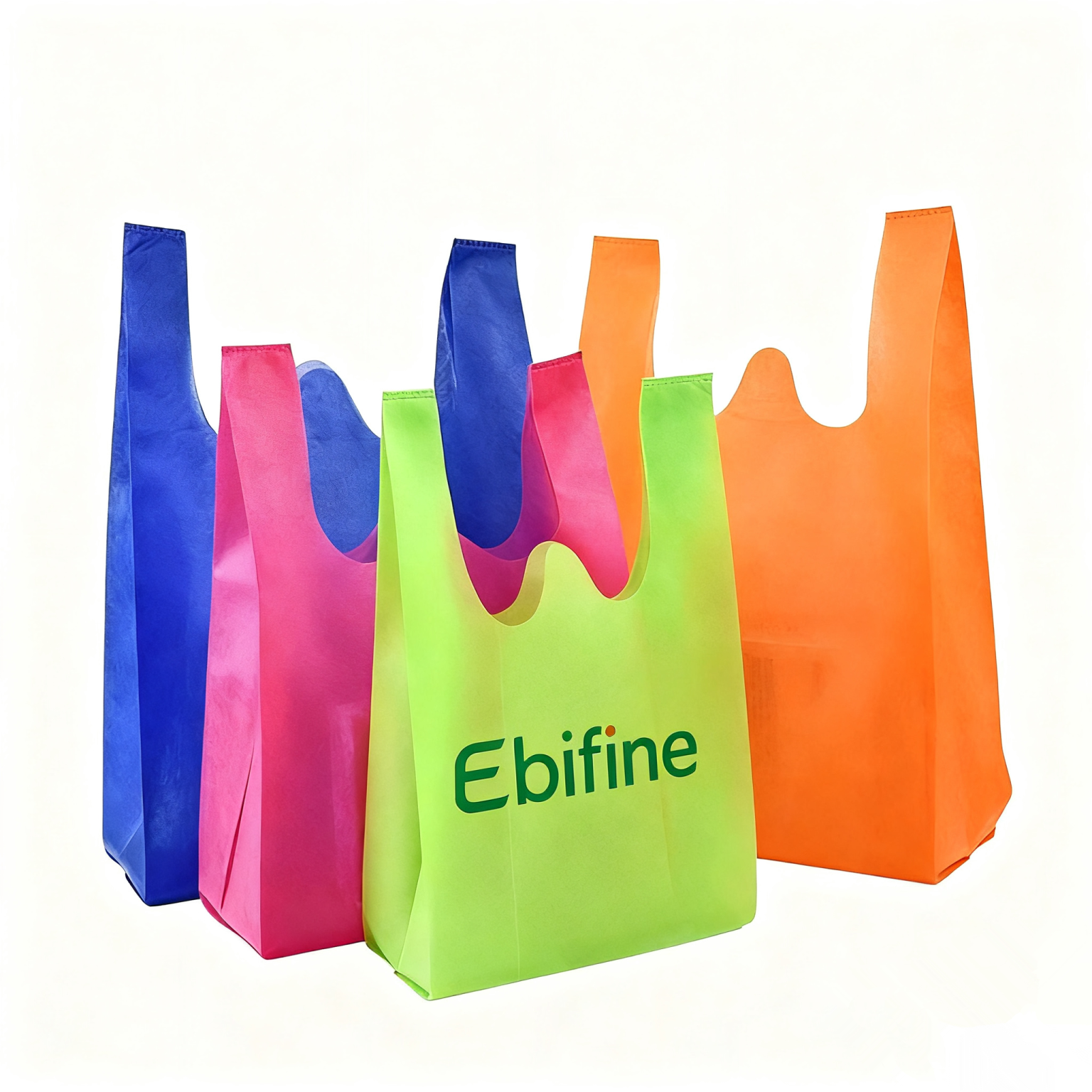
When designing printed plastic bags, we recommend starting with the job the bag must perform—not with the logo. Decide what it needs to carry, how customers will use it, how it will be printed, and what impression it should leave. Those decisions determine whether the final packaging is practical and commercially worthwhile.
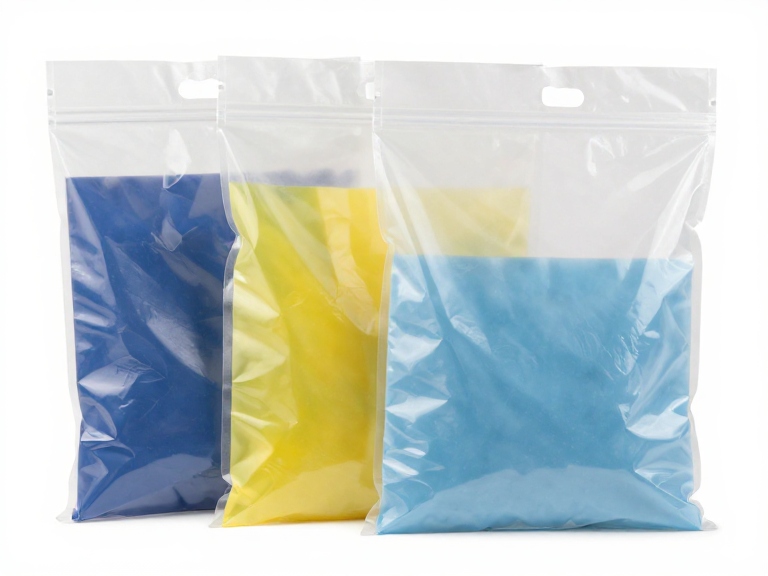
Quick Answer: What Matters Most?
The best printed plastic bag design balances material, load capacity, dimensions, print quality, artwork, and total landed cost. Choose the bag structure and plastic film for the product and usage conditions first. Then finalize the size, handle, colors, print coverage, and finishing details around those requirements.
For retail stores, a well-sized bag with clear branding and reliable handles is usually a better investment than an elaborate design on a weak film. For e-commerce and product packaging, protection, sealing, opacity, and shipping efficiency may matter more than large-format branding.
| Design decision | What to check | Our recommendation |
|---|---|---|
| Bag purpose | Retail carryout, product packaging, promotion, or shipping | Define the primary use before selecting the structure |
| Material | PE, PP, recycled content, thickness, and required performance | Specify the film by use and load, not by price alone |
| Dimensions | Product width, height, depth, and usable space | Measure the actual packed product and allow practical clearance |
| Printing | Print process, colors, coverage, and production quantity | Match the print method to artwork complexity and order volume |
| Handles and seams | Weight, grip, reinforcement, and stress points | Prioritize carrying strength over decorative details |
| Compliance | Product-contact requirements, claims, and local regulations | Verify requirements for the destination market and intended use |
| Total cost | Unit price, setup, freight, defects, and storage | Compare the full delivered cost, not just the quoted bag price |
1. Define What the Printed Plastic Bag Needs to Do
The first decision is not the color or logo placement. It is the bag’s intended use. A bag for a fashion boutique has different requirements from one used for takeaway food, hardware components, cosmetics, or online order fulfillment. Trying to use one generic specification for every application often leads to unnecessary cost or disappointing performance.
For retail carryout, the bag must be comfortable to hold, easy to open, and strong enough for the typical shopping load. For product packaging, the priorities may be a close fit, surface protection, opacity, resealability, or a clean presentation. For promotional giveaways, print visibility and brand recall may justify a larger printable area.
Match the design to the real use case
- Fashion and gift retail: Focus on presentation, handle comfort, print consistency, and a suitable size range.
- Grocery and convenience retail: Prioritize carrying capacity, practical dimensions, and applicable local restrictions.
- Cosmetics and accessories: Consider a clean finish, suitable opacity, and a premium-looking print layout.
- Industrial and component packaging: Give more attention to film performance, puncture resistance, sealing, and handling conditions.
- E-commerce: Evaluate whether a carrier bag, mailer, or protective inner bag is the most efficient structure.
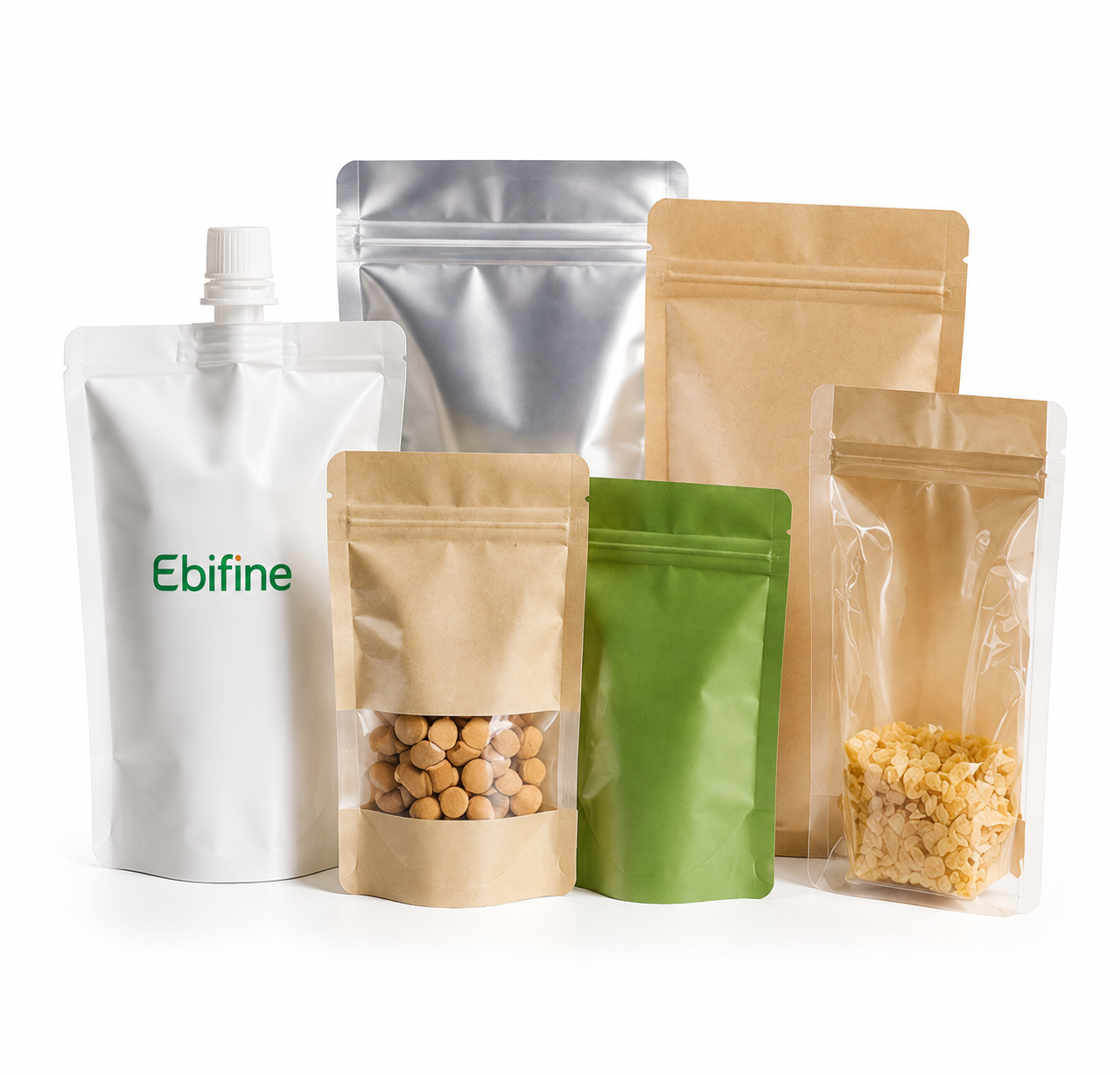
For businesses comparing packaging formats, custom flexible packaging can be a better route when the product needs a purpose-built pouch or film structure rather than a conventional shopping bag.
2. Choose the Right Plastic Material
Material selection affects appearance, flexibility, strength, print behavior, recyclability, and cost. The common mistake is to ask a supplier for a “plastic bag” without identifying the film type or the performance the bag must deliver.
PE: a practical choice for flexible bags
Polyethylene (PE) is widely used for flexible packaging because it can provide a useful combination of flexibility, toughness, and moisture resistance. Different PE grades and film constructions behave differently, so the material name alone is not a complete specification. Ask the manufacturer to confirm the proposed film structure and whether it is suitable for the product weight and handling conditions.
PP: useful when appearance and stiffness matter
Polypropylene (PP) can offer a crisper feel and a different level of stiffness from many PE films. It is used in several packaging formats, including woven and non-woven bags. Do not assume that every PP bag has the same strength or print characteristics: woven construction, non-woven fabric, and PP film are different structures.
Consider alternatives before committing
Plastic is not automatically the right answer for every retail or packaging application. Paper can suit dry retail goods and gift packaging; reusable non-woven bags may suit repeated shopping trips; and specialized flexible packaging may be more appropriate for products needing a defined barrier or closure. Explore paper packaging products or custom non-woven bags if the use case supports those formats.
3. Specify Film Thickness and Strength Properly
Thickness is important, but it is only one part of bag performance. A bag can have a relatively thick film and still fail at a weak handle attachment, poor side seal, or stress concentration around the corners. Conversely, a well-designed bag made with an appropriate film can perform reliably without being excessively heavy.
When designing printed plastic bags, specify thickness in a clear unit and confirm whether the quoted figure refers to one film wall or the combined measurement. Suppliers may quote microns (µm) or mils; these units are not interchangeable without conversion. Make sure the quotation, sample, and purchase order use the same measurement basis.
Test the bag under realistic conditions
- Load it with the heaviest typical product combination.
- Check handle stretching and tearing after repeated lifting.
- Inspect bottom and side seals under load.
- Check resistance to puncture from corners, edges, or hardware.
- Evaluate whether the bag remains usable after normal handling and transport.
For commercial users, a simple load test using the actual product is more useful than choosing thickness from a generic chart. If a bag will carry dense products, glass containers, or metal components, tell the manufacturer. The supplier may need to recommend a different film, gusset, seal design, or reinforcement—not simply a thicker film.
4. Get the Bag Dimensions and Structure Right
Incorrect dimensions create avoidable problems. A bag that is too small slows packing and may stretch around the product. A bag that is too large wastes material, looks untidy, and can increase shipping volume. The correct size should be based on the packed product, not just the product’s flat dimensions.
Measure the product in its packed condition
Record the maximum width, height, and depth of the item or product bundle. Allow enough clearance for easy insertion and removal, but do not add so much extra space that the product shifts excessively. If the bag uses a bottom or side gusset, clarify how the supplier measures the width and usable depth.
Also consider the following structural details:
- Flat bags: Suitable for flat or slim products when a simple structure is sufficient.
- Side-gusset bags: Add expandable depth for products with more volume.
- Bottom-gusset bags: Help a bag stand or accommodate bulkier contents.
- Die-cut handle bags: Offer a compact retail format, but the handle opening and surrounding film need adequate strength.
- Drawstring bags: Useful when the customer needs a simple closure and a reusable presentation pouch.
For a softer, more presentation-focused format used for cosmetics, jewelry, gifts, and apparel, consider custom frosted drawstring bags. They offer a different user experience from a conventional checkout carrier bag, so they should be specified for the right application.
5. Prepare Artwork for the Actual Printing Process
A strong visual design can still produce a poor printed bag if the artwork is not prepared correctly. The designer should work from the manufacturer’s dieline or print template, not an approximate rectangle created before the bag structure is finalized.
Check the technical artwork details
- Use the supplier’s confirmed print area and dieline.
- Keep logos, text, and important graphics away from seals, folds, gussets, and handle cutouts.
- Provide vector artwork where possible for logos and clean typography.
- Confirm image resolution and the required file format before production.
- Define bleed, safe areas, and registration requirements with the printer.
- Outline or package fonts according to the supplier’s prepress instructions.
Small text, thin lines, and intricate details are especially vulnerable when printed on flexible film. What looks crisp on a high-resolution monitor may become difficult to read on a moving, curved, or lightly creased bag. For most retail applications, a clear logo, readable brand name, and one strong visual element outperform an overcrowded layout.
Artwork should also account for the physical viewing experience. A logo placed across a gusset may distort when the bag is filled. A design positioned too close to a handle opening may be cut or visually interrupted. Request a digital mockup showing the bag in three dimensions, then approve a physical pre-production sample for important orders.
6. Select a Printing Method That Fits the Order
Printing methods differ in setup requirements, color capability, repeatability, and cost at different order quantities. The right option depends on the bag material, artwork, order size, and quality expectations. Do not choose a process simply because it is the cheapest line on a quotation.
| Printing approach | Typical strengths | Limitations to discuss | Best fit |
|---|---|---|---|
| Flexographic printing | Efficient for repeat production and larger runs; suitable for many flexible-film applications | Plate and setup costs; artwork and color matching need preparation | Regular commercial orders and repeat designs |
| Screen printing | Can provide strong, opaque deposits for selected applications | May be less efficient for complex, high-volume, multi-color designs | Selected short runs, specialty graphics, or particular bag constructions |
| Digital printing | Can reduce some setup barriers and support shorter or variable runs | Availability, substrate compatibility, durability, and unit economics vary by supplier | Short runs, test campaigns, or designs that change frequently |
For recurring retail programs, flexographic printing is often worth evaluating because production efficiency can improve at suitable volumes. For a small trial order or frequently changing artwork, ask whether digital production is available and compare the full quote. Printing technology and capabilities vary by manufacturer, so request samples produced using the proposed process and material.
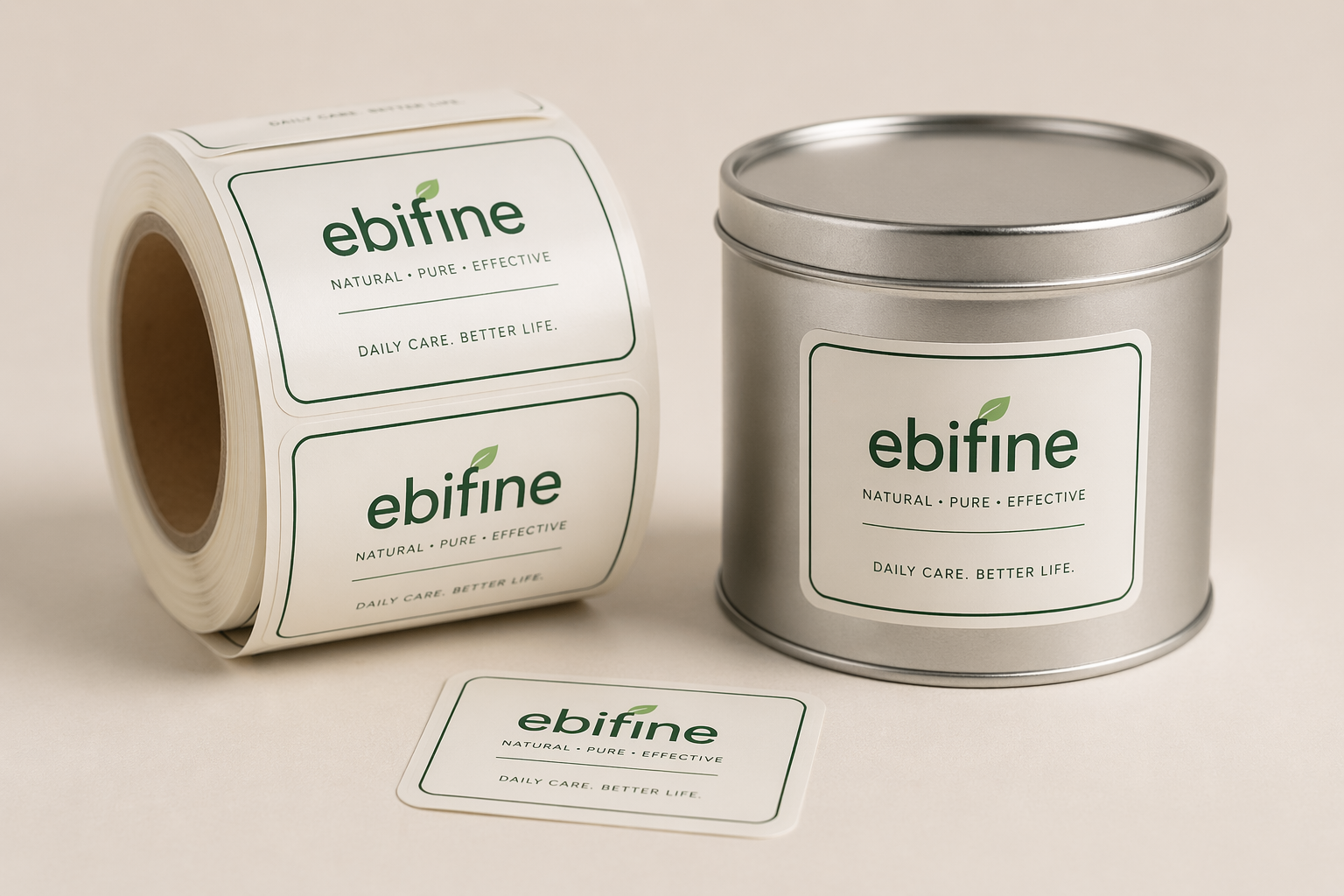
If the bag is only one part of a wider brand packaging system, coordinate its graphics with your custom packaging labels and other printed materials. Consistent colors and typography across the packaging range create a more professional presentation.
7. Plan Colors, Contrast, and Print Coverage
Color selection is not just a branding decision. It affects readability, visual consistency, ink coverage, and the way the bag looks against the product inside it. A design with too many colors can increase complexity without improving recognition.
Use a controlled color palette
Start with the brand’s primary color, a supporting color, and a background or neutral tone. Check contrast between the printed elements and the film. Light ink on a transparent or translucent substrate may appear very different from the same color printed on white film. If the artwork requires a white underprint or another base layer, confirm how it affects cost and appearance.
Think about transparency and opacity
Transparent bags show the product and can make sense when visibility is part of the selling experience. Opaque or frosted bags offer more privacy and can create a more refined look. However, a frosted finish may soften fine details, and a transparent film can make printed colors appear different depending on what is inside.
Do not approve colors from a screen image alone. Ask for a physical color proof or production sample on the intended film. If color consistency is critical across repeat orders, agree on the color reference, acceptable tolerance, and approval method in writing.
8. Design Handles, Seals, and Everyday Usability
Customers judge a bag by how it works in their hands. A beautiful print does not compensate for a handle that cuts into fingers, a seal that opens under load, or an opening that is difficult to use. In most professional situations, usability should be treated as a core part of the design—not a finishing detail.
Common handle options include die-cut handles, loop handles, patch handles, and drawstring closures. Each has a different appearance and load-bearing design. The best choice depends on the bag size, expected weight, product shape, and customer experience.
- Die-cut handles: Clean and compact, but the opening can become a stress point. Check reinforcement and edge finish.
- Loop handles: Can be comfortable for retail carry, depending on material and attachment.
- Patch handles: May improve strength for heavier retail loads when correctly designed and attached.
- Drawstrings: Provide a simple closure and a reusable pouch format, but are not a substitute for a heavy-duty carrier handle.
Inspect the bottom seal, side seals, handle attachment, and cut edges. These are practical failure points. For heavy-duty applications, provide the supplier with a target load and ask what testing method they recommend. Do not rely on a vague promise that a bag is “strong enough.”
9. Check Sustainability Claims and Destination-Market Compliance
Packaging requirements are not identical across countries, states, or cities. Some markets restrict certain types of checkout bags, impose fees, set minimum recycled-content requirements, or regulate labels and environmental claims. A design that is acceptable in one sales region may not be suitable in another.
Before ordering, identify where the bags will be distributed and whether they are intended for direct or indirect food contact. If the bag will touch food, request documentation confirming that the material and inks are appropriate for the intended conditions of use. Do not assume that a bag is food-contact compliant simply because it is made from PE or PP.
Be precise with environmental language
Terms such as “recyclable,” “recycled,” “compostable,” and “biodegradable” should not be used interchangeably. Whether a package can actually be recycled depends on its material construction and the collection and processing systems available in the market where it is sold. Compostability claims also need to match the relevant conditions and recognized certification requirements.
We recommend asking suppliers for material declarations, relevant test reports, and certifications that apply to the exact product—not generic company certificates. If a sustainability claim will appear on the bag, have the wording checked against the rules in the target market. The U.S. Federal Trade Commission’s Green Guides provide guidance on environmental marketing claims; see the reference section below.
For brands actively exploring alternatives, review biodegradable packaging options and PLA packaging material. These materials should be selected only after checking the actual performance, disposal route, certification, and local infrastructure—not because the label sounds more sustainable.
10. Control Total Cost and Production Quality
The lowest unit price is not necessarily the lowest-cost choice. A bag that tears, prints inconsistently, or arrives late can create customer complaints and replacement costs. For a commercial order, evaluate the complete landed cost and the risk of production problems.
What should be included in the quotation?
- Material type, structure, and thickness measurement basis.
- Finished bag dimensions, gusset, handle, and seal construction.
- Printing process, number of colors, print coverage, and plate or setup charges.
- Minimum order quantity and any price breaks at higher quantities.
- Sample, proofing, tooling, and packaging costs.
- Production lead time, inspection terms, and defect-handling process.
- Shipping method, freight, duties where applicable, and final delivery terms.
Compare quotations on an identical specification. If one supplier quotes a thinner film, smaller print area, or different handle structure, the unit price is not a fair comparison. Ask each manufacturer to confirm the same material, dimensions, tolerances, print colors, packing method, and inspection standard.
Use samples and inspection checkpoints
For a new supplier or a new bag design, approve a sample before mass production. Check dimensions, film feel, color, print position, handle comfort, seals, and product fit. For repeat orders, retain an approved reference sample and agree how production batches will be checked. A pre-shipment inspection is particularly valuable when the order is large, the bag is customer-facing, or the artwork is color-sensitive.
For buyers sourcing several packaging formats, a supplier that can coordinate custom packaging solutions may simplify communication and specification control. That advantage is worthwhile only if the supplier can demonstrate consistent quality and clear responsibility for each product type.
Printed Plastic Bag Options: Which Structure Should You Choose?
The following comparison is a practical starting point. Final performance depends on the exact film, thickness, construction, and manufacturing quality.
| Bag type | Best use cases | Main advantages | Potential drawbacks | Our buying advice |
|---|---|---|---|---|
| Flat PE bag | Simple product packaging and lightweight retail items | Simple structure; flexible; practical for many basic uses | Limited carrying comfort and presentation if used as a shopping bag | Choose when the product fit and basic protection matter more than carry experience |
| Die-cut handle bag | Retail checkout, events, and lightweight merchandise | Compact appearance and integrated handle | Handle opening can be a stress point | Specify reinforcement and test with the actual load |
| Loop-handle bag | Retail stores and take-home shopping | Convenient to carry; broad design flexibility | Handle attachment adds a construction detail to inspect | Good option when customer carrying comfort is important |
| Frosted drawstring bag | Cosmetics, jewelry, gifts, apparel, and accessories | Neat presentation, closure, and potential for reuse | Not designed to replace a heavy-duty shopping carrier | Use for presentation and storage rather than heavy loads |
| PP non-woven bag | Promotional events and repeat-use shopping | Fabric-like feel and reusable format | Different bulk, cost, and end-of-life considerations from thin film bags | Consider when repeated use is realistic and desired |
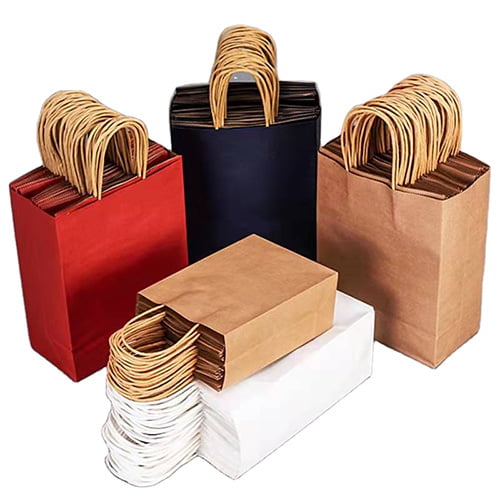
| Paper bag | Dry retail products, gifts, and selected food-service uses | Distinct appearance and familiar paper format | Can be less suitable for wet conditions or certain heavy loads | Choose when the product and handling conditions suit paper |
Pros and Cons of Investing in Custom Printed Plastic Bags
| Pros | Cons |
|---|---|
| Builds brand recognition through repeated customer exposure. | Custom printing may involve setup costs and minimum order quantities. |
| Can be tailored to product dimensions, handles, opacity, and use. | A poor specification can result in weak bags or unnecessary material use. |
| Offers flexible design options across colors and print layouts. | Color matching and print registration need proofing and production control. |
| Can be lightweight and efficient to store and distribute. | Regulatory restrictions and disposal infrastructure vary by market. |
| Can support a consistent packaging identity across retail locations. | Overly complex artwork can increase cost without improving recognition. |
Common Mistakes When Designing Printed Plastic Bags
Most avoidable problems begin before production. The following mistakes are worth addressing during the specification stage.
- Choosing a bag by appearance alone. A premium-looking mockup does not prove that the film, handles, or seals can handle the intended load.
- Ignoring the packed product dimensions. Measuring the product without its protective wrap or box often produces a bag that is too tight.
- Using artwork that is too complicated. Tiny text, fine lines, and excessive colors can reduce readability and raise production complexity.
- Approving colors only on a monitor. Film color, transparency, ink, and the contents inside the bag can change the visual result.
- Failing to define thickness clearly. Always confirm the unit and whether the figure is for one wall or the total film measurement.
- Skipping a physical sample. A sample helps reveal issues that a flat digital proof cannot show, including handle comfort and actual product fit.
- Assuming environmental claims are universal. Verify the claim and disposal route in the market where the bag will be sold.
- Comparing suppliers on unit price only. Compare identical specifications and include freight, setup, inspection, and potential defect costs.
Our Expert Recommendation: Design for Performance First, Branding Second
For most businesses, the strongest printed bag is not the one with the most elaborate artwork. It is the one that carries the product reliably, fits the brand’s positioning, prints consistently, and remains cost-effective over repeat orders.
Our recommended workflow is straightforward:
- Define the product, use case, target market, and expected load.
- Select the bag structure and material based on those requirements.
- Confirm dimensions, gussets, handles, seals, and film thickness.
- Request the manufacturer’s dieline and prepare print-ready artwork.
- Choose a printing method based on artwork, quantity, and repeat-order needs.
- Approve a physical sample and confirm color and performance expectations.
- Lock the final specification and inspection requirements before production.
For beginners, we recommend starting with a simple design, a proven bag structure, and a manageable first order. For commercial users, consistency between samples and repeat batches should be a priority. For brands with several product categories, standardize the core visual identity while allowing bag dimensions and structures to change according to the product.
Ebifine, operated by Guangzhou Ebifine Import And Export Co., Ltd., has supplied packaging solutions since 2016, supporting OEM and ODM requirements for global brands in retail, cosmetics, FMCG, and food and beverage markets. If your project needs a frosted pouch for gifts, accessories, cosmetics, or apparel, our custom frosted drawstring bag is one option to evaluate against your product and presentation requirements.

Custom Frosted Drawstring Bag
A lightweight, customizable packaging option for cosmetics, jewelry, gifts, apparel, and retail products. Logo printing and different sizes can be specified for brand presentation and practical product fit.
| Material | PE plastic |
|---|---|
| Structure | Drawstring bag |
| MOQ | 100 pieces |
| Lead time | 15–20 days |
| Supplier | Guangzhou Ebifine Import And Export Co., Ltd. |
View custom frosted drawstring bag details
Confirm final dimensions, printing specifications, material details, and lead time against the approved quotation and sample.
Frequently Asked Questions About Designing Printed Plastic Bags
1. What is the most important factor when designing printed plastic bags?
The most important factor is matching the bag structure and material to its intended use. Product weight, dimensions, handling conditions, and destination-market requirements should be established before artwork is finalized. A strong visual design cannot compensate for an unsuitable bag construction.
2. Which material is best for custom printed plastic bags?
PE is a common choice for flexible bags because of its flexibility and practical packaging performance. PP is used in different film and non-woven structures where stiffness or fabric-like handling may be preferred. The best material depends on the product, required strength, appearance, and applicable regulations.
3. How do I choose the correct plastic bag thickness?
Start with the product’s weight, shape, sharp edges, and expected handling. Ask the manufacturer to recommend a film construction and test it with a realistic load. Confirm the thickness unit and whether the quoted measurement applies to one wall or the combined film.
4. What printing method is best for plastic bags?
Flexographic printing is often suitable for repeat commercial production on flexible film. Digital printing may be worth comparing for shorter runs or frequently changing artwork. The correct choice depends on the material, order volume, color requirements, print quality, and supplier capability.
5. Should I use transparent or frosted plastic bags?
Transparent bags are useful when product visibility is important. Frosted bags provide more privacy and a softer presentation, making them suitable for some cosmetics, accessories, gifts, and apparel. Choose based on the product and customer experience, then approve a sample to check how the print appears on the selected film.
6. How can I reduce the cost of custom printed plastic bags?
Use a practical bag size, avoid unnecessary print colors and coverage, simplify artwork, and compare pricing at different order quantities. Do not reduce film thickness or remove reinforcement without testing performance. Compare total landed cost rather than unit price alone.
7. Do I need a sample before placing a bulk order?
Yes, especially for a new supplier, custom dimensions, complex artwork, or a large order. A physical sample lets you check material feel, size, print color, handle comfort, seals, and product fit before approving mass production.
8. Can printed plastic bags be recyclable or biodegradable?
Some plastic bag structures may be recyclable where suitable collection and processing systems exist. Biodegradable and compostable claims depend on the exact material, test conditions, certification, and local disposal infrastructure. Verify the product-specific evidence and destination-market rules before printing environmental claims.
9. What information should I send a plastic bag manufacturer for a quotation?
Provide the intended use, product dimensions and weight, bag style, material preference if known, thickness target, print artwork or color count, order quantity, destination market, and required delivery date. Include any food-contact, recycled-content, or other compliance requirements that apply.
References
The following sources are useful starting points for checking print production, environmental marketing claims, and packaging-related requirements. Always confirm which requirements apply to the specific bag and market.
- Flexographic Technical Association (FTA) — Industry resources on flexographic printing, process control, and print production.
- U.S. Federal Trade Commission: Environmental Claims Summary of the Green Guides — Guidance for marketers making environmental claims about products and packaging.
- U.S. Food and Drug Administration: Packaging and Food Contact Substances — Information on substances used in materials that contact food.