A low wholesale price does not make a plastic bag supplier reliable. If the bags arrive with inconsistent thickness, weak seals, poor printing or dimensions that differ from the approved sample, the apparent savings can quickly turn into customer complaints and wasted inventory. For retailers, distributors and packaging brands, supplier selection is a quality and supply-chain decision—not simply a price comparison.
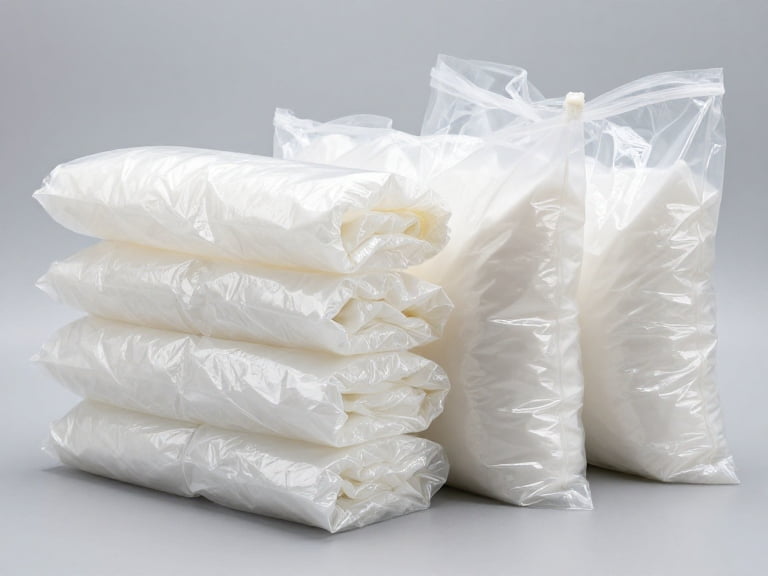
Before ordering, request a detailed quotation, production-representative samples, material specifications, relevant compliance documents and a written defect-handling process. For custom retail and e-commerce packaging, Ebifine offers plastic packaging options including custom frosted CPE bags, with logo printing, multiple sizes, a stated MOQ of 100 pieces and an indicated lead time of 15–20 days for the featured product. Confirm the final specifications and schedule for your order directly.
1. What Should a Plastic Bags Wholesale Supplier Actually Provide?
A plastic bags wholesale supplier may be a manufacturer, a trading company, a packaging distributor or a combination of these. Each business model can serve a legitimate purpose, but buyers should understand who is responsible for production and quality control.
A manufacturer typically has direct control over at least some production processes, such as film extrusion, bag converting, printing, cutting and sealing. A trading company may coordinate production through partner factories and offer a broader range of products. A distributor may focus on ready-stock packaging and fast fulfillment rather than custom manufacturing.
For commercial buyers, the key question is not simply whether the supplier owns a factory. It is whether the supplier can reliably deliver the exact product you need and take responsibility when something goes wrong.
How wholesale plastic bag production works
Most flexible plastic bags begin with a specified polymer resin or film. The material is processed into film, converted into the required bag shape, printed if necessary, cut and sealed. Additional steps may include zipper installation, handle punching, gusset formation, surface treatment, lamination or special finishing.
Different bag types require different equipment and process controls. A simple flat poly bag is not equivalent to a frosted CPE zipper bag, a printed shopping bag or a multilayer flexible packaging pouch. A supplier that specializes in one type may not be the best choice for another.
For example, an apparel retailer ordering frosted reusable packaging should pay close attention to film feel, clarity or opacity, zipper function and seal strength. A food brand ordering printed flexible packaging has a different set of priorities, including barrier performance, sealing compatibility and food-contact requirements.
2. 12 Tips for Choosing a Reliable Plastic Bags Wholesale Supplier
Tip 1: Define the exact bag specification first
Do not begin supplier selection with a message that says, “Please quote plastic bags.” That description is too broad to produce a meaningful price. Specify the bag type, dimensions, material, thickness, color, printing, closure, quantity and packaging method.
For a custom bag, include a drawing or reference photograph showing the opening, bottom seal, side gusset, handle, zipper and other construction details. If the supplier has to guess, the quotation may not match the product you have in mind.
We recommend creating one specification sheet and sending it to every shortlisted supplier. This makes quotations easier to compare and reduces misunderstandings after sampling.
Tip 2: Confirm whether the supplier is a manufacturer or trading company
Ask for the registered company name, production address and a description of the processes performed at its own facility. If printing, extrusion or bag converting is outsourced, ask which partner handles it and how quality is checked between stages.
A trading company is not automatically unreliable. It may be useful when you need multiple packaging categories from one purchasing contact. However, if your order requires tight control over film thickness, printing registration or sealing, you need a supplier with a clear production-management process.
Request a live video walkthrough or recent production footage relevant to your bag type. Generic factory photographs are weak evidence of current capability.
Tip 3: Check material knowledge, not just material names
Terms such as PE, LDPE, HDPE, PP and CPE describe different plastic materials or material families. They are not interchangeable. Each has different flexibility, stiffness, surface feel, processing behavior and potential applications.
Ask the supplier to identify the material used in the quotation and explain whether the product is made from virgin resin, recycled content or a blend. If recycled content is claimed, request supporting documentation that relates to the material being supplied.
For a frosted apparel bag, for example, CPE may be selected for its soft hand feel and frosted appearance. For a stiff retail bag, a different material or construction may be more appropriate. Choose based on performance, not on a vague claim that one resin is always superior.
Tip 4: Verify thickness and dimensions with measurable standards
Thickness is one of the most common sources of disagreement in plastic bag orders. A supplier may quote a thickness per wall or per total film, and buyers may interpret the figure differently. Clarify the measurement method and unit before accepting the price.
Ask whether the quoted thickness is nominal or a guaranteed production tolerance. Confirm dimensions in a consistent format, including whether measurements refer to the usable internal space or the external finished bag. For gusseted bags, specify how the gusset is measured.
When samples arrive, use a suitable thickness gauge and measuring tools to check them against the specification. Do not rely on touch alone, especially when comparing similar film structures.
Tip 5: Request production-representative samples
A sample is useful only if it represents the material, construction and decoration that will be used in bulk production. A hand-made prototype may demonstrate the design but not the final production process. Ask the supplier to identify any differences between the sample and the planned bulk order.
Check the bag’s dimensions, film consistency, sealing, opening, closure, print position, color and surface finish. For bags with zippers or handles, test those features repeatedly. For packaging that carries heavier items, test the intended load under realistic conditions.
Keep an approved sample and dated photographs as a reference. Your purchase order should state that bulk production must match the approved specification and sample within agreed tolerances.
Tip 6: Evaluate printing and finishing capabilities
Custom printing can make a basic plastic bag a recognizable brand asset. But a visually attractive sample does not guarantee consistent results across a large production run. Ask which printing method the supplier recommends for your artwork, material and quantity.
Review color matching, registration, text legibility, surface treatment and resistance to rubbing. If the design uses multiple colors, fine text or detailed graphics, request a production-representative printed sample. Confirm whether artwork preparation, plates, cylinders or setup charges are included in the quotation.
Ebifine provides printing and finishing services for customized packaging. Buyers can review its printed plastic packaging capabilities when comparing logo and surface-decoration requirements.
Tip 7: Check quality-control procedures
A reliable supplier should be able to explain how it controls incoming materials, production settings and finished products. Ask whether operators check film thickness, dimensions, print quality, sealing strength and appearance during production, rather than waiting until the order is packed.
For larger orders, agree on an inspection plan before production starts. Identify the characteristics that matter most, define acceptable tolerances and document how defective goods will be handled. If an independent inspection company is appropriate for the order size, include the inspection timing and access arrangements in the purchase agreement.
In most professional situations, a clear inspection plan is more valuable than a general promise of “100% quality control.”
Tip 8: Verify relevant compliance documents
Packaging requirements depend on the material, product application and destination market. Food-contact packaging, for example, may require specific documentation and testing that would not apply to a general apparel bag. Recycled-content claims, chemical restrictions, labeling and packaging waste obligations may also vary by jurisdiction.
Ask the supplier for documents relevant to the exact product and intended market. Check the issuing organization, date, scope, material identity and whether the document covers the factory or product you are buying. A generic certificate should not be treated as proof that every bag complies with every regulation.
For food-related packaging, review the relevant food packaging solutions and make compliance a specification requirement before production begins.
Tip 9: Compare MOQ and production flexibility
MOQ affects both unit price and inventory exposure. A supplier with a high minimum order may offer a lower unit price, but that does not make the deal more profitable if you cannot sell the stock. A low MOQ may cost more per piece but can be a better way to test a new design.
Ask whether MOQ applies per bag size, per design, per color or per printing artwork. Also confirm whether different sizes can share one production order or whether each variation requires a separate setup.
For beginners, we recommend testing demand with a manageable quantity before committing to a large run. For established commercial users, negotiate a repeat-order structure that preserves material and print consistency across batches.
Tip 10: Evaluate lead time and supply-chain reliability
Ask the supplier to separate sample development, material preparation, printing, bag converting, quality inspection and shipping. A single lead-time estimate can hide important stages. Confirm when the production clock starts—for example, after deposit, artwork approval or sample approval.
Ask how the supplier manages material shortages, peak-season capacity and repeat orders. If your business depends on continuous stock, discuss forecast planning and whether the factory can reserve production capacity or maintain agreed materials.
A supplier who gives a realistic schedule and communicates delays early is usually more valuable than one who promises an unusually short lead time without explaining the production plan.
Tip 11: Compare total landed cost, not just unit price
The factory quotation is only one part of the cost. Include sampling, printing setup, tooling, packaging, inland transportation, freight, insurance, import duties, customs clearance and any inspection charges. Confirm the Incoterm used in the quotation, such as EXW or FOB, so that responsibilities are clear.
Compare at least three quotations using the same product specification and delivery basis. If one supplier is significantly cheaper, ask which material, thickness, printing process or packaging detail differs. A price gap should be explained before it becomes a quality problem.
Tip 12: Review communication and after-sales responsibility
Reliable suppliers answer technical questions clearly, identify risks and document decisions. They do not simply agree to every request. If a requested material is unsuitable for the intended use, a capable supplier should explain why and recommend an alternative.
Before paying a deposit, confirm the payment beneficiary, company details, production contact, inspection access, delivery responsibility and process for defective goods. Agree on whether the supplier will repair, replace, credit or otherwise resolve products that fail the written specification.
From our experience, the best long-term supplier is not necessarily the one with the most polished sales presentation. It is the one that communicates accurately and takes responsibility for the product after the order is placed.
3. Plastic Bags Wholesale Supplier Comparison Table
Different supplier models suit different purchasing needs. Use the following table to decide which type of partner deserves priority in your sourcing process.
| Supplier type | Best use case | Main advantage | Potential limitation | What to verify |
|---|---|---|---|---|
| Direct manufacturer | Custom production and repeat wholesale orders | Closer control over production and specifications | May have higher MOQ or a narrower product range | Actual production processes and factory capacity |
| Trading company | Multi-category sourcing and supplier coordination | One contact for several product types | Less direct visibility into production | Factory partners and responsibility for defects |
| Packaging distributor | Ready-stock bags and urgent replenishment | Potentially faster availability | Limited customization and product variation | Stock status, batch consistency and return terms |
| Custom packaging specialist | Printed, frosted, laminated or application-specific bags | More focused product development and finishing | Sampling and setup may increase upfront cost | Relevant samples, print quality and technical support |
Our recommendation: choose a direct manufacturer or custom packaging specialist for recurring customized products. Choose a distributor when speed and standard stock matter more than design control. Use a trading company when it adds genuine sourcing value, but insist on visibility into the actual production partner.
4. How to Choose the Right Plastic Bag Material
Material selection should follow the product’s job. A bag used to carry garments has different requirements from a bag designed for food contact, heavy retail shopping or moisture-sensitive e-commerce packaging.
PE and LDPE bags
Polyethylene bags are widely used in retail, apparel, packaging and general-purpose applications. LDPE is typically flexible and soft, making it suitable for applications where pliability is important. The right thickness and construction depend on the product weight and expected handling.
HDPE bags
HDPE is often selected for bags requiring a relatively crisp feel and useful strength at a given thickness. It is common in shopping and carrier bag applications. Do not assume that HDPE is always stronger in every practical situation; bag design, film thickness, resin quality and handle construction all influence performance.
CPE bags
CPE bags are often chosen for a softer feel and frosted surface appearance. They can suit apparel packaging, cosmetics, retail presentation and e-commerce orders. A frosted finish can give garments or accessories a more refined presentation while keeping the contents partially visible.
For brands looking for this format, Ebifine’s frosted drawstring bags and custom frosted CPE options are worth comparing. Make sure the closure, film thickness and dimensions match the intended use.
PP and non-woven polypropylene
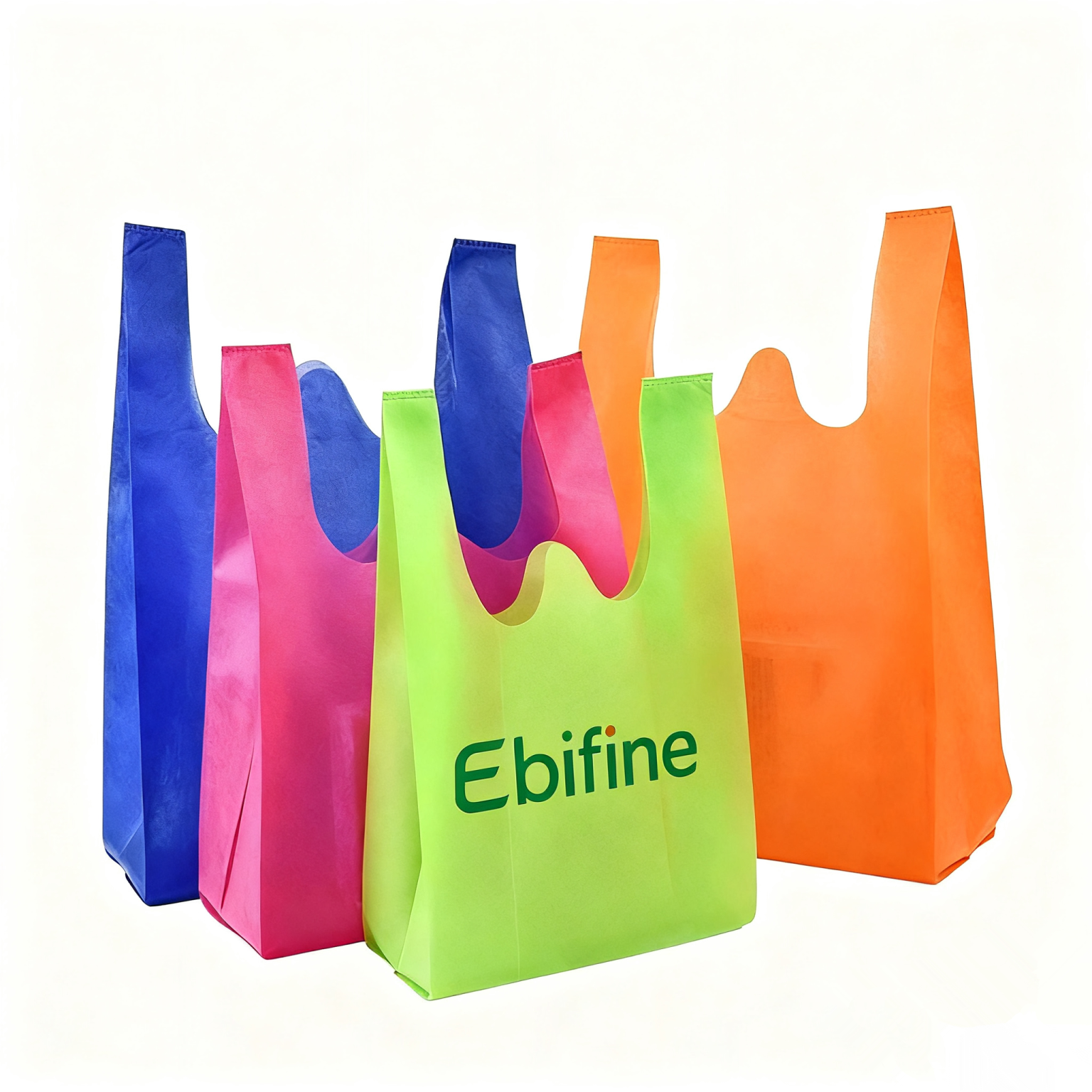
PP is used in a range of packaging and bag applications. Non-woven PP bags are a common option for reusable shopping and grocery packaging. They are not the same product as conventional flexible plastic film bags, so compare them based on expected reuse, load, construction and applicable local rules.
If the objective is a reusable retail carrier, consider a reusable non-woven grocery bag rather than assuming a disposable film bag is the best solution.
Multilayer flexible packaging
Multilayer structures may combine different films to achieve properties such as barrier performance, printability, sealability and product protection. They are useful for some food, personal-care and specialty packaging applications, but the correct structure must be selected for the contents, shelf-life needs and sealing equipment.
For product formats that need a stable base and retail shelf presentation, compare stand up pouches as an alternative to simple flat plastic bags.
5. How to Check Plastic Bag Quality Before Bulk Production
Never approve a large order based only on a supplier’s product photographs. A practical sample review should check the following characteristics against your written specification.
- Dimensions: measure width, length, gusset and usable internal space.
- Thickness: measure at multiple points using a suitable gauge and confirm the measurement convention.
- Film consistency: inspect for uneven thickness, pinholes, wrinkles, contamination and visible defects.
- Seals: check seal alignment, strength and consistency. Use an application-appropriate test where required.
- Printing: inspect color, registration, text clarity, logo position and surface durability.
- Closures: open and close zippers, drawstrings or other closures repeatedly.
- Odor and appearance: check for unusual odor, surface marks and unwanted color variation.
- Packaging: confirm bundle count, carton strength, labels and protection during transport.
For heavy-duty applications, test the finished bag with the actual product weight and handling conditions. A bag that survives a quick hand pull may still fail during repeated transport or warehouse handling. Agree on test methods and acceptance criteria with the supplier before production.
6. Wholesale Pricing: How to Calculate the Real Cost
Wholesale plastic bag prices depend on material, thickness, dimensions, bag structure, printing colors, order quantity, finishing, packaging and delivery terms. There is no reliable universal price per piece without these details.
Consider a hypothetical order of 10,000 printed bags. Supplier A quotes $0.045 per piece, while Supplier B quotes $0.052. The initial difference is $70 across the order. However, if Supplier A uses a thinner film than requested or excludes individual packaging, the quotations are not comparable. If defects or print problems make part of the order unsellable, the cheaper option may become more expensive.
Calculate the landed cost using this structure:
Landed cost per sellable bag = (product cost + setup + sampling allocation + freight + insurance + duties + inspection + other import charges) ÷ sellable quantity.
For example, if a hypothetical order costs $450 for production and another $150 for setup, freight and related charges, the landed cost is $0.06 per bag before local warehousing or fulfillment. If 2% of the bags are defective, the effective cost per sellable bag increases because the same total expenditure is spread across fewer usable units.
| Cost factor | Questions to ask | Commercial impact |
|---|---|---|
| Material and thickness | What resin and thickness are included? | Controls product feel, performance and price |
| Printing setup | Are plates, cylinders or artwork fees included? | Can materially affect smaller orders |
| MOQ | Is MOQ per size, color or design? | Determines inventory commitment |
| Packaging | Are bundles, cartons and labels included? | Affects warehouse and fulfillment costs |
| Freight and import | Which Incoterm and destination charges apply? | Changes the final landed price |
| Defect handling | Who pays for replacement or rework? | Protects margin and customer relationships |
For beginners, a smaller order with a slightly higher unit price can be a sensible way to validate demand. For commercial users with stable sales, larger repeat orders may improve unit economics—but only when quality and replenishment are consistent.
7. Pros and Cons of Buying Plastic Bags Wholesale
| Pros | Cons and risks |
|---|---|
| Lower unit cost may be available at higher order quantities. | Large orders tie up cash and create inventory risk. |
| Custom sizes, colors and printing help create consistent brand presentation. | Customization may require sampling, setup fees and higher MOQs. |
| Manufacturers can support repeat production once specifications are established. | Material and print variation can occur without adequate process controls. |
| A broad supplier base offers different materials and bag constructions. | Supplier capability and documentation vary significantly. |
| Packaging can be tailored to retail, apparel, e-commerce or industrial use. | Import costs, lead times and compliance responsibilities require planning. |
Wholesale sourcing is worth using when your business has predictable demand, a clear specification and enough storage or fulfillment capacity. It is less attractive when demand is uncertain, the product changes frequently or the minimum order would exceed your realistic sales forecast.
8. Common Mistakes When Choosing a Plastic Bags Wholesale Supplier
- Requesting a price without a specification. The resulting quotations may describe completely different products.
- Comparing thickness figures without checking the convention. Clarify whether the measurement is per wall or total film.
- Assuming a sample proves bulk consistency. Ask how the production line will reproduce the approved sample.
- Ignoring printing setup costs. Artwork preparation and printing setup can change the economics of smaller orders.
- Failing to check the factory’s production route. Outsourced processes need clear quality responsibility.
- Ordering more than the business can sell. A lower unit price does not justify excess inventory.
- Skipping compliance review. Requirements depend on application and destination market, especially for food-contact packaging.
- Not defining what happens when goods fail inspection. Agree on remedies before the deposit is paid.
Another common mistake is choosing a plastic bag when another packaging format would perform better. A reusable carrier, a paper pouch or a stand-up flexible package may fit the application more effectively. Compare reusable shopping bag suppliers and kraft paper packaging when the product and customer expectations justify an alternative.
9. Who Should Buy Plastic Bags Wholesale?
Wholesale sourcing is most useful for businesses that consume or resell packaging regularly. Typical buyers include:
- Retail chains and supermarkets that need repeat supply of carrier bags and checkout packaging.
- Apparel and fashion brands that require garment bags, frosted packaging or branded delivery bags.
- Cosmetics and personal-care companies that need customized pouches and product presentation packaging.
- E-commerce sellers looking for lightweight packaging that supports shipping and brand identity.
- Packaging distributors supplying multiple customers and product categories.
- Food businesses that need packaging selected for the relevant product-contact and barrier requirements.
10. Who Does Not Need a Wholesale Order Yet?
Businesses with very low or unpredictable packaging demand may not benefit from a large wholesale purchase. If you are testing a new product, have not finalized dimensions or artwork, or do not know which packaging format customers prefer, a smaller stock order may be a safer first step.
Wholesale custom production is also a poor fit if you need immediate delivery but have not allowed time for sampling, printing setup and manufacturing. In that case, choose a ready-stock distributor or a local supplier while you validate demand.
Our recommendation is to move to custom wholesale production once the packaging specification is stable and the expected sales volume can justify the MOQ.
11. Expert Recommendation: What We Would Prioritize in a Supplier
From our experience, the strongest supplier relationships begin with a technically clear product brief and a realistic purchasing plan. We would prioritize five things over a low headline price: material consistency, measurable quality control, reliable printing, transparent lead times and a clear process for handling defects.
Ebifine supports customized packaging requirements across several product categories. For brands that need frosted packaging for apparel, cosmetics, retail or e-commerce, its custom frosted CPE packaging bag is a practical option to evaluate. The featured product is described as lightweight and reusable, with logo printing and multiple size options. The listed MOQ is 100 pieces and the indicated lead time is 15–20 days; confirm availability, specifications and timing for your particular order before purchase.

Custom Frosted CPE Packaging Bag
Designed for apparel, cosmetics, retail and e-commerce packaging, this custom frosted CPE bag offers a soft frosted appearance with options for logo printing and different sizes.
- Material: Plastic (CPE)
- Listed MOQ: 100 pieces
- Indicated lead time: 15–20 days
- Customization: Logo printing and multiple sizes
For brands building a wider packaging program, it may be useful to compare plastic bags with eco friendly packaging options and related formats such as roll labels or tea tin packaging. The goal is not to add more packaging components unnecessarily. It is to choose a format that protects the product, supports the brand and makes commercial sense.
Quick Summary Table
| Priority | What to check | Our recommendation |
|---|---|---|
| Product specification | Material, thickness, dimensions and construction | Write one specification before requesting quotations |
| Factory capability | Production location and in-house processes | Verify relevant production, not just a general factory profile |
| Sample quality | Seals, printing, dimensions and usability | Approve a representative sample and keep a reference |
| Compliance | Material documents and destination-market requirements | Check the exact product and intended application |
| Commercial terms | MOQ, lead time, Incoterm and defect remedy | Compare complete landed cost |
| Long-term supply | Repeat-order capacity and communication | Choose consistency over a one-time low price |
The right plastic bags wholesale supplier should make your packaging operation more predictable. If a supplier cannot explain the material, confirm the dimensions, provide a representative sample or put quality responsibilities in writing, do not rush into a bulk order.
Frequently Asked Questions About Choosing a Reliable Plastic Bags Wholesale Supplier
1. How do I choose a reliable plastic bags wholesale supplier?
Define your bag specification, shortlist suppliers with relevant product experience, verify their production capabilities, request samples and compare detailed quotations. Check material documents, quality-control procedures, lead times and defect-handling terms before paying a deposit.
2. Should I buy directly from a plastic bag manufacturer?
Buying directly from a manufacturer can improve production visibility and communication for custom or repeat orders. A trading company or distributor may be more suitable when you need several product categories or ready-stock delivery. Verify who controls production and who is responsible for quality.
3. What information should I provide when requesting a wholesale quotation?
Provide the bag type, dimensions, material, thickness, color, printing artwork, closure, quantity, packaging requirements and delivery destination. Include a drawing or reference photograph where possible. A clear specification helps suppliers quote the same product.
4. What is a normal MOQ for wholesale plastic bags?
MOQ varies by material, dimensions, printing method, bag structure and factory. Stock products may have lower minimums than fully customized bags. Ask whether the MOQ applies per design, color, size or artwork, and confirm any setup charges for smaller runs.
5. How can I check plastic bag thickness?
Use a suitable thickness gauge and clarify the measurement convention with the supplier. Confirm whether the stated thickness is per wall or total film, and agree on an acceptable tolerance. Check several points rather than relying on one reading.
6. What is the difference between CPE, LDPE and HDPE bags?
They are different polyethylene-related materials with different physical characteristics and common uses. CPE is often selected for a soft frosted appearance, LDPE for flexible applications and HDPE for bags requiring a crisper feel. The best choice depends on construction, thickness and intended use.
7. How long does custom plastic bag production take?
Lead time depends on material availability, artwork approval, printing setup, order quantity and production capacity. Ask for separate estimates for sampling, material preparation, manufacturing, inspection and shipping. Confirm the event that starts the production schedule.
8. Are frosted CPE bags suitable for apparel packaging?
They can be suitable for apparel packaging because they offer a soft frosted appearance and can be customized with logos and sizes. Confirm the required dimensions, thickness, closure and intended reuse conditions with the supplier before ordering.
9. How can I compare wholesale plastic bag prices accurately?
Compare quotations using the same material, thickness, dimensions, printing, quantity, packaging and Incoterm. Include sampling, setup, freight, duties, inspection and other charges to calculate landed cost per sellable bag.
10. What should I do if the bulk order does not match the approved sample?
Document the differences with photographs and measurements, refer to the approved sample and written specification, and notify the supplier promptly. The purchase agreement should define inspection criteria and remedies such as rework, replacement or credit.
References and Packaging Compliance Resources
Plastic packaging requirements depend on the product’s intended use and destination market. These primary resources are useful starting points for checking relevant regulatory and material obligations. They do not replace product-specific compliance review.
- European Union — Regulation (EC) No 1935/2004 on materials and articles intended to come into contact with food. Relevant when plastic packaging is intended for food contact in the EU.
- European Union — Regulation (EU) 2025/40 on packaging and packaging waste. The EU’s packaging and packaging waste framework, with obligations and implementation dates that businesses should review for their market and packaging category.
- U.S. Food and Drug Administration — Packaging & Food Contact Substances. FDA information on substances used in materials that contact food in the United States.