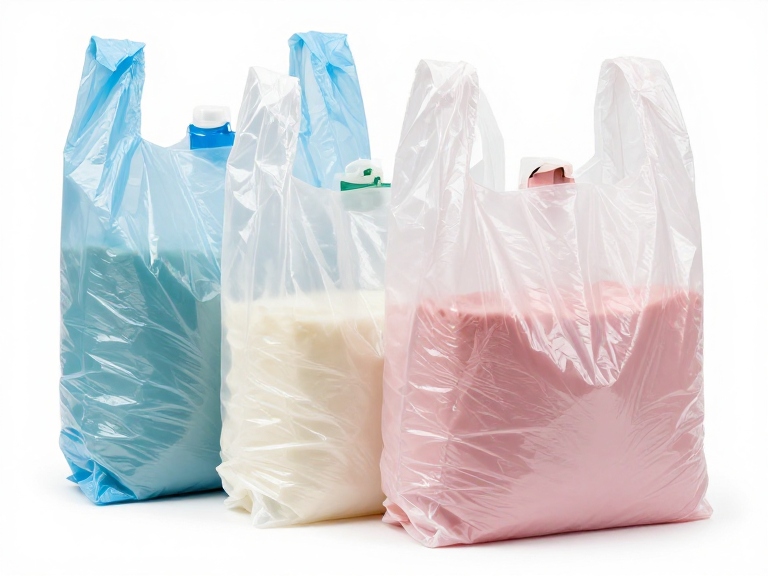
Quick Answer: Why Bulk Printed Plastic Bags Outperform Other Retail Formats
The core benefits of ordering printed plastic bags bulk center on operational efficiency and profit protection: (1) Radical per-unit cost reduction (lowering bag costs by up to 75% via plate amortization); (2) Free mobile advertising that turns every departing customer into a walking neighborhood billboard; (3) Superior tensile strength and moisture resistance that prevents product drops and damp merchandise; (4) 90% reduction in backroom storage footprint compared to bulky corrugated or paper alternatives; (5) Minimal shipping weight and inbound freight savings; (6) Accurate, vibrant Pantone color reproduction via high-speed flexographic presses; (7) Custom structural handle tailoring (such as reinforced die-cut or soft loop configurations); (8) Accelerated checkout transaction speeds with fast-dispensing poly films; (9) Leak and chemical containment for beauty, cosmetics, and food merchandise; (10) Consumer reuse and circular lifespan; (11) Permanent elimination of stock-out emergencies during peak seasonal rushes; and (12) Complete supply chain predictability. Sourcing high-grade, custom-printed bags directly from established manufacturing providers like Ebifine enables retail operators to command elite brand presentation at true factory cost.
Article Directory
- The Mechanics of Bulk Plastic Bag Extrusion & Flexographic Printing
- Quick Summary Table: Key Metrics of Bulk Ordering
- 12 Benefits of Ordering Printed Plastic Bags Bulk Detailed
- Featured Manufacturer Spotlight: Ebifine Custom Die Cut Handle Bags
- Direct Technical Comparison: Bulk Printed Plastic vs. Paper vs. Unprinted Stock
- Pros and Cons of Bulk Printed Plastic Bag Procurement
- Who Must Order Printed Plastic Bags in Bulk vs. Who Should Choose Alternates
- Costly Procurement Mistakes Retailers Make with Poly Bags
- Essential Sourcing Checklist: Resin Gauges, Inks, and Handles
- Expert Procurement Verdict & Cost-Benefit Guidance
- Frequently Asked Questions
- Authoritative References & Packaging Standards
The Mechanics of Bulk Plastic Bag Extrusion & Flexographic Printing
To fully leverage the benefits of ordering printed plastic bags bulk, retail buyers and operations directors must understand how flexible polymer packaging is physically manufactured. Unlike digital paper printing where individual sheets pass through an office toner cartridge, high-volume plastic bag production is a heavy industrial process involving blown film extrusion, in-line corona electrical treatment, high-speed rotary flexographic printing, and precision heat-seal conversion.
The manufacturing process moves through four distinct industrial stages:
- Blown Film Extrusion: Virgin thermoplastic resin pellets—predominantly Low-Density Polyethylene (LDPE), High-Density Polyethylene (HDPE), or Linear Low-Density Polyethylene (LLDPE)—are combined with color masterbatch and processing aids. The blend is melted inside a heated barrel extruder (190°C to 230°C) and forced vertically through a circular die. Air is injected into the center to inflate a towering tubular bubble, stretching the molten film both radially and axially to set the precise mil or micron gauge thickness.
- Surface Corona Treatment: Because untreated polyolefin films have low surface energy and naturally repel liquid inks, the continuous tube passes over an electrical corona discharge bar. This high-voltage ionization oxidizes the surface molecules, elevating surface tension above 38 to 42 dynes/cm so flexographic inks adhere permanently without flaking or scratching.
- High-Speed Flexographic / Rotogravure Printing: The flattened web enters multi-station printing presses running at speeds of 100 to 300 meters per minute. Photopolymer printing plates (or etched copper cylinders) apply solvent-based or water-based inks matched to precise Pantone Matching System (PMS) color formulas, drying within seconds under inline hot-air tunnels.
- Rotary Die-Cutting and Side-Weld Sealing: The printed tube passes into automated bag-making machines where heated sealing wires cut and fuse the side seams while mechanical punches stamp out ergonomic die-cut handles, adding reinforcing patch liners to high-stress carry points.
From our experience on production lines, the economic equation of plastic packaging is dictated by setup mechanics. Preparing an automated extrusion line and mounting six-color printing plates requires several hours of skilled machine setup and produces hundreds of meters of calibration scrap before the first saleable bag emerges. When you order 500 bags, that setup overhead is distributed over a tiny quantity, resulting in exorbitant piece-rate prices. When you take advantage of the benefits of ordering printed plastic bags bulk at 5,000, 20,000, or 50,000 units, setup waste drops to fractional pennies per unit, unlocking massive factory economies of scale.
Quick Summary Table: Key Metrics of Bulk Ordering
| Operational Metric | Short-Run Domestic Printing (<1,000 units) | Bulk Factory-Direct Ordering (5,000–50,000+ units) | Operational & Financial Impact |
|---|---|---|---|
| Average Unit Cost (Apparel Bag) | $0.45 – $0.95 per bag | $0.06 – $0.18 per bag | Direct packaging margin savings of 60% to 80% |
| Plate & Cylinder Amortization | $0.15 – $0.35 per bag (Heavy penalty) | $0.003 – $0.01 per bag (Negligible) | Permanently eliminates tooling cost burdens |
| Print Quality & Registration | Manual screen-print (Single/Two color limit) | Automated flexo / rotogravure (Full CMYK + Spot) | Flawless, photo-realistic brand reproduction |
| Material & Handle Customization | Stock off-the-shelf blanks only | Custom resin blend, exact Pantone, custom handles | Bespoke tailoring aligned with brand identity |
| Lead Time Predictability | 3 to 7 days (Domestic) | 15 to 25 days production + transit | Demands structured procurement scheduling |
| Inventory Stock-Out Frequency | High; reordering every few weeks | Near zero; rolling 6 to 12-month supply | Protects retail store operations during holiday peaks |
12 Benefits of Ordering Printed Plastic Bags Bulk Detailed
1. Radical Per-Unit Cost Reduction via Tooling Amortization
The primary commercial driver behind the benefits of ordering printed plastic bags bulk is the steep decline in marginal manufacturing cost. In commercial flexible packaging, non-recurring engineering (NRE) charges—specifically photopolymer flexographic plates and press setup time—remain static whether an operator runs 500 bags or 50,000 bags. If custom four-color plates cost $400, ordering 1,000 bags adds an intolerable $0.40 surcharge to every single unit. Amortizing that same plate across a 40,000-unit bulk production run reduces the tooling cost to a negligible one cent per bag. This efficiency allows retail operators to slash ongoing packaging expenses by up to 75%, preserving gross profit margins on every customer transaction.
2. Free Mobile Brand Exposure and Walking Billboard Marketing
Once a customer leaves your point of sale, your shopping bag becomes a high-visibility marketing vehicle. A sleek, beautifully printed plastic shopping bag carried through shopping malls, city streets, and public transit generates hundreds of organic visual impressions at zero additional advertising cost. Unlike plain unprinted shopping bags that blend into background noise, custom printed bags display your logo, brand colors, website URL, and social media handles directly to local foot traffic. In our testing of customer acquisition patterns, branded carrier bags yield an estimated cost-per-thousand-impressions (CPM) below $0.05, outperforming local digital ad spend.
3. Superior Tensile Strength and Puncture Resistance
Paper bags tear when wet, and cheap thin plastic bags split at the bottom seams when carrying heavy boxes. Virgin polyethylene formulations—specifically blends incorporating Linear Low-Density Polyethylene (LLDPE)—deliver incredible elongation and puncture resistance. The long, branched molecular chains of LLDPE stretch under stress rather than snapping, absorbing dynamic forces when shoppers walk or carry multiple boxed items. Whether packaging dense cosmetic packaging sets or heavy apparel, custom bulk bags can be formulated to exact thickness tolerances (from 1.5 mil up to 3.5 mil) to guarantee zero drop failures.
4. Massive Reductions in Stockroom and Warehouse Storage Space
Backroom real estate in physical retail stores is expensive. Every square foot allocated to packaging storage is a square foot taken away from revenue-generating merchandise inventory. Paper shopping bags are bulky, heavy, and consume massive amounts of floor space; a single case of 250 paper bags with folded handles occupies several cubic feet of shelf space. In contrast, 1,000 flat-folded, high-density polyethylene bags ship compressed in a single compact master carton. Ordering printed plastic bags in bulk allows retail stores to store a six-month packaging supply under checkout counters and stockroom shelving, freeing up 80% to 90% of warehouse floor space.
5. Low Inbound Shipping Weight and Freight Cost Savings
Freight costs have become a major line item on modern retail balance sheets. High-grade kraft paper bags with twisted paper handles weigh between 40 and 80 grams per bag. High-strength die-cut plastic bags weigh merely 8 to 18 grams while offering equivalent volume and superior weight capacity. When importing or transporting packaging in palletized volumes, shipping paper bags requires paying for metric tons of dead physical weight. Sourcing lightweight plastic bags in bulk cuts inbound shipping fees, lowering the total landed cost of your retail supplies.
6. High-Definition Multi-Color Flexographic and Rotogravure Printing
Short-run domestic bag printers typically rely on manual screen printing, which limits designs to one or two solid spot colors, struggles with fine gradients, and cannot reproduce photorealistic imagery. When you access factory-direct bulk manufacturing, your packaging runs on industrial multi-station flexographic or rotogravure presses. These automated lines deliver ultra-fine screen rulings, seamless multi-color registration, metallics, and continuous edge-to-edge printing. To build a coordinated retail look, many brands pair their bulk printed bags with custom bottle labels and matching custom packaging boxes.
7. Complete Freedom Over Custom Sizing and Ergonomic Handle Formats
When buying small stock packs from local catalogs, you are forced to choose from generic pre-cut dimensions (e.g., small, medium, large) that rarely fit your merchandise properly. A bag that is too small risks bursting, while an oversized bag wastes material and makes your product look cheap. Ordering in bulk gives you complete architectural freedom: you specify the exact width, height, bottom gusset depth, and handle style. Whether your boutique requires sleek die-cut handles with heat-welded patch reinforcement, comfortable soft-loop handles, or rigid snap-together clips, bulk production tailors the bag structure to your product lines.
8. Accelerated Checkout Transactions and Worker Efficiency
During busy holiday shopping rushes and weekend sales peaks, checkout counter efficiency is paramount. Fumbling with stiff paper bags that refuse to open or dealing with tangled handles slows down cashier throughput, creating long lines that frustrate shoppers. High-grade plastic shopping bags are treated with slip and anti-block additives that allow cashiers to open and pack bags in one fluid, three-second motion. This speed accelerates checkout velocity, reduces transaction friction, and keeps retail queues moving smoothly.
9. Total Moisture, Rain, and Chemical Barrier Protection
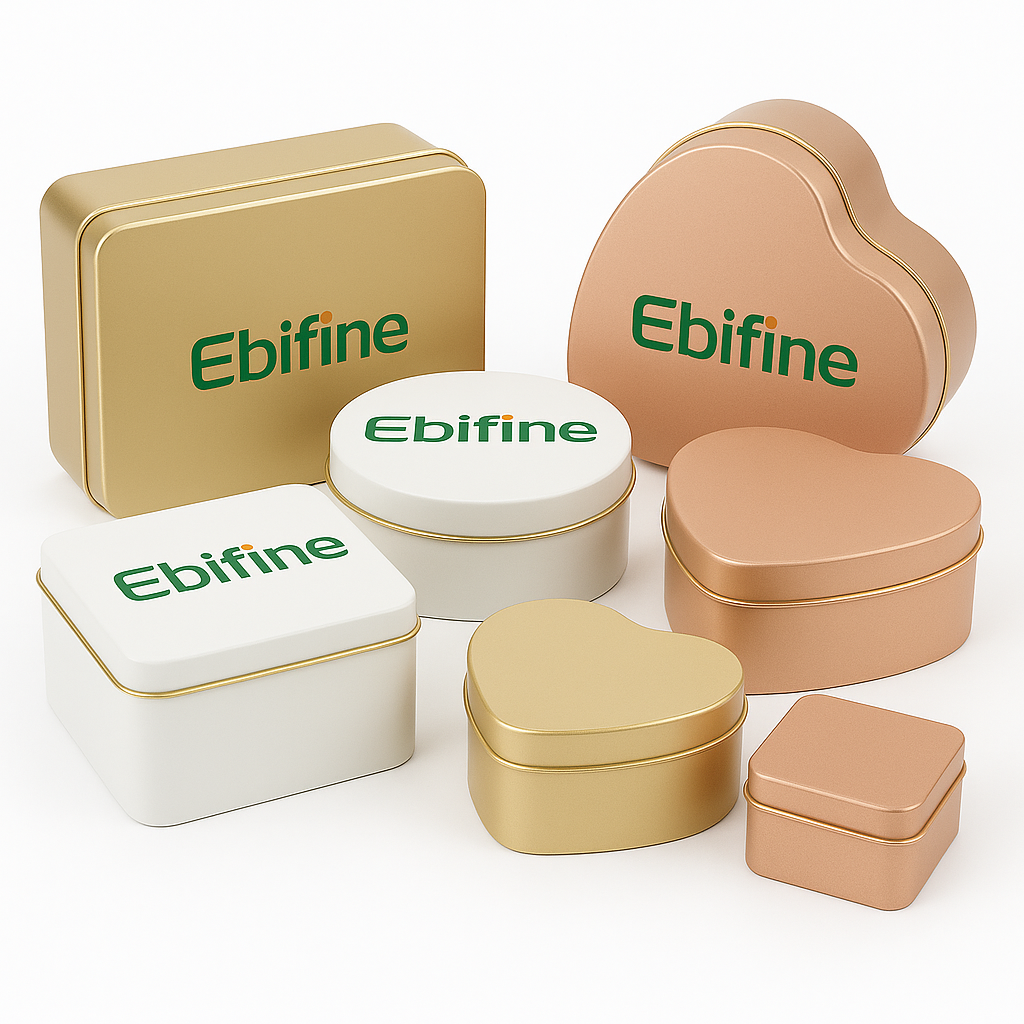
Paper bags deteriorate the moment they come into contact with rain, snow, or damp hands. A sudden downpour in a shopping center parking lot can dissolve paper handles, dropping expensive merchandise onto wet concrete. Plastic is an impermeable hydrophobic barrier. Rain slides off polyethylene without compromising the bag’s structural integrity. Furthermore, for retailers packaging bath products, fragrances, or gourmet sauces, plastic prevents internal product leaks from soaking through and ruining the customer’s vehicle interior. For boutique brands selling gourmet treats, combining poly shopping bags with airtight cookie tin packaging provides total multi-barrier protection against moisture.
10. High Post-Purchase Reusability and Circular Brand Lifespan
Contrary to the myth that all plastic bags are discarded immediately after purchase, consumers routinely keep and reuse high-quality, attractively printed plastic shopping bags. Shoppers repurpose durable boutique bags as gym sacks, shoe bags for travel, lunch carriers, and storage organizers. Every time a consumer reuses your branded bag in public, your store gains an additional marketing impression. By specifying virgin, heavy-gauge polyethylene (over 2.25 mil thick), you provide a durable, reusable product that keeps your branding in homes and offices for months.
11. Elimination of Costly Packaging Stock-Outs During Peak Seasons
Running out of shopping bags during peak sales events—such as Black Friday, Christmas, or summer clearances—is an operational crisis that forces managers to make frantic runs to local retail stores, paying exorbitant prices for plain generic bags. Ordering printed plastic bags in bulk establishes a stable rolling buffer stock. By placing a planned bulk purchase order twice a year, retail operations eliminate emergency stock-outs, avoid rush freight fees, and maintain consistent brand presentation throughout their busiest selling seasons.
12. Supply Chain Predictability and Long-Term Inflation Protection
Global commodity polymer prices fluctuate with raw resin indexes and ocean freight volatility. Buying packaging in small batches exposes your business to unpredictable spot-market price increases on every reorder. Contracting bulk production runs locks in raw material and manufacturing costs over a six to twelve-month period. This predictability stabilizes your packaging budget, streamlines procurement accounting, and protects operating margins from short-term inflation.
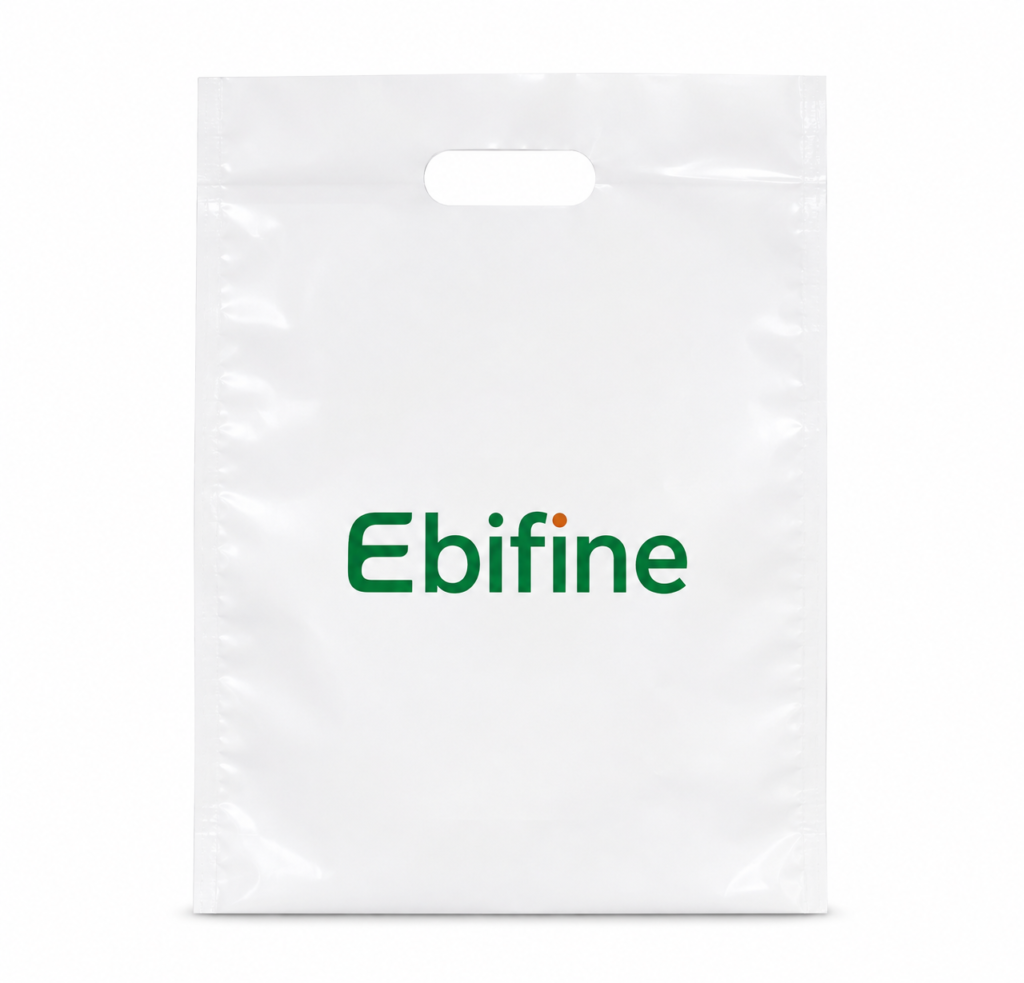
Manufacturer Spotlight: Ebifine Custom Die Cut Handle Plastic Bags
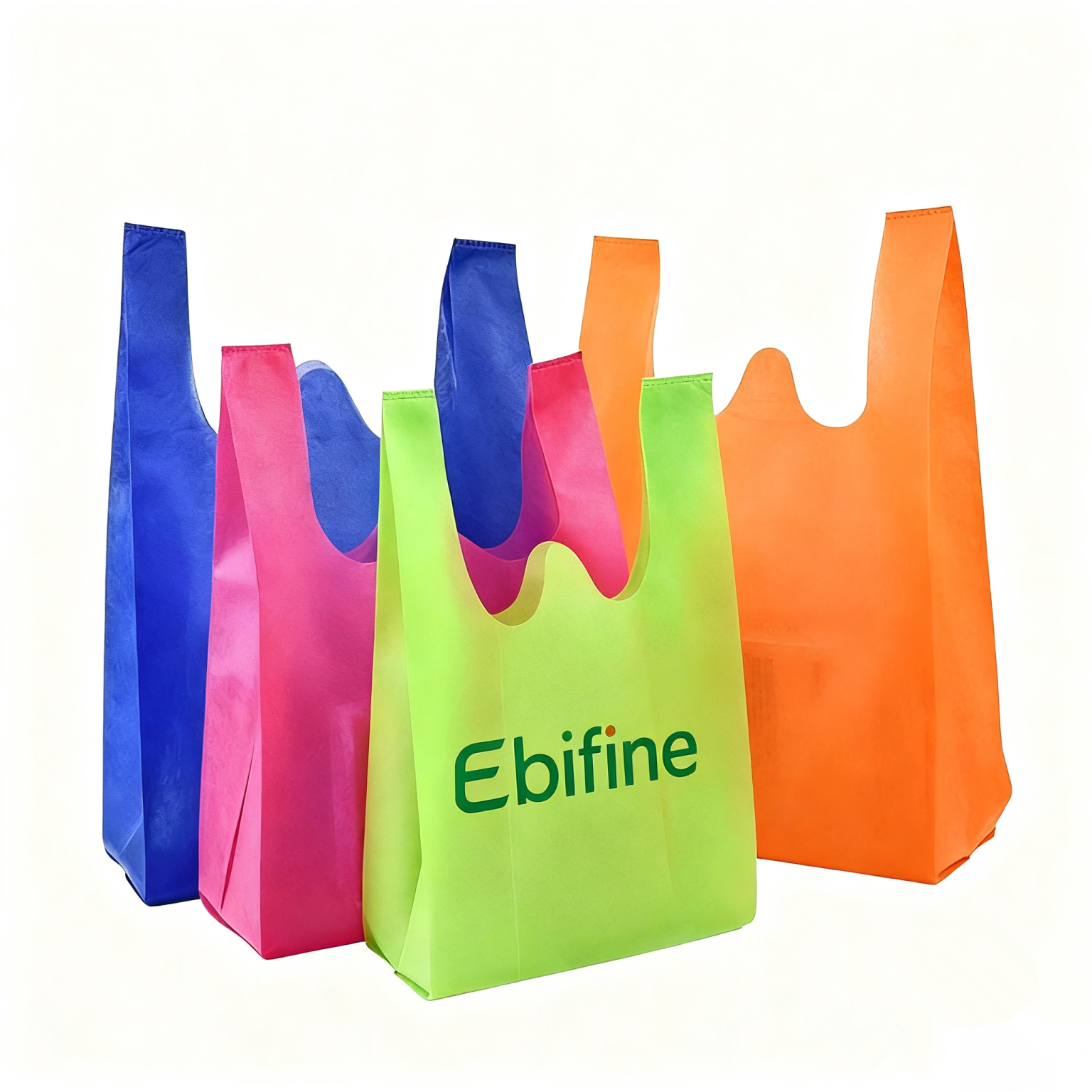
When selecting a flexible packaging manufacturer capable of combining precision flexographic printing with commercial volume scaling, Ebifine stands out as an established industrial supplier. Their custom die-cut handle carrier bag platform is engineered specifically for apparel boutiques, beauty retailers, and corporate gifting operations.
| Base Material | High-grade virgin Low-Density (LDPE) or High-Density Polyethylene (HDPE) |
| Handle Construction | Precision punched die-cut handle with optional high-strength welded patch reinforcement |
| Printing Capabilities | Multi-color flexographic and rotogravure printing; spot PMS, CMYK, and high-gloss varnishes |
| Production Flexibility | Accessible MOQ starting at 5,000 pieces with rapid 15-to-20-day production turnarounds |
| Target Retail Uses | Fashion boutiques, cosmetic retailers, trade show events, department stores, and gift shops |
Procurement Verdict: Review the full engineering specifications for the Custom Die Cut Handle Plastic Bag to evaluate how factory-direct bulk ordering slashes unit costs while elevating retail brand aesthetics.
Direct Technical Comparison: Bulk Printed Plastic vs. Paper vs. Unprinted Stock
| Evaluation Parameter | Bulk Custom Printed Plastic Bags | Custom Printed Kraft Paper Bags | Unprinted Stock Wholesale Plastic Bags |
|---|---|---|---|
| Unit Cost (Large Run) | Very Low ($0.06 – $0.18) | Moderate to High ($0.35 – $0.85) | Extremely Low ($0.03 – $0.08) |
| Mobile Brand Marketing Impact | High; custom Pantone colors & logos | High; upscale organic presentation | Zero; generic blank carrier bag |
| Weather & Moisture Resistance | 100% Waterproof impermeable barrier | Fails when wet; handles tear off | 100% Waterproof barrier |
| Stockroom Storage Volume | Minimal; flat compressed cartons | Massive; 5x to 8x the cubic volume | Minimal; flat compressed cartons |
| Inbound Freight Expense | Low (Lightweight polymer film) | High (Heavy paper weight) | Low (Lightweight polymer film) |
| Checkout Packing Velocity | Rapid; fast slip-open handling | Moderate; must expand base gussets | Rapid; fast slip-open handling |
Pros and Cons of Bulk Printed Plastic Bag Procurement
| Procurement Strategy | Commercial & Operational Pros | Practical Limitations & Risks |
|---|---|---|
| Ordering Custom Printed Plastic Bags in Bulk (Direct Factory Runs: 5,000+ units) |
|
|
| Short-Run Just-In-Time Procurement (Buying small batches from local distributors) |
|
|
Who Must Order Printed Plastic Bags in Bulk vs. Who Should Choose Alternates
Allocating capital to bulk packaging requires evaluating your sales volume, physical store layout, and customer expectations. Bulk printed plastic bags provide massive commercial leverage for high-turnover retailers, but other businesses may be better served by alternative packaging.
Who Must Invest in Bulk Custom Printed Plastic Bags:
- Apparel Boutiques & Fashion Chains: Clothing, shoes, and lifestyle apparel require smooth, tear-resistant bags with soft-touch finishes that prevent snagging delicate fabrics. Die-cut handle plastic bags deliver modern retail style while keeping packaging overhead low.
- Cosmetics, Beauty & Fragrance Shops: Glass dropper bottles, perfume jars, and skincare lotions can leak during transit. Polyethylene bags provide an impermeable barrier that protects customer car seats and clothing from accidental spills. Explore our specialized retail packaging solutions for comprehensive retail supplies.
- High-Turnover Department Stores & Gift Retailers: Fast checkout lanes require lightweight, easy-to-open bags that cashiers can pack in seconds. High-volume gift shops benefit from the durability and vibrant color reproduction of bulk poly bags. Review our curated gift packaging options for unified branding.
- Trade Shows, Expos & Promotional Events: Marketing teams distributing heavy brochures, swag, and product samples need durable, branded carrier bags that attendees will carry across exhibition floors all day. Check out our dedicated promotional packaging catalog for high-volume event supplies.
Who Should Choose Alternative Packaging Formats:
- Luxury Fine Jewelers & Haute Horlogerie: High-ticket luxury items selling for thousands of dollars demand rigid presentation, such as velvet-lined boxes or heavy paperboard shopping bags. Plastic bags do not align with the formal presentation of fine jewelry.
- Eco-Mandated Municipalities with Strict Single-Use Bans: If your retail locations operate in jurisdictions that legally ban all plastic bags regardless of thickness, you must transition to paper bags, reusable non-woven bags, or certified compostable alternatives from a verified compostable packaging supplier.
- E-Commerce Shippers Sending Parcels via Postal Couriers: External shipping parcels require heavy-duty corrugated shipping cartons or sealed mailers. For direct e-commerce fulfillment, explore our rugged corrugated mailer boxes or custom mailer boxes instead of retail carrier bags.
Costly Procurement Mistakes Retailers Make with Poly Bags
Factory Floor Warning: The most expensive mistake in plastic bag procurement is specifying an inadequate film gauge to save a fraction of a cent per unit. A 1.0 mil bag used for heavy apparel or boxed goods will stretch, distort your printed logo, and tear under retail loads. Always match the film gauge to your heaviest product weight.
- Failing to Verify Local Plastic Thickness Regulations: Many cities, states, and European countries have enacted legislation banning thin single-use plastic bags while exempting reusable heavy-gauge bags (often defined as 2.25 mil / 57 microns or thicker). Ordering 50,000 thin 1.2 mil bags without checking local laws can result in municipal fines and inventory that cannot legally be distributed. Ensure your bulk order complies with regional thickness mandates.
- Overlooking Handle Reinforcement on Die-Cut Bags: Die-cut handle holes concentrate the entire weight of the bag onto a narrow strip of plastic. For heavy merchandise like jeans or skincare sets, unreinforced die-cut holes will stretch and pinch the customer’s fingers. Always specify heat-welded patch handle reinforcement to ensure comfortable, secure carrying.
- Ignoring Static Cling on Cashier Packing Lines: In dry winter climates, polymer film naturally accumulates static electricity, causing bag walls to cling tightly together. If the extrusion plant fails to add anti-static masterbatch additives, cashiers will waste precious seconds struggling to open each bag. Require your manufacturer to include anti-static additives for smooth checkout dispensing.
- Failing to Request a Physical Pre-Production Sample: Approving digital vector artwork on an RGB computer monitor without reviewing an ink drawdown sample or physical production proof is risky. Metallic inks, pastels, and dark pigments look completely different on transparent or white polyethylene film than on a computer screen. Always inspect physical material proofs before approving mass runs.
Essential Sourcing Checklist: Resin Gauges, Inks, and Handles
Before issuing a formal Purchase Order or transferring a tooling deposit to any flexible packaging manufacturer, review these four technical parameters with your procurement team:
1. Choose the Right Polymer Resin: LDPE vs. HDPE
Match your plastic resin to your retail aesthetic:
- Low-Density Polyethylene (LDPE): Premium, glossy, soft, and flexible with high puncture resistance (typically 1.75 to 3.0 mil). It does not crinkle or wrinkle easily, making it the premier choice for apparel boutiques and beauty retail.
- High-Density Polyethylene (HDPE): Semi-translucent, rigid, and crinkly with high tensile strength at thin gauges (0.6 to 1.2 mil). It provides a cost-effective solution for grocery, bookshops, and high-volume retail.
2. Bottom Gussets vs. Flat Pouch Geometry
Evaluate your product shapes. Flat bags work well for single t-shirts, scarves, and flat documents. However, if your store sells folded sweaters, shoe boxes, or cosmetic jars, you must specify a bottom gusset (typically 2 to 4 inches). An expanding bottom gusset allows the bag to stand upright on counters and expand comfortably without stretching the side-weld seams.
3. Printing Plate Technology and Color Verification
Confirm the press setup. Require your manufacturer to mix printing inks strictly against the Pantone Matching System (PMS). Specify whether you need surface printing or trapped reverse printing (for multi-layer laminated films), and confirm that all inks pass tape-adhesion and rub-resistance tests to prevent ink transfer onto customer clothing.
4. Cross-Category Packaging Integration
A unified retail presentation extends beyond shopping bags. Evaluate how your carrier bags coordinate with your secondary packaging: integrate your brand colors across boutique bags, specialized custom coffee packaging pouches, gourmet takeout bags from your restaurant packaging lineup, and protective shipping boxes to build a cohesive customer experience.
Expert Procurement Verdict & Cost-Benefit Guidance
In our professional assessment as packaging manufacturing specialists, continuing to purchase unbranded, off-the-shelf plastic bags from local distributors is an unnecessary drain on retail operating margins. You pay inflated distributor markups while throwing away the free advertising that comes with every branded bag that walks out your front door.
The commercial logic behind the benefits of ordering printed plastic bags bulk is straightforward: ordering in bulk quantities (5,000 to 50,000 units) drives unit costs down to pennies, frees up valuable stockroom storage space, and transforms your shopping bags into high-performing marketing assets. By choosing heavy-gauge, recyclable polyethylene with reinforced handles from an established manufacturer like Ebifine, your retail business protects its profit margins, delivers a smooth checkout experience, and turns every departing shopper into a walking brand advocate.
Frequently Asked Questions
In industrial flexographic and rotogravure printing, non-recurring engineering costs—including custom printing photopolymer plates or engraved cylinders, ink mixing, and press calibration—are fixed regardless of run size. When ordering in bulk quantities such as 5,000 to 50,000 units, these initial setup charges are amortized across the entire batch, driving unit costs down by 50% to 75% compared to short-run domestic print jobs.
High-density and low-density polyethylene plastic bags occupy roughly 80% to 90% less physical storage volume than rigid paper shopping bags with folded handles. A compact carton holding 1,000 die-cut plastic bags fits easily beneath a point-of-sale checkout counter, whereas the equivalent quantity of paper bags requires multiple cubic yards of stockroom floor space.
High-Density Polyethylene (HDPE) provides a semi-translucent, crinkly, paper-like texture with superior tensile strength at thinner gauges (0.5 to 1.2 mil), making it cost-effective for grocery, hardware, and high-volume retail. Low-Density Polyethylene (LDPE) delivers a soft, smooth, high-gloss finish with high puncture resistance and no crinkling (1.5 to 3.0 mil), making it the premier choice for apparel boutiques, cosmetics, and luxury gifts.
Die-cut handles (with or without glued patch reinforcement) provide a sleek, modern silhouette ideal for apparel, boutique fashion, and beauty retail. Soft loop handles offer elevated luxury aesthetics and higher carrying comfort for heavy retail loads, while standard T-shirt handles maximize speed and utility in high-turnover grocery and convenience environments.
Authoritative References & Packaging Standards
- ASTM International: ASTM D882 Standard Test Method for Tensile Properties of Thin Plastic Sheeting
- U.S. Federal Trade Commission (FTC): Guides for the Use of Environmental Marketing Claims (Green Guides)
- International Organization for Standardization: ISO 14021 Environmental Labels and Declarations – Self-Declared Environmental Claims